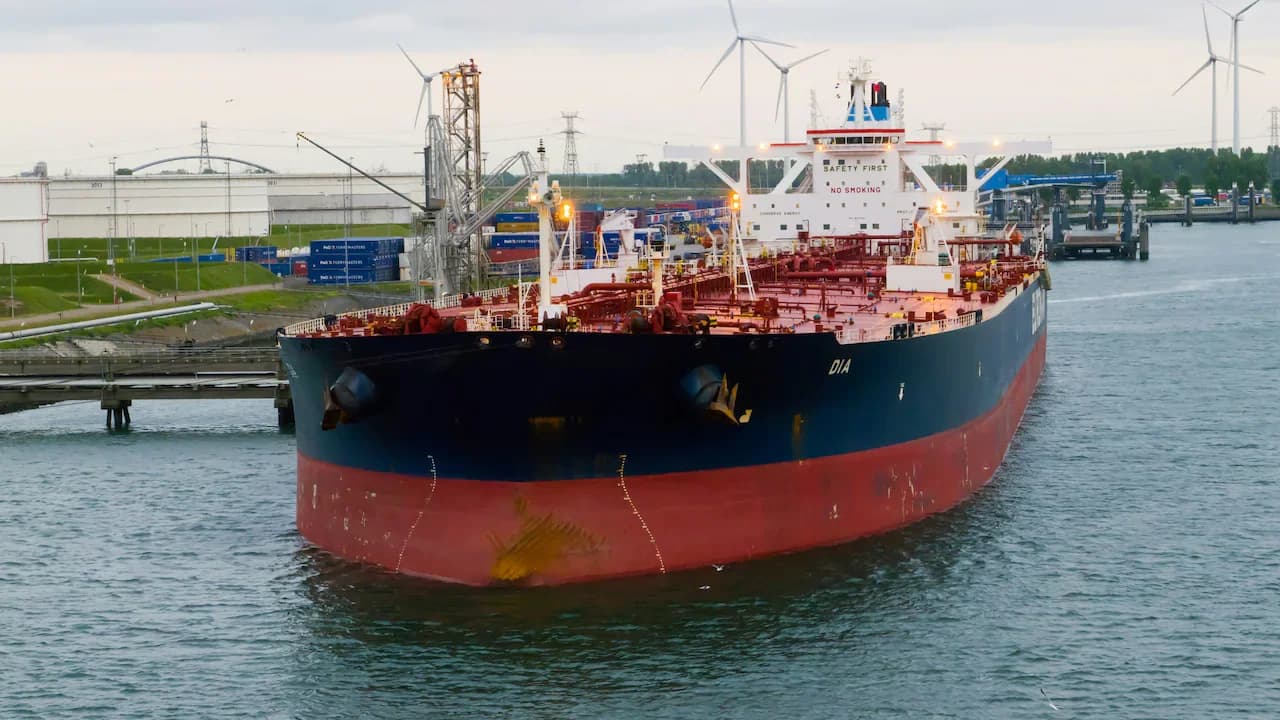
India's crude oil imports from Russia are driven by national energy requirements and commercial considerations, a senior government official confirmed on Monday. Sujata Sharma, joint secretary in the Petroleum Ministry, emphasized that India's sourcing strategy has remained unchanged through different phases of US policy on Russian oil imports. Speaking at an inter-ministerial briefing, Sharma stated that "Regarding (the) American waiver on Russia, I would like to emphasize that we have been purchasing from Russia earlier ... I mean before waiver also, during waiver also, and now also," according to Business Standard. Her remarks came after the US waiver on Russian crude purchases expired on May 16, but India has made it clear that purchases will continue regardless of any sanctions waiver from the United States. As per Reuters, Sharma made it clear that India's oil sourcing strategy has remained consistent despite changing US policies on Russian oil imports, reinforcing the government's commitment to maintaining energy security through diversified supply sources. "Whatever waiver or no waiver, it (availability) will not affect," Sharma emphasized, adding that "It is basically the commercial sense which should be there for us to purchase" and there was no shortage of crude supplies and enough volumes had been tied up through long-term arrangements. The earlier extension formed part of a broader strategy by the Trump administration to manage soaring global energy prices amid the ongoing Iran conflict.
The US Treasury Department has issued a fresh 30-day licence allowing certain countries to access Russian crude oil cargoes that are already stranded at sea amid sanctions-related disruptions and shipping uncertainty. US Treasury Secretary Scott Bessent announced the temporary authorization, stating "Treasury Department is issuing a temporary 30-day general license to provide the most vulnerable nations with the ability to temporarily access Russian oil currently stranded at sea." The measure permits vulnerable countries to receive Russian crude oil and petroleum products that have already been loaded onto ships and are currently stranded at sea, but does not allow fresh Russian oil exports or new trade agreements. "The aim was to prevent supply shortages and support countries struggling with energy access," Bessent wrote on X, adding that the move would provide "additional flexibility" while the US continues discussions with countries that may later require separate approvals. This marks the third temporary licence issued by the US in 2026 involving Russian oil cargoes already loaded onto ships, with earlier waivers issued in March under General Licenses 133 and 134, which were initially meant for India before being expanded to other countries.
India's oil refiners are expected to weather disruption in supply after the US allowed its waiver on Russian crude purchases to expire, according to reports from Business Standard. In May, flows are expected to come in at close to 1.9 million barrels a day, close to peak levels - though that still includes a period under the US permit that was allowed to expire over the weekend. The end of the US waiver comes despite entreaties from Indian officials and a Brent price that is now more than 50 per cent above pre-war levels. According to Kpler data, India's imports of Russian oil rose to a record 2.3 million barrels per day in May, with Russian crude accounting for nearly half of India's total oil imports in some months. Data from Kpler showed Russian crude shipments to India reached about 2.3 million barrels per day in May so far, with monthly averages expected to remain close to 1.9 million barrels per day, according to latest reports. The timing coincides with global crude prices surging above $105 per barrel from around $72 before the conflict began, creating additional pressure on India's energy costs. Discounted Russian crude had risen to become the core of India's oil import basket since 2022, when Moscow's invasion of Ukraine triggered sweeping western sanctions and disrupted Russia's traditional export markets. India, the world's third-largest crude importer and consumer, sharply increased purchases of Russian oil to take advantage of lower prices, helping domestic refiners manage elevated global energy costs.
Despite the waiver expiry, India's continued Russian oil purchases are driven by multiple strategic factors beyond sanctions compliance. Sumit Ritolia, Manager Modelling and Refining at Kpler, identifies six key reasons why India will continue buying Russian crude oil. The first reason centers on supply security and economics in a much more fragile global crude system, where the issue is no longer purely about sanctions optics but increasingly about maintaining stable energy supplies. With continued geopolitical uncertainty and the Strait of Hormuz situation still far from normal, including restricted transits, higher freight risk, and slower flows, Middle Eastern barrels are no longer as straightforward or secure as they were previously. Russian crude continues to offer a clear advantage through both pricing and relatively stable logistics via non-Strait routes. With waiver lapsing, flows are likely to remain broadly stable, although they could ease modestly from March levels, with the key distinction that Russian oil itself is not sanctioned but certain entities, vessels, and financial channels are. Russia will continue to be a core supplier for India, but procurement must strictly ensure no involvement of sanctioned sellers or intermediaries, use of non-sanctioned vessels, and fully compliant financial, insurance, and trading channels. "There are limited alternatives available at similar scale and pricing, particularly in a market still dealing with geopolitical uncertainty and uneven Middle Eastern flows," said Ritolia, adding that "India is unlikely to move away from Russian crude in the near term."
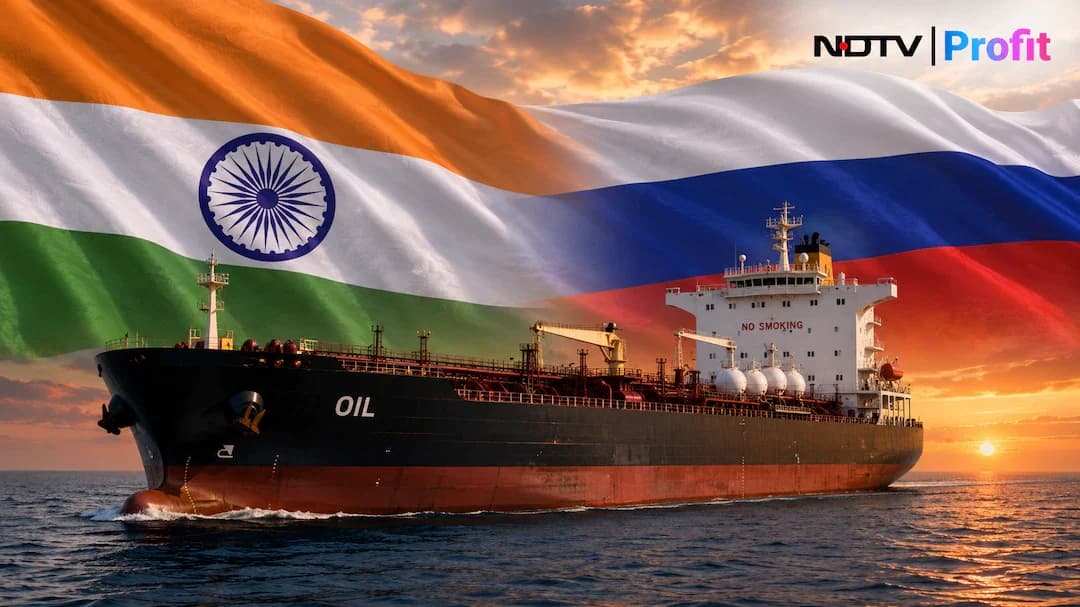
There are offers of prompt-loading crude coming from the US, the United Arab Emirates, Oman and Iraq, according to traders familiar with the matter, as reported by Business Standard. China's virtual absence from the market has been key to preserving spot supply, while total West Asia flows remain a fraction of what they were before the war began. Maintenance at Reliance Industries Ltd. and Nayara Energy Ltd. has helped to push up the volumes of Russian crude in floating storage — now at more than 7 million barrels globally, up fivefold from a month ago, according to ship-tracking data compiled by Bloomberg. Despite the waiver expiry, Indian refiners anticipate that another US extension to the waiver is possible, according to people familiar with the matter who asked not to be named as the issue is sensitive. India's refiners are expected to weather the supply disruption on weaker demand and available barrels from the US and Middle East, though the recent fuel price hike has added significant cost pressures across multiple sectors. Kpler even suggests that there might be some sort of tactical understanding that India keeps importing Russian energy which has been the backbone for India energy security since the start of the war. India has about 60 days worth of crude oil and liquefied natural gas reserves, alongside 45 days of liquefied petroleum gas stockpiles, the country's oil minister Hardeep Puri has said. Hindustan Petroleum Corp Chairman Vikas Kaushal told analysts last week that "We have not had any difficulty in getting the crudes which we want," adding that "Of course, I would wish they were coming to me $30 cheaper than what they are coming in at, but that's a different aspect."