The Trump administration has reportedly encouraged Venezuela and Iraq to consider leaving OPEC earlier this year, marking an unusually direct challenge to the organization. According to Reuters, this represents a significant escalation in tensions between the US and OPEC, with President Trump having long accused the cartel of keeping oil prices artificially high. The moves targeted two of OPEC's five founding members, with US officials pushing for greater oil production and investment in both countries while expressing concerns that OPEC production limits could eventually constrain their ambitions. Ten people familiar with the matter confirmed that the US prevented Venezuela from paying its annual membership dues, with the State Department confirming it receives disbursement requests and reviews them against approved uses of the foreign Government Deposit Funds.
The US pressure on Venezuela went far enough that Saudi Crown Prince Mohammed bin Salman intervened this summer, persuading the Trump administration not to press the issue further, as reported by Reuters. After the US seized Maduro in January, the State Department opened discussions with Venezuelan officials in Washington on whether the country should leave OPEC, with Trump wanting US oil majors to revive Venezuela's oil output. The US controls Venezuela's access to state funds following the January ouster of Nicolas Maduro, with the State Department confirming it receives disbursement requests and reviews them against approved uses of the foreign Government Deposit Funds. Washington argued money from Venezuela could be spent on more important matters, one source familiar with the country's relationship with OPEC said. The US Government Accountability Office opened a formal investigation in July into the administration's management and disbursement of Venezuelan oil revenues, following congressional requests for transparency.
In Iraq, Prime Minister Ali Faleh al-Zaidi raised the possibility of leaving OPEC at a government meeting this summer after discussions with US officials who encouraged the idea, according to Reuters. However, Iraq's oil ministry pushed back, persuading al-Zaidi to keep Iraq in the group and consider seeking a higher production quota instead. The issue could resurface since some elements of Iraq's ruling coalition are favorable to leaving OPEC and OPEC+, which they view as dominated by Saudi Arabia and Russia. The State Department's conversations with Iraq have focused on improving energy infrastructure to increase production and transportation of energy, not OPEC, according to a State Department official. This year, the US threatened to starve Iraq of its oil money if it didn't cut Iran's influence in its government.
OPEC membership fee payments are typically due in the first quarter of each year at around 2.8 million euros ($3.08 million) each, with the US preventing Venezuela from paying its annual dues. According to Reuters, OPEC has the discretion to disregard unpaid membership fees and is not planning to expel Venezuela over the issue. Venezuela currently pumps about 1.2 million barrels per day in September, significantly below its historical highs of around 2 million bpd during the 2017-2018 period. The country's return to OPEC+ quotas is unlikely until it reaches that production level again, with OPEC last regulating Caracas' output with quotas in 2017-18. Unlike the United Nations, where dues are scaled to the size of a country's economy, OPEC splits the fees equally among members, with the price tag being tiny compared to OPEC oil revenues but carrying symbolic importance as a marker of continued membership.
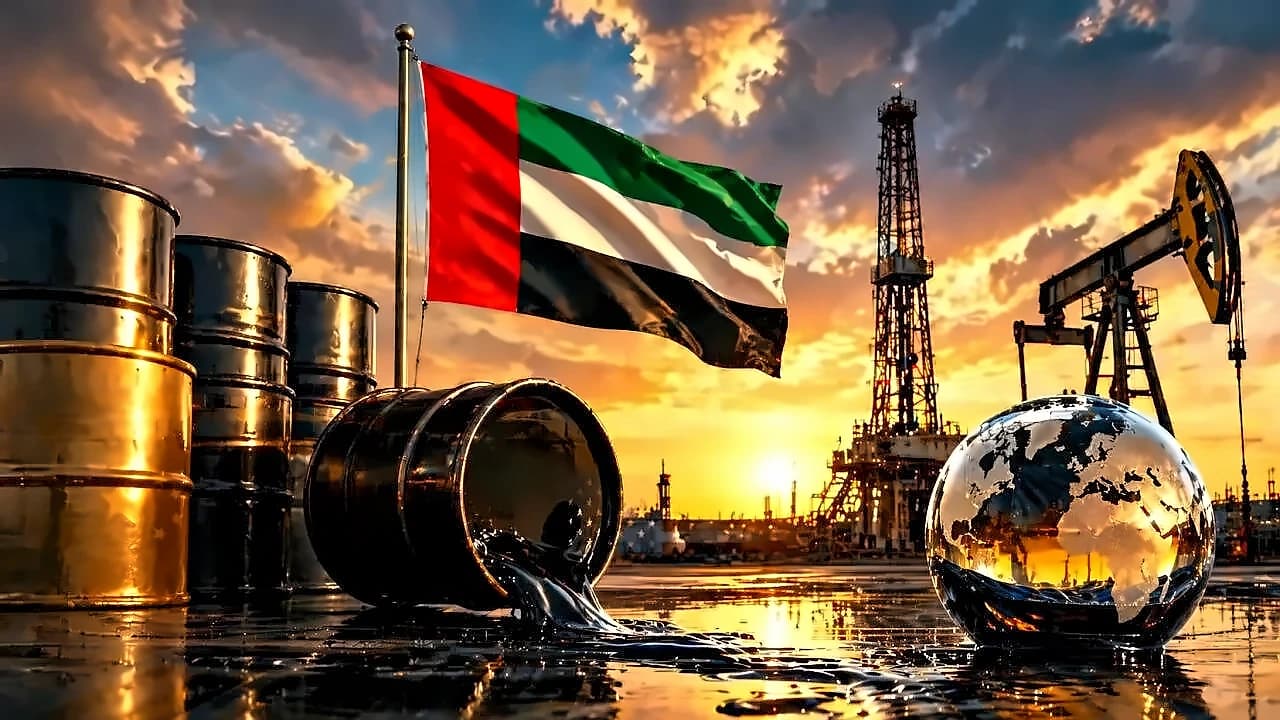
The US maneuvers add strain to an organization that has already lost four members since 2019, with OPEC's share of the global oil market recently hitting a low due to disruptions caused by US and Israeli actions against Iran. As reported by Reuters, the United Arab Emirates announced its exit from OPEC earlier this year after becoming frustrated with production caps, while Angola, Ecuador and Qatar quit in 2024, 2020 and 2019 respectively. Dan Alamariu, chief geopolitical strategist at Alpine Macro, noted that 'the risk of OPEC fracture is rising.' The Trump administration has said Venezuela's oil revenues are being used to meet the needs of the Venezuelan people, including government salaries and essential services. The US has powerful leverage over both countries, with the US controlling Venezuela's access to state funds following Maduro's removal and Iraq's oil revenues continuing to pass through an account at the Federal Reserve Bank of New York, a structure remaining in place more than two decades after the 2003 Iraq War.