President Donald Trump announced Saturday that a peace deal with Iran to reopen the Strait of Hormuz is 'largely negotiated' and will be announced shortly, marking a significant development in ongoing negotiations. According to Associated Press, Trump held calls from the Oval Office with leaders of Saudi Arabia, the UAE, Qatar, Pakistan, Turkey, Egypt, Jordan and Bahrain, as well as Israeli Prime Minister Benjamin Netanyahu, all focused on finalizing terms with the Islamic Republic of Iran. Trump stated in a social media post that 'An Agreement has been largely negotiated, subject to finalization between the United States of America, the Islamic Republic of Iran, and the various other Countries,' with details being discussed and will be announced shortly. The deal under discussion includes a memorandum of understanding as a first phase, before broader talks within 30 to 60 days, as reported by Iran's foreign ministry. However, clear sticking points remain, with Iran's Fars news agency reporting that the Strait of Hormuz would remain under Iran's management, dismissing Trump's announcement as 'incomplete and inconsistent with reality.'

The latest signs of movement followed a flurry of regional diplomacy involving Pakistan, Qatar, Saudi Arabia, the United Arab Emirates, Turkey, Egypt, Jordan and Bahrain, as several Middle Eastern leaders urged Washington to accept a deal and prevent a renewed escalation. According to Axios, several Middle Eastern leaders involved in Trump's call urged him to accept a deal with Iran, with the message from Arab and Muslim leaders being: 'Please stop the war for the benefit of the whole region.' The Financial Times reported citing mediators and people briefed on the talks that the United States and Iran were close to extending their ceasefire by 60 days under a framework that would gradually reopen the Strait of Hormuz and launch discussions over Tehran's highly enriched uranium stockpile. US Secretary of State Marco Rubio also struck a cautious tone Saturday, saying 'some progress' had been made in talks on Iran and suggesting there could be news soon, while warning that no breakthrough was certain. Pakistan's Prime Minister Shehbaz Sharif later congratulated Trump on his peace efforts and said Pakistan hoped to host another round of talks 'very soon', describing the US president's call with Middle Eastern leaders as 'very useful and productive'.
The Strait of Hormuz has been a key issue raised by both the US and Iran after each country imposed closures and blockades of the waterway. The agreement would involve the gradual reopening of the Strait of Hormuz during the 60-day period, allowing free passage of ships without tolls. Iran would also agree to clear the mines it deployed in the strait to ensure ships can pass freely through this critical shipping route. As per Associated Press, the deal would include an official declaration of the war's end, with two-month negotiations on Iran's nuclear program. Iran state TV earlier quoted Foreign Ministry spokesperson Esmail Baghaei as describing the draft as a 'framework agreement', adding that 'We want this to include the main issues required for ending the imposed war and other issues of essential importance to us. Then, over a reasonable time span, between 30 to 60 days, details are discussed and ultimately a final agreement is reached.' However, Baghaei told Iran's official IRNA news agency that nuclear issues are not part of current negotiations, with Iran's focus at this stage on ending the war on all fronts, including Lebanon. Iranian foreign ministry spokesman Esmaeil Baqaei also described a 'memorandum of understanding', saying Iran's intention was to reach an agreement 'in the form of a framework, consisting of 14 points' and that they were in the process of finalising the memorandum so further talks could be held within 30 to 60 days.
As part of the proposed deal, the US would lift its blockade on Iranian ports and issue sanctions waivers to allow Iran to sell oil freely during the 60-day period. According to Associated Press, this would enable Iran to resume its oil exports through international markets. The agreement also includes commitments from Iran to never pursue nuclear weapons and to negotiate over a suspension of its uranium enrichment program and the removal of its stockpile of highly enriched uranium. However, Trump failed to mention any agreement on Iran's nuclear program or its highly enriched uranium, both of which his administration has repeatedly cited as critical to ending the war. Iran has sought to put off nuclear talks until after a formal cessation in hostilities, creating a major sticking point in negotiations. Iran's parliament speaker Mohammad Bagher Qalibaf warned that if Trump resumed attacks, the result would be 'more crushing and more bitter' than at the start of the war, as reported by Associated Press.
Iran has reportedly provided verbal commitments through mediators about the scope of concessions it's willing to make on suspending enrichment and giving up nuclear material, according to two sources cited by Axios. The draft agreement includes specific commitments from Iran to never pursue nuclear weapons and to negotiate over a suspension of its uranium enrichment program and the removal of its stockpile of highly enriched uranium. However, a major sticking point has been Trump's demand that Iran surrender its enriched uranium and permanently relinquish any nuclear weapons capacity. Trump has also demanded Iran dismantle the Natanz, Fordow and Isfahan nuclear sites, which the U.S. bombed after joining Israel's war against Iran last June. Iran's parliament speaker Mohammad Bagher Qalibaf emphasized that Iran still has its enriched uranium and a missile program it says is being rebuilt, with the new supreme leader being the son of the previous one and close to the powerful Revolutionary Guard. Iran's Fars news agency reported that Iran also requested the US end its blockade of Iranian ports, the release of billions of dollars in frozen Iranian assets and a plan to compensate Iran for damages suffered during the war, while rules for ship passage through the Strait of Hormuz remained another point of dispute. Despite Washington accepting some of Tehran's positions, the three issues remain unresolved and Iran is preparing other options, as reported by Fars.
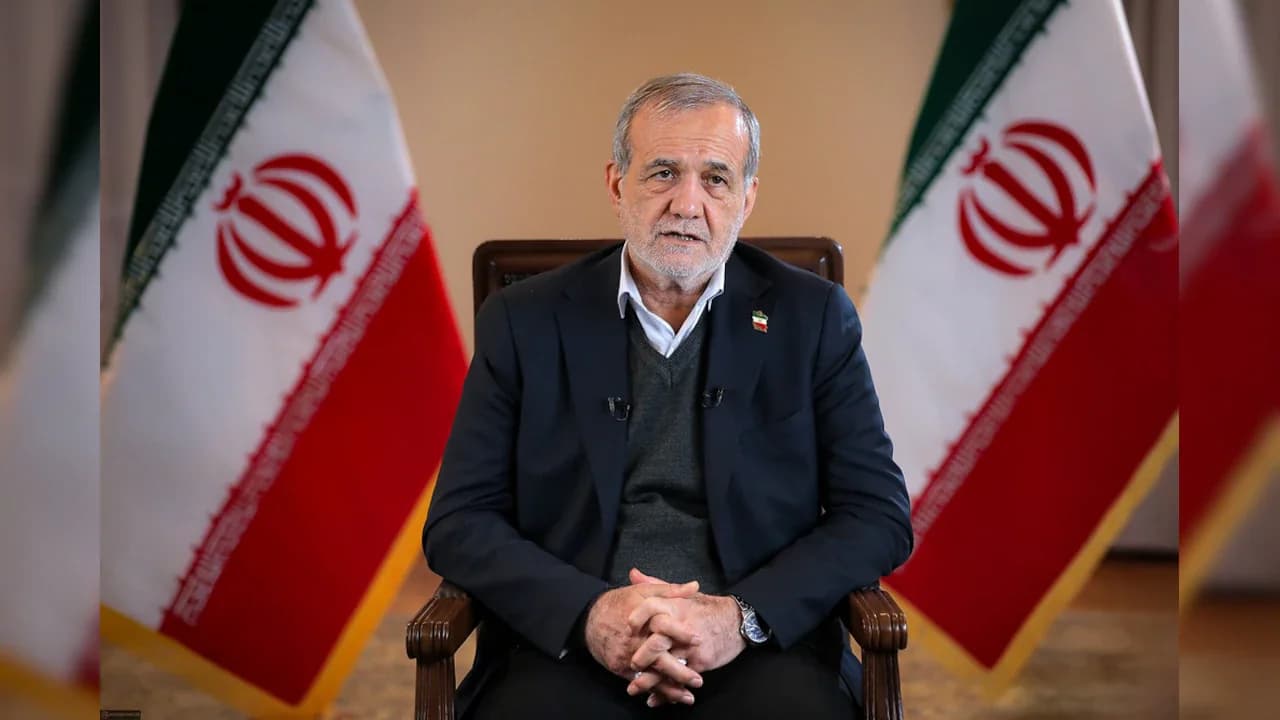
The announcement triggered significant political opposition, with Mike Pompeo, who served as CIA director and secretary of state during Trump's first term, denouncing the rumored terms as 'too close to what Barack Obama's negotiators had achieved' and a 'boon to Iran's Islamic Revolutionary Guard Corps.'' Pompeo wrote on social media: 'The deal being floated with Iran seems straight out of the Wendy Sherman-Robert Malley-Ben Rhodes playbook: Pay the IRGC to build a WMD program and terrorize the world.'' The alternative, Pompeo added, is 'straightforward: Open the damned strait. Deny Iran access to money. Take out enough Iranian capability so it cannot threaten our allies in the region.'' Republican senator Roger Wicker wrote that the 'rumored 60-day ceasefire – with the belief that Iran will ever engage in good faith – would be a disaster,' while former Obama administration officials like Ben Rhodes and Wendy Sherman expressed cautious optimism about ending the conflict. Pakistan's army chief Syed Asim Munir is a key figure in the negotiations and has held meetings in Tehran recently with figures such as Iranian president Masoud Pezeshkian and parliamentary speaker Mohammad Bagher Ghalibaf, with the military stating that negotiations had resulted in 'encouraging progress toward a final understanding.' The US would also agree to negotiate over lifting sanctions and unfreezing Iranian funds during the 60-day period, as reported by Axios.