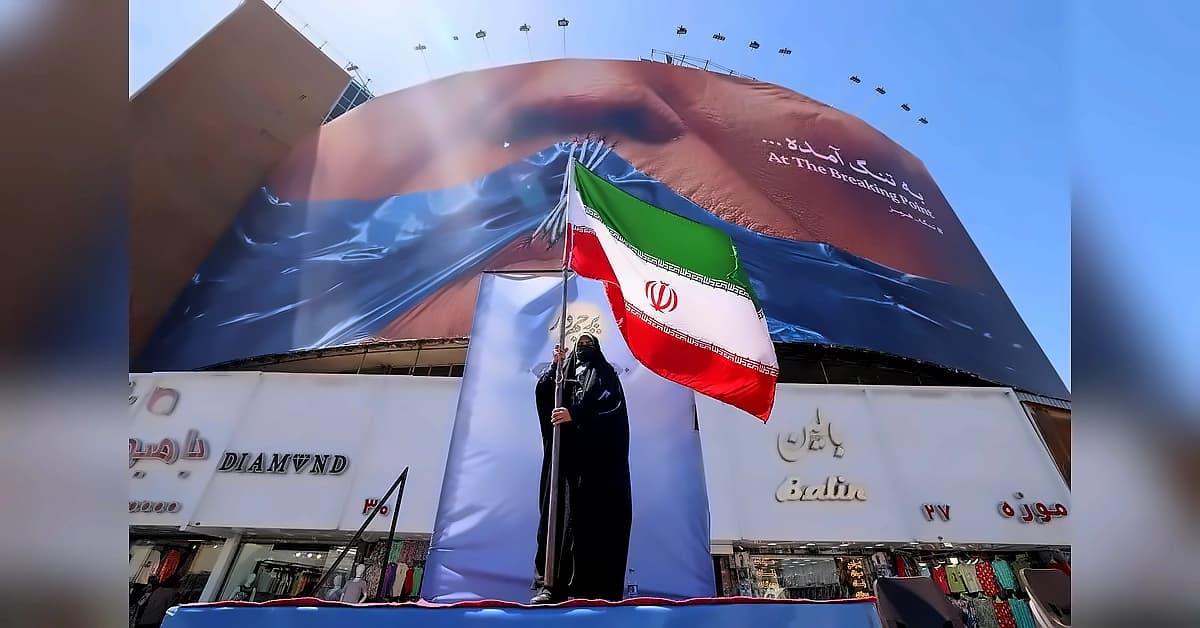
Iranian Foreign Minister Abbas Araghchi has issued a stark warning to the United States, accusing Washington of 'fake intelligence' that could lead to even bigger miscalculations. Speaking on social media platform X, Araghchi stated 'Worse than fake news is fake intelligence. Be careful,' ending his post by saying 'Allah is Great, Greater than ANY power on Earth. In Allah we trust.' The warning comes as Tehran and Washington continue to trade competing claims over the Strait of Hormuz, with Araghchi specifically referencing 'The war on Iran' as evidence of US intelligence failures. His remarks directly counter US President Donald Trump's assertions of 'total control' over the strategic waterway, with Araghchi warning that any US move in the Strait could prove to be 'an even bigger miscalculation.'
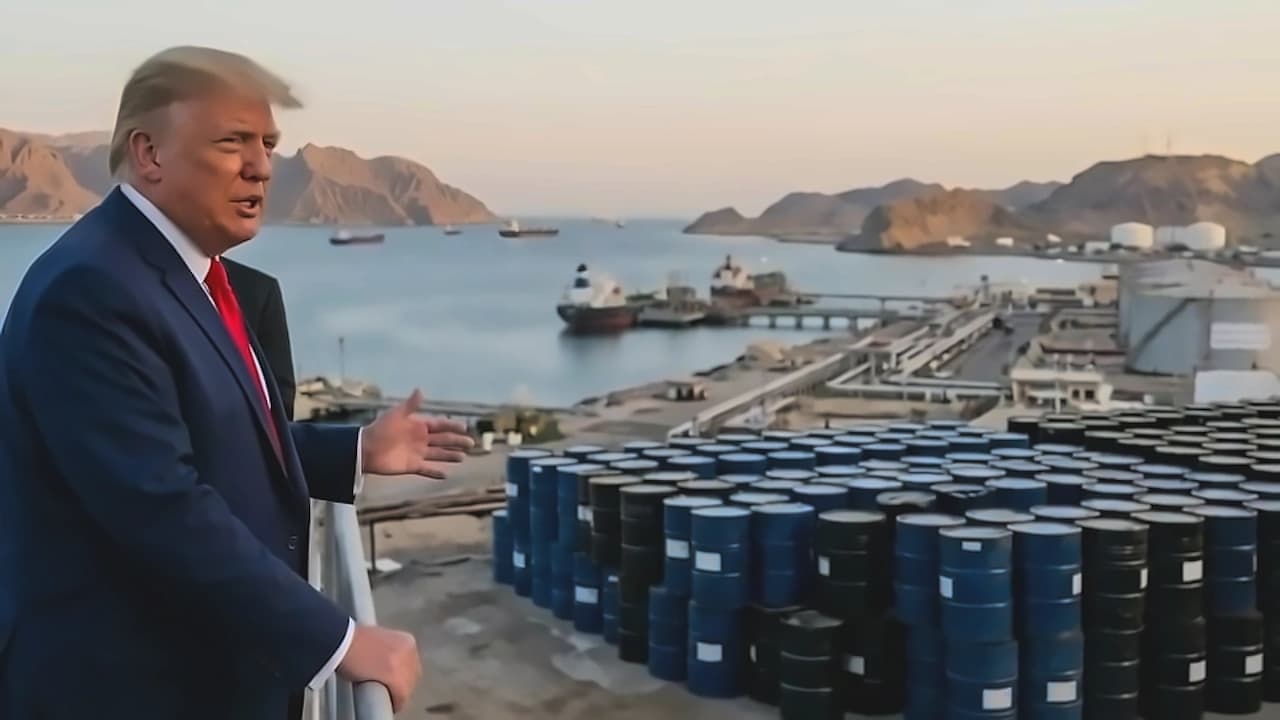
US President Donald Trump has asserted that Washington maintains total control over the Strait of Hormuz, describing the American naval blockade against Iran as 'infallible' even as tensions over the strategic waterway continue. Speaking to reporters at Joint Base Andrews outside Washington late Tuesday, Trump declared that 'We own it,' adding that 'At some point, maybe they'll do something, and then they get blown away.' These remarks come as the US has cleared the Strait of Hormuz of mines and Trump now claims the waterway is 'open now.' The US has maintained a naval blockade of Iranian ports since mid-April, with Trump describing the military position as a 'steel wall' that remains unaffected by occasional Iranian attempts to place mines. Trump has oscillated for months between threatening to resume attacks on Iran and expressing confidence that talks to bring an end to America's war with the Islamic Republic are progressing. In his latest social media post on Truth Social, Trump claimed the area was successfully blockaded by the US Navy, stating that 'everyone is referring to it as a 'WALL OF STEEL,' and there is 'nothing Iran can do about it.'
Iran's semi-official Fars news agency reported that Hojjatoleslam Hossein Taeb, commander of Iran's paramilitary Basij Organisation, claimed that the Strait of Hormuz remains under Tehran's control and management. Taeb stated 'Today you see that the Strait of Hormuz is under the management and control of the Islamic Republic, and our country continues on its path in complete security,' his remarks coming a day after US President Donald Trump claimed on Truth Social that the US had total control of the strategic waterway. The Basij commander's statement represents the most direct Iranian military response to Trump's claims, making clear that Tehran considers the current situation unchanged despite US military presence and blockade enforcement. Former Iranian diplomat Abbas Khameyar has also accused Washington of failing the test of economic and military warfare against Iran, describing Hormuz as a deterrent card that has helped change the course of the conflict and re-impose the rules of engagement.
Iranian Deputy Foreign Minister for Legal and International Affairs Kazem Gharibabadi has delivered a sharp rebuke to President Trump's latest territorial claims, stating 'The Strait of Hormuz cannot be seized by tweet, nor by aircraft carrier, nor by issuing an order, nor by an election speech.' Speaking on social media platform X, Gharibabadi responded to Trump's Saturday remarks at a political rally in New York state, where the US President said he would declare the Strait of Hormuz a US territory after what he described as Iran's defeat. 'Iran neither fears threats nor cowers before displays of power,' Gharibabadi emphasized, adding that 'the Strait of Hormuz has been Iranian, is Iranian, and will remain Iranian.' He further declared that 'this strait will only be closed and opened under Iran's command,' warning that as long as the US continues its fanciful delusions, 'Iran will continue to enforce the blockade.'
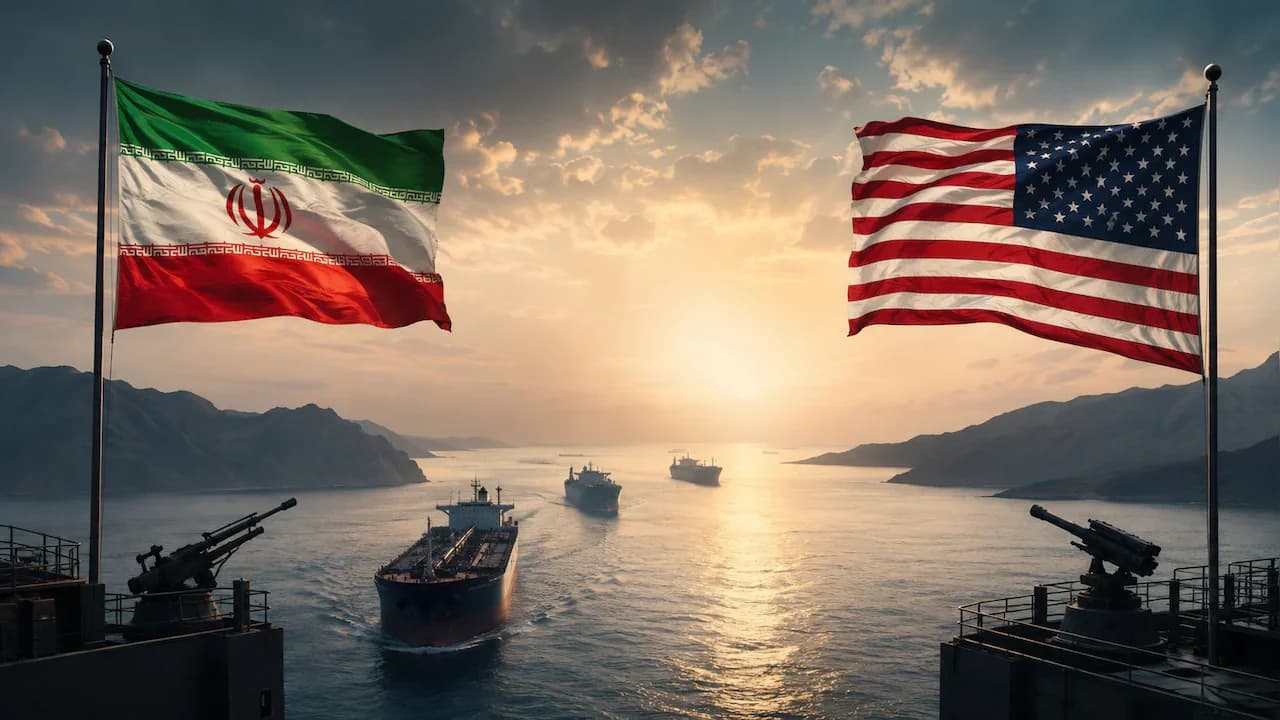
The US Central Command (CENTCOM) has deployed over 20 warships to the Middle East as part of its ongoing enforcement of the American naval blockade against Iran. According to CENTCOM's latest statement, the command confirmed that more than 20 warships had been deployed to support military missions, including strict enforcement of the US blockade against Iran. The deployment represents a significant escalation in US military presence in the region amid heightened tensions around the Strait of Hormuz. As reported by CENTCOM, sailors aboard the USS Ross, a US Navy destroyer, are among the forces deployed to the region as part of the enhanced military presence, with sailors standing watch on the bridge of the USS Ross and conducting maintenance on F/A-18E Super Hornets on the flight deck of aircraft carrier USS Abraham Lincoln to ensure carrier strike group assets remain mission ready.
As of August 9, CENTCOM has redirected 55 commercial vessels, disabled two, and boarded two others to ensure compliance with the blockade. The latest figures mark an increase from an earlier update in which CENTCOM said 53 commercial vessels had been redirected, while two had been disabled and two boarded. As reported by CENTCOM, these enforcement actions are part of the strict enforcement of the US blockade against Iran. The naval blockade has created significant disruption to global oil shipments through the critical Strait of Hormuz corridor, with the US military's enforcement action coinciding with prolonged uncertainty over a proposed agreement between Iran, Oman and the United States governing traffic through the strait. The narrow waterway connecting the Persian Gulf to the Gulf of Oman and the Arabian Sea serves as one of the major flashpoints in President Trump's war of choice, through which about one-fifth of global crude and natural gas passes in peacetime. Notably, the US military has also permitted more than 30 ships to pass through the blockade for humanitarian aid. The ongoing standoff has created significant market uncertainty, with oil prices continuing to climb as traders remain uncertain of the prospects for a West Asia deal. Global benchmark Brent crude traded slightly higher at just over $89 per barrel in London on Wednesday, extending its rally into a sixth day.
Iranian officials have outlined comprehensive conditions for reopening the Strait of Hormuz, with Mohammad Bagher Zolghadr, secretary of Iran's Supreme National Security Council, outlining Tehran's demands on August 8. Iran wants the US to lift its naval blockade and sanctions, withdraw American forces from the region, pay compensation for war-related damage and release frozen Iranian assets. The council has also demanded an end to US attacks on Iran's regional allies. Tehran has maintained that the strait will not be fully reopened unless Washington meets several of its demands, with Iranian officials indicating that discussions with Oman over shipping arrangements would not amount to a complete reopening. As reported by Business Standard, Iran has rejected US claims that sanctions are putting its economy under severe pressure, with Iranian Foreign Ministry spokesman Esmaeil Baqaei describing Washington's approach as less of a 'policy' and more of a 'compulsive addiction.' The military standoff and uncertainty around shipping through the Strait have pushed up international crude prices and raised concerns about a wider regional conflict, with commercial shipping currently operating under strict security measures amid the volatile situation.
US Senator Richard Blumenthal has demanded answers from Defense Secretary Pete Hegseth and acting Navy Secretary Hung Cao over conditions aboard the USS Abraham Lincoln, which has been at sea for more than 250 days. Blumenthal wrote on X that 'The Trump Admin must explain what they are doing to support sailors on the USS Abraham Lincoln who have been continuously at sea for nearly 7 months,' citing reports of supply shortages, plumbing problems and deteriorating mental health. The carrier has remained deployed since a US naval buildup announced in late January, when the USS Abraham Lincoln strike group was diverted from exercises in the South China Sea to the Middle East. The extended deployment has raised concerns among lawmakers about the welfare of sailors aboard the vessel, particularly given the unprecedented length of the current mission.