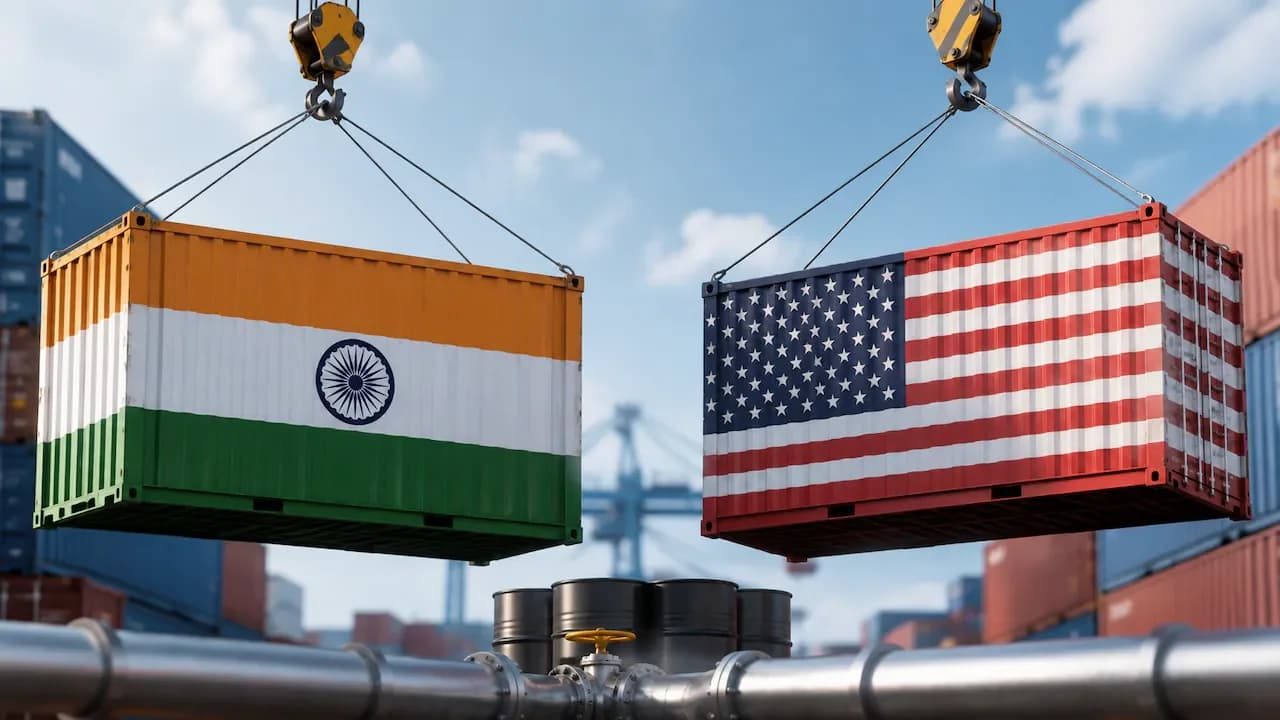
Two Democratic Senators have urged President Donald Trump against granting any further exemption from US sanctions on Russian oil purchases, contending there is no rationale for such a move as the war with Iran is now over. Senators Jeanne Shaheen and Elizabeth Warren stated that the waiver from sanctions has only helped Russia finance its 'illegal war' with Ukraine. The senators argued that extending this license yet again would give Vladimir Putin another opportunity to reap windfall financial gains while he continues his brutal war against Ukraine. As ranking members of the Senate committees on foreign relations and banking, housing and urban affairs respectively, Shaheen from New Hampshire and Warren from Massachusetts emphasized that every additional dollar the Kremlin earns from this license helps Putin finance his illegal war.
External Affairs Minister S Jaishankar revealed at the Kultaranta Talks in Finland that the United States had specifically requested India to purchase Russian oil in 2022 to help stabilize global oil markets. Speaking at the event, Jaishankar stated that 'At that time, the US specifically asked India to buy Russian oil to stabilize the oil market'. According to reports from Bloomberg, the minister emphasized his approach to energy procurement, stating 'I buy oil based on cost and availability'. The revelation comes as India emerged as a major buyer of Russian crude after Washington and its allies imposed sanctions on Moscow following its invasion of Ukraine in 2022 and introduced a price cap on Russian oil. As per Bloomberg, the minister's comments shed light on the complex dynamics that emerged after the start of the Ukraine war, when Western governments sought to isolate Russia economically while simultaneously trying to prevent a major shock to global energy supplies.
The minister explained how international sanctions and supply chain changes drove India toward Russian energy sources. Following Washington's sanctions on Moscow after Russia's invasion of Ukraine, European nations pivoted away from Russian supplies and began competing for Middle Eastern oil, which had been India's traditional supplier. 'At that point of time, much of the oil available in the market was from Russia because Europeans were buying up the Middle East oil, which was our traditional supplier,' Jaishankar explained. 'Circumstances pushed us in a certain direction,' he added, highlighting how traditional supply patterns were disrupted as European countries turned to alternative sources. According to Bloomberg, the shift transformed India into one of the largest buyers of discounted Russian oil, helping the country secure affordable energy supplies at a time when many economies were struggling with rising inflation and soaring fuel costs.
Jaishankar described Russia as a 'steady' supplier of energy and dismissed attempts to frame India's energy choices as matters of geopolitical allegiance. The minister took direct aim at what he called inconsistency in the US position, which moved from encouraging Indian purchases of Russian oil, to imposing tariffs, to subsequently revoking them. 'Let's not pretend there's some great principle involved here. I don't think making this about sanctimony is really warranted,' he stated, highlighting the inconsistent approach of major powers toward energy trade. The minister rejected suggestions that India's purchases raised broader ethical concerns, emphasizing practical energy considerations over political alignments. 'Let's not pretend that this is about some great principles. I don't think hypocrisy is appropriate here,' he said, pointing out how the US asked India to buy Russian energy, then imposed tariffs, and then revoked them. According to Bloomberg, Jaishankar argued that many countries adopted policies based on their own national interests during the energy crisis and that India should not be singled out for making pragmatic decisions to protect its economy and energy security.
During his address at the Kultaranta Talks, Jaishankar delivered sharp remarks defending India's strategic energy choices while highlighting what he called inconsistencies in Western criticism. When questioned about India's position on the Russia-Ukraine conflict, the minister responded by drawing attention to Europe's historical arms sales to Pakistan and Western contradictions on Ukraine. 'No European country has been attacked with Indian weapons. I wish I could say that for Europe weapons vis-a-vis India,' Jaishankar remarked, subtly reminding the audience of India's peaceful global footprint. The minister emphasized India's long-standing security concerns regarding Western arms supplies to the region, stating 'Europe sells weapons, which are used to attack India. Not just now but for many years. We Indians have never done anything to endanger Europe'. These remarks represent a robust defense of India's sovereign decisions as part of the minister's clear-eyed diplomatic interventions during his European engagements.