A bipartisan group of US senators has intensified criticism of President Trump's Russia diesel deal, with senators from both parties writing to Trump on Tuesday, terming the agreement a 'gift to our adversary and a betrayal of our allies'. The letter was signed by Democrats Richard Blumenthal, Chris Coons, Dick Durbin, Jack Reed, Jeanne Shaheen and Sheldon Whitehouse, and Republicans Alan Armstrong, Susan Collins, John Cornyn, Mitch McConnell, Lisa Murkowski and Thom Tillis. 'The deal you struck with President Vladimir Putin on October 9 will not achieve just ends, nor will it benefit Americans,' the senators stated, emphasizing that 'This deal is a gift to our adversary and a betrayal of our allies; it should be rescinded.' The senators acknowledged the need to lower energy costs for Americans but asserted that allowing Russian diesel into global markets will offer limited to no relief to Americans, warning that 'It will have a negligible impact on fuel prices, but the revenues the Kremlin will receive from this agreement will undoubtedly finance its desired war of attrition and advance its security cooperation with China, Iran, and North Korea.'
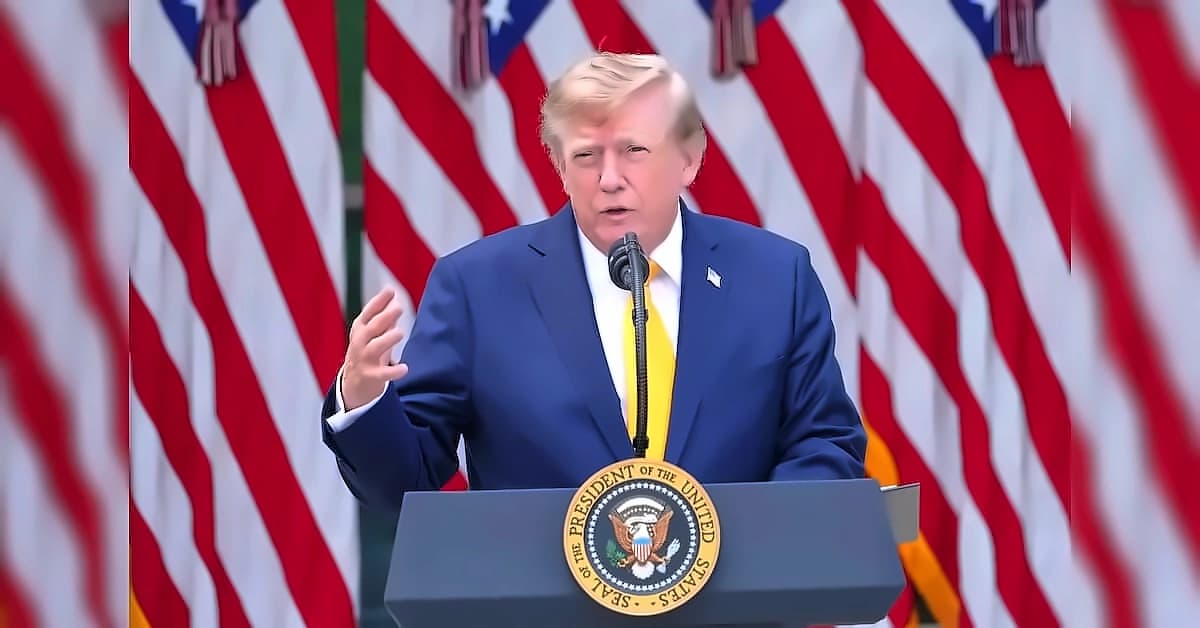
President Trump has clarified that the Russian diesel deal is intended for global markets rather than domestic US consumption, stating 'That's a diesel deal. Not for us. That's being released into the world. That's not being released to us' during a press conference on Tuesday. 'That's a diesel deal that's going to be released into the world for the world market, because the world market suffered with high prices. And when you knock out diesel refineries, that's not a great thing. But they are not releasing it to us. They are releasing it to the entire world,' Trump explained. This clarification comes as Republicans and Democrats hit out at the deal, which Trump announced three weeks after the US Congress authorised him to impose sweeping sanctions on Russia and slapped tariffs on its key trading partners, including China and India. The accord also provoked fresh tension with Europe, where officials warned that it would bolster Moscow's war effort in Ukraine.
Trump's decision to allow Russian diesel supplies to the US and global markets could ease fuel shortages but also put pressure on Indian refiners, according to Business Standard reports. The move comes after Washington repeatedly targeted India over its purchases of Russian crude, imposing additional tariffs and empowering the US President to levy duties of up to 100 per cent on major buyers of Russian energy. Rajeev Sharan, Head of Research at Brickwork Ratings, told Business Standard that 'Washington's decision strengthened India's argument that energy security and affordability should guide purchasing decisions', noting that 'That shows energy security and affordability can outweigh sanctions, the very argument India has made.' However, he emphasized that 'the US licence is temporary, and the sanctions law, with its threat of tariffs on large buyers of Russian oil, remains in force'. Nilanjan Banik, professor of economics and finance at Mahindra University, suggested the deal could strengthen India's diplomatic position by giving New Delhi grounds to seek a waiver from the Graham Act, which permits tariffs of up to 100 per cent on significant buyers of Russian oil. The initial volumes are unlikely to bring sustained relief to prices, as analysts noted, with the first batch being small so the early effect on prices will be modest.
The G7 countries have agreed to release 100 million barrels from emergency reserves and commit to refraining from energy export bans, as reported by NDTV Profit. However, Russia's diesel export capacity faces significant constraints despite the agreement. Russia was capable of exporting about 100,000 tons of diesel per day prior to Ukrainian drone attacks on refineries that began in 2024, but in light of damage to its refineries, Russia banned diesel exports from July to meet domestic demand and extended that ban to countries without bilateral agreements until October 31. According to industry sources, Russia could produce 300,000 tons of diesel this month if a large oil refinery hit by drones in the European part of the country were to restart. Global daily diesel consumption is forecast to be close to 29 million barrels, according to the International Energy Agency (IEA), as reported by The Times of India. Russian Deputy Prime Minister Alexander Novak said monthly diesel exports of 3 million tons — near levels seen before Ukraine's drone campaign — will only be possible after December. Bloomberg geoeconomics analyst Alex Kokcharov noted that 'There is no indication that any diesel is making its way to the US just yet', and 'Given questions around the legality of easing sanctions and Russia's own export capacity, it's not clear this will result in any net increase to global diesel supplies'.
Crude oil futures traded lower on Monday morning following Trump's energy ceasefire announcement, with Brent crude futures falling $1.54, or 1.47%, to $103.18 a barrel by 7.24 am IST, and US West Texas Intermediate (WTI) crude declining by the same amount, or 1.68%, to $90.31 a barrel, as reported by The Times of India. October crude oil futures were trading at ₹8,675 on Multi Commodity Exchange (MCX) against the previous close of ₹8,881, down by 2.32%, and November futures were trading at ₹8650 against the previous close of ₹8828, down by 2.02%. The price decline reflects targeting of product shortages, which tend to move refining margins more than crude itself. Brent crude futures settled down 38 cents, or 0.38%, at $100.20 per barrel and West Texas Intermediate (WTI) crude futures fell $1.16, or 1.3%, to settle at $88.28 per barrel on Thursday, according to BigGo Finance. However, unfortunately for Trump, even if Russian diesel reaches the global market in the coming weeks, it probably won't offer much relief for American farmers and truckers before the midterms. The first release of 2.25 million barrels in October is 1.4 million barrels less than American consumers used in a single day as of early in the month, and shipments from Russia to the East Coast typically take more than two weeks, and record-high shipping costs would also likely push prices higher. With mid-term election due on 3 November, Trump is under immense pressure to lower fuel costs and reverse the electoral fortunes of the Republicans who are poised to lose badly.
By rough estimate, 100 million barrels represents about a day of global consumption, according to NDTV Profit. The Strait of Hormuz remains the decisive factor, since a reopening would outweigh the new supply streams combined. The current situation is complicated by the US and Israel launching war against Iran on Feb 28, prompting Tehran to respond with missile and drone attacks across the region and effectively closing the Strait of Hormuz. Attacks on tankers passing through the Strait of Hormuz have also increased this month, threatening to disrupt the recovery in Middle Eastern crude exports seen in September. China is set to resume refined fuel exports after a brief halt during the Golden Week holiday, but its approved October exports of diesel, gasoline and jet fuel, at around 3.7 million metric tons, are down sharply from a year earlier and lower than the more than 4 million approved for September. The Russian volumes depend on refineries damaged by Ukrainian strikes, and the licence expires in April 2027, which may deter long-term contracts. Russia's economy has lost 1 per cent of GDP, around $26.6 billion, due to Ukrainian strikes on oil refineries, according to Russian President Vladimir Putin, as reported by Reuters.