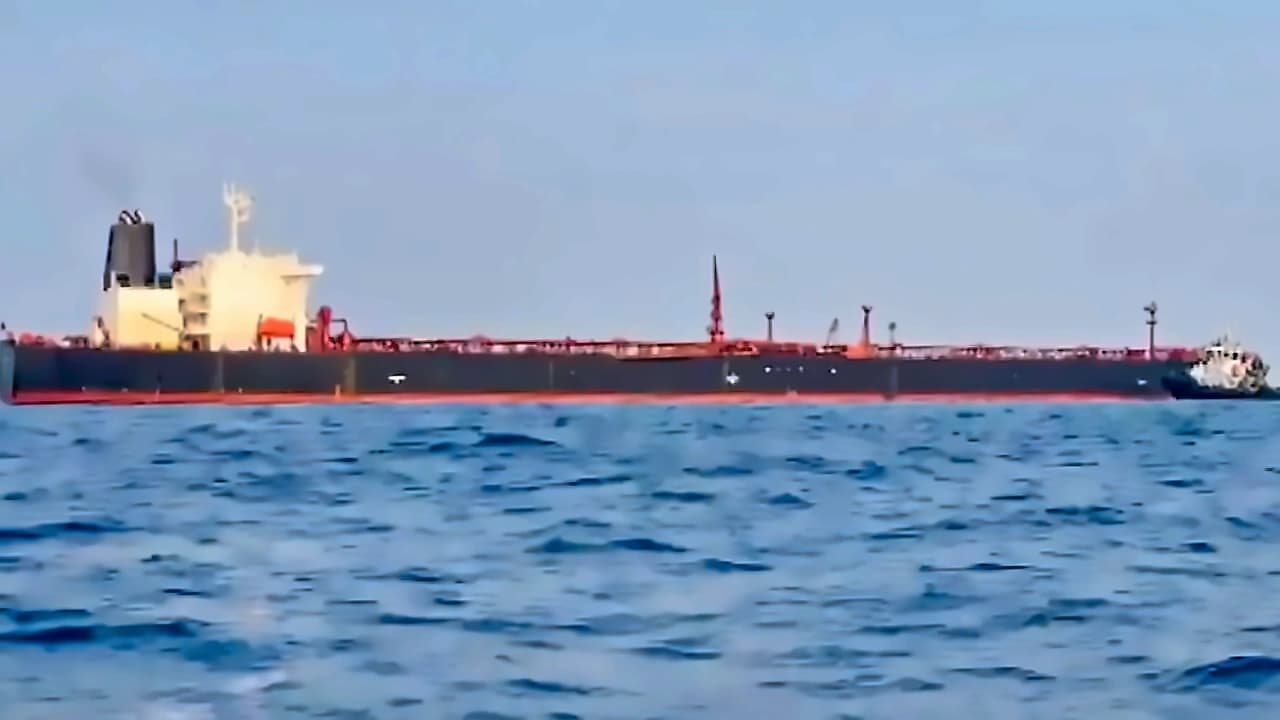
External Affairs Minister S. Jaishankar has reaffirmed India's firm stance on Russian oil purchases during his recent visit to Kyiv, Ukraine. Speaking on September 3, Jaishankar made clear that 'this conflict, which is today in its fifth year, will not dissolve because somebody is buying or not buying oil or alumina or minerals or metals'. As reported by Megh Updates, he emphasized that 'the Russia-Ukraine war would instead be solved through dialogue, diplomacy and negotiations', adding that India would encourage such an approach. The minister stressed that India's energy security and the challenge of ensuring fuel supplies for its 1.4 billion people remained important national priorities. Jaishankar also underlined that 'India has its perspective, which I expect you to respect' when responding to questions about potential US tariff threats, signaling India's determination to protect its energy independence regardless of external pressure.
Russian Ambassador to India Denis Alipov has strongly defended India's continued purchases of Russian crude oil amid escalating US tariff threats. According to reports from DD News, Alipov stated that 'India does not buy Russian oil for the sake of helping Russia. It is buying oil for itself and its own national development'. The Russian envoy's remarks came as Western regulatory scrutiny intensifies and the threat of secondary sanctions looms over countries conducting business with major Russian energy suppliers. Alipov emphasized that 'India has in the past shown that its able to stand its ground and defend its national interests' when speaking to ANI news agency, describing tariff threats as 'punitive pressure tactics' by Western coalitions. In an interview with Asian News International, Alipov highlighted that 'the question is — how confident is India? India has shown that it's able to stand its ground and defend its national interests' and warned that 'those who impose sanctions and tariffs have taken the path of pressure tactics instead of honest cooperation, which prevents those countries from offering a better deal to India in oil than us'. He argued that 'the world will not cope if Russian oil is excluded. The energy markets cannot afford that. Russian oil will stay in the market for India and other countries'. Alipov also specifically addressed concerns about funding the war in Ukraine, stating that 'India buys the commodity to meet its own energy requirements and not to help Moscow fund the war in Ukraine'. His latest remarks came amid intensifying Western regulatory scrutiny and secondary sanctions risks against countries dealing with major Russian energy suppliers.
The United States has imposed significant tariffs on Indian goods over Russian energy purchases, including a 25% duty last year that was withdrawn earlier this year in February after New Delhi and Washington reached a framework for an interim agreement for a trade deal. However, the tariff threat remains, with a Bill tabled in the US Senate which proposes imposition of tariffs of up to 100% on all goods from the five largest importers of Russian crude oil. India currently ranks as the second largest buyer of Russian crude oil, making it a primary target for these proposed sanctions. As per Asian News International, the sanctions bill authored by the late Senator Lindsey Graham would give President Donald Trump authority to levy 100% tariffs on the top five buyers of Russian crude and natural gas, as well as the top five countries aiding Russia in evading energy sanctions. China, India and Turkey are the largest purchasers of Russian petroleum products. As per ANI, Alipov described these tariff threats as 'punitive pressure tactics' by Western coalitions, warning that such measures were undermining constructive global engagement. The ambassador emphasized that 'the tariffs are also related to the cooperation between Russia and India in oil supplies' and that these interests are paramount for India. Alipov also criticized the timing of these measures, stating that 'those who impose sanctions and tariffs have taken the path of pressure tactics instead of honest cooperation, which prevents those countries from offering a better deal to India in oil than us'. He warned that 'the world will not cope if Russian oil is excluded. The energy markets cannot afford that. Russian oil will stay in the market for India and other countries'.
According to a report by the Global Trade Research Initiative (GTRI), Russia accounted for 30.3% of India's crude oil imports in FY2026. As reported by ANI, India purchased $40.8 billion worth of Russian crude oil out of total crude oil imports worth $134.7 billion. The ambassador emphasized that Moscow remained committed to meeting India's energy requirements and was prepared to supply as much oil as New Delhi needed. India's purchase of Russian crude oil surged after 2022 following G7 and EU price caps on energy from Moscow. The Ministry of External Affairs subsequently reiterated that 'our national interest guides our energy purchases, and the imperative for us to meet the energy requirements of 1.4 billion people is what guides us, and that will continue to be our policy'. Alipov further emphasized that 'we would be ready to supply as much oil as India needs' and criticized Western sanctions as 'pressure tactics' that prevent better deals for India. For India, Russian oil has become an important source of crude for domestic refiners, particularly amid disruption and uncertainty in global energy markets.
During his bilateral visit to Kyiv, Jaishankar met with Ukrainian Foreign Minister Andrii Sybiha and later called on Ukrainian President Volodymyr Zelenskyy. As reported by Megh Updates, the discussions focused on the wider consequences of the Russia-Ukraine war, particularly attacks affecting commercial shipping in the Black Sea. Jaishankar noted that Indian seafarers serve on ships flying many flags and have been among those affected by the conflict, with five Indian seafarers killed since July 2026 amid exchanges of fire between Russia and Ukraine. The minister emphasized that 'the safety of civilian shipping and the wider impact on global energy and food security are important concerns for India'. Zelenskyy welcomed Modi's call to move from 'endless war' towards an 'end of war' and said Ukraine 'stands ready for diplomacy'. Beyond the war, Jaishankar and Sybiha discussed strengthening India-Ukraine bilateral cooperation in infrastructure, pharmaceuticals, agriculture, fertilisers, machinery, chemicals, consumer goods, technology and digitalisation. Jaishankar noted that bilateral trade had faced disruption during the past four years because of the war and logistical challenges, but said there had also been resilience and new possibilities. He invited Sybiha to India for the next meeting of the Intergovernmental Commission, signalling that despite differences over Russian oil and the war, India intends to deepen its engagement with Ukraine while continuing to safeguard its energy security and independent foreign policy.
The Ministry of External Affairs has reiterated that India's energy sourcing policy would continue to be guided by national interest and the country's energy requirements. MEA spokesperson Randhir Jaiswal stated that 'our sourcing decisions are based on the need to provide for our population and maintain energy security'. As per ANI, Alipov defended India's independent foreign policy, saying New Delhi had demonstrated its ability to protect its national interests despite external pressure. 'The question is — how confident is India? India has shown that it's able to stand its ground and defend its national interests' Alipov emphasized, adding that 'the world will not cope if Russian oil is excluded. The energy markets cannot afford that. Russian oil will stay in the market for India and other countries'. He warned that 'the world will not cope if Russian oil is excluded. The energy markets cannot afford that. Russian oil will stay in the market for India and other countries'. India has consistently maintained that its crude oil purchases are guided by national interest, energy security and affordability, as well as the need to meet the energy requirements of its 1.4 billion people. Jaishankar's recent visit to Ukraine reflects India's effort to maintain communication with both Russia and Ukraine while protecting its independent foreign and energy policy, having accompanied PM Modi during the Prime Minister's visit to Ukraine in August 2024, but his September 3 visit was his first dedicated bilateral visit to Ukraine as External Affairs Minister. The envoy's comments come after President Vladimir Putin and Prime Minister Narendra Modi met last week at the Shanghai Cooperation Organisation in Bishkek, and are due to meet again at the Brics summit in India on the weekend.