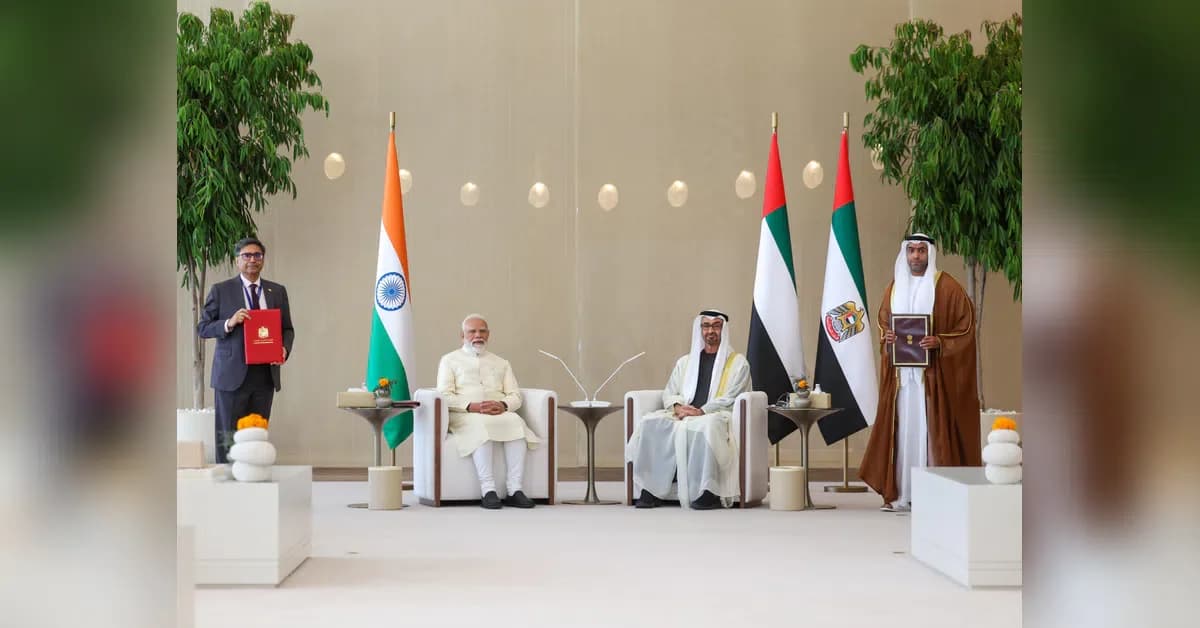
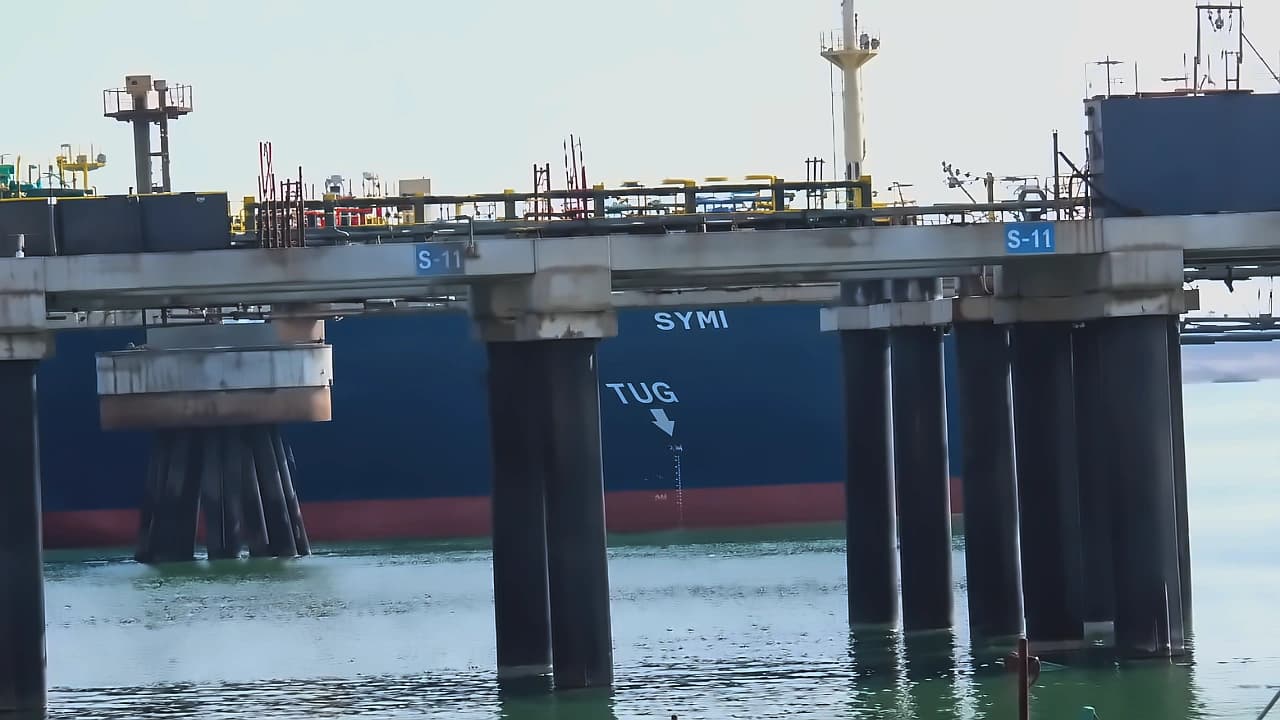
India and the UAE have signed comprehensive agreements on energy cooperation, with the UAE committing to store up to 30 million barrels of crude oil in India's Strategic Petroleum Reserve. According to Foreign Secretary Vikram Misri, this initiative aims to strengthen energy cooperation and enhance India's energy security. The agreements include enhanced UAE participation in Indian strategic petroleum reserves, establishment of strategic gas reserves in India, and long-term LPG offtake supply agreements. These energy cooperation measures were initiated between Indian energy sector companies and UAE entities, primarily the Abu Dhabi National Oil Company. The agreement also includes the possibility of storing crude oil in Fujairah, UAE, as part of India's strategic petroleum reserve system, with both countries discussing potential collaboration in Liquid Natural Gas (LNG) and Liquid Petroleum Gas (LPG) storage facilities in India.
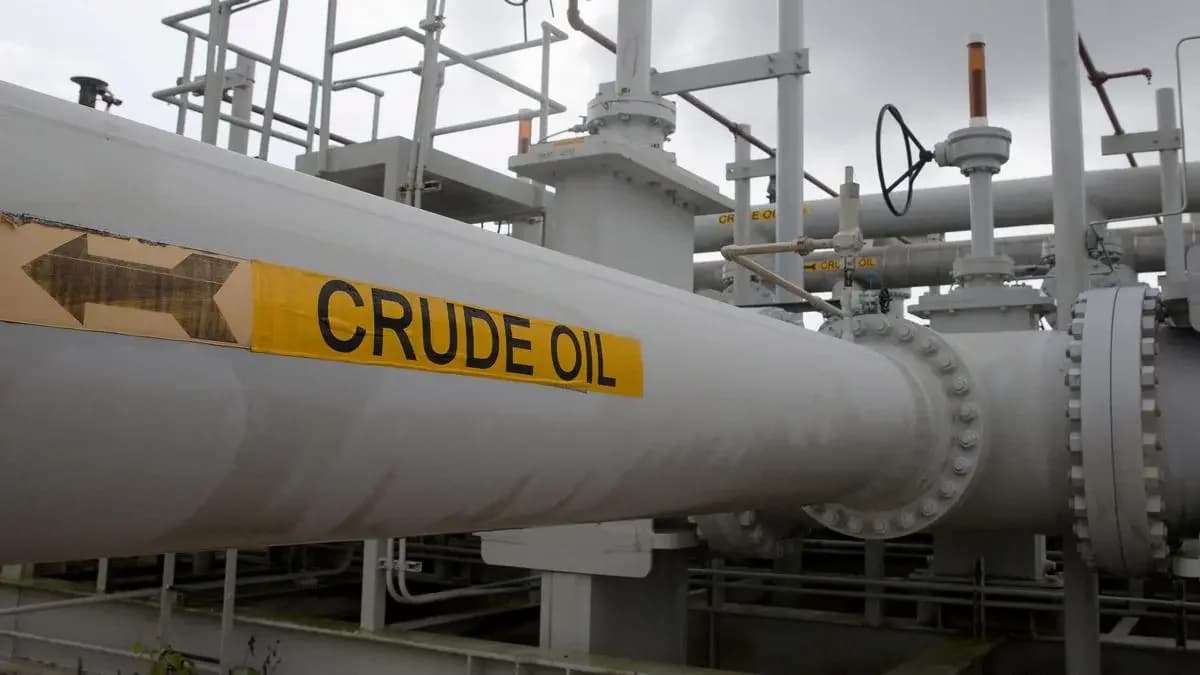
India's Strategic Petroleum Reserves are government-maintained emergency stockpiles created to protect countries from supply shocks. The reserves are stored in giant underground rock caverns carved deep beneath the earth near coastal areas, following the principle of hydrostatic containment. These caverns are considered among the safest storage systems because they are naturally protected from surface attacks, natural disasters and evaporation losses. India's Phase I SPR facilities are located at Visakhapatnam in Andhra Pradesh, and Mangaluru and Padur in Karnataka, together storing around 5.33 million metric tonnes of crude oil, equivalent to nearly 39 million barrels. This provides roughly 9.5 days of India's crude oil requirement during emergencies. The government is expanding under Phase II with new facilities planned at Chandikhol in Odisha and expansion at Padur, expected to provide nearly 12 more days of emergency coverage.
The UAE has signed new investment commitments totalling USD 5 billion during the visit, as reported by Foreign Secretary Vikram Misri. These investments include Emirates NBD Bank's investment in RBL Bank in India, Abu Dhabi Investment Authority's investment in the National Infrastructure Investment Fund, and International Holding Company's investment in Saman Capital of India. The UAE has traditionally been India's seventh largest investor over the last 25 years, highlighting the continued strength of bilateral economic ties.
The UAE's commitment to store 30 million barrels in India's Strategic Petroleum Reserve provides India with valuable stability and time to aggressively scale up renewables, electric mobility (private and public), metro and rail networks. According to recent reports, India has scaled non-fossil capacity from 80 GW to over 283 GW since 2014, demonstrating significant progress in energy diversification. Under the NGHM initiative, 8,000 TPA of green hydrogen capacity has been commissioned, targeting 5 million metric tonnes per year by 2030. The recent interventions are designed to systematically lower dependence on crude oil imports over the coming years, positioning India for a more sustainable energy future while maintaining current energy security requirements. The oil storage agreement comes at a time of growing geopolitical uncertainty in West Asia and rising concerns over energy supply disruptions linked to the Iran-US-Israel conflict.
The two countries concluded a framework on strategic defence partnership building on initial steps taken during UAE President Sheikh Mohamed bin Zayed's visit to India in January. According to Misri, the partnership will strengthen collaboration in defence manufacturing, technology, and equipment. In maritime cooperation, agreements were signed between Cochin Shipyard Limited and Drydocks World of Dubai for setting up a ship repair cluster at Vadinar in India and a centre of excellence for skill development in the maritime field.