India and the United Arab Emirates have agreed to establish a strategic defence partnership framework during Prime Minister Narendra Modi's visit to the UAE, as reported by the Indian foreign ministry. The partnership encompasses deepening defence industrial collaboration, cooperation on innovation and advanced technology, training, exercises, maritime security, cyber defence, secure communications and information exchange. This development comes amid the ongoing Iran war, which has roiled global energy markets with the closure of the Strait of Hormuz, disrupting transportation and business across the region. The UAE's decision last month to leave OPEC is expected to boost its output and help importers such as India, while the fragile ceasefire last month has provided some relief to regional stability.
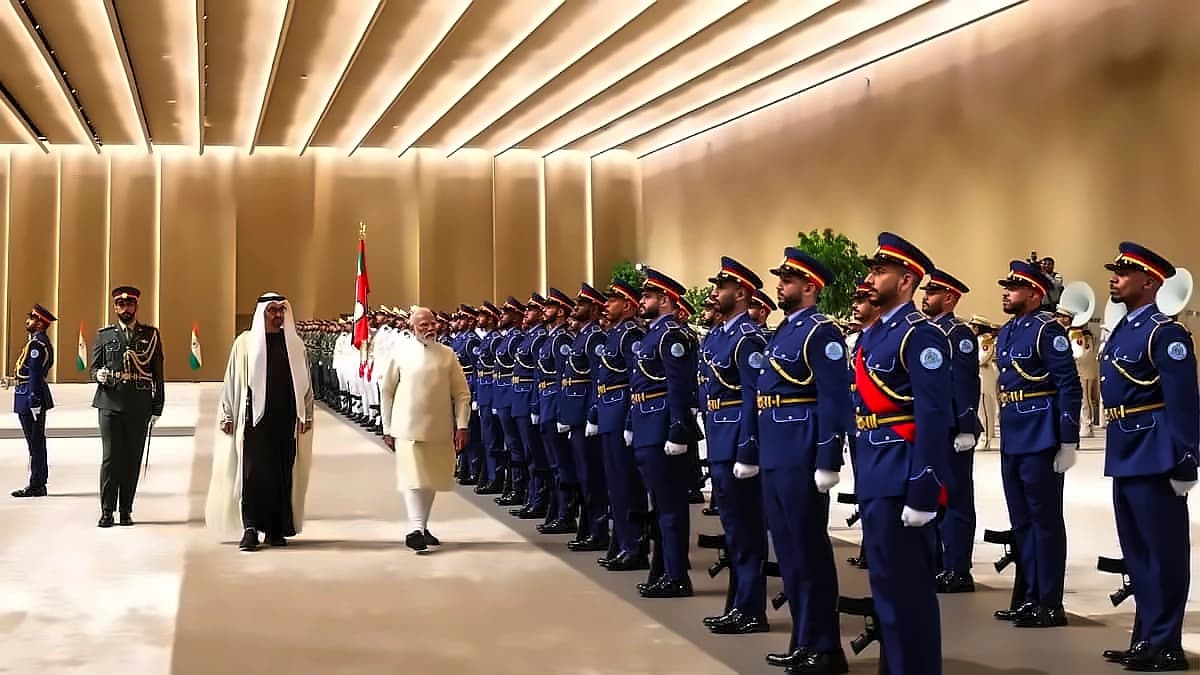
Under the new Strategic Collaboration Agreement, the UAE will expand its participation in India's petroleum storage programme, reinforcing emergency fuel buffers and improving resilience against global supply shocks. The oil pact announced on Friday includes a potential increase of ADNOC's crude oil storage in India for up to 30 million barrels, with Abu Dhabi's state oil firm confirming the deal also explores potential crude storage in the UAE's Fujairah as part of India's strategic reserve. ADNOC has also agreed to explore expanded LPG supply and trading opportunities with Indian Oil Corporation. Officials said the arrangement is aimed at ensuring uninterrupted crude availability at a time when tensions in key shipping corridors such as the Strait of Hormuz continue to pose risks to global oil flows. Foreign Secretary Vikram Misri announced that agreements have been initialled with ADNOC to expand UAE crude storage in India's Strategic Petroleum Reserves to 30 million barrels, representing a significant scale-up from the earlier partnership.
Beyond crude oil storage, India and the UAE have agreed to deepen cooperation in natural gas and LPG infrastructure. A separate agreement between Indian Oil Corporation and ADNOC will secure long-term LPG supply arrangements, strengthening India's access to critical fuel imports. The two sides also discussed the creation of strategic gas reserves and expanded LNG and LPG storage projects in India. The UAE remains one of India's most important energy suppliers, consistently ranking among the top five sources of crude oil and maintaining long-term fuel contracts. New Delhi and Abu Dhabi have also signed a $3 billion deal for India to buy LNG from the UAE, its third-largest trading partner, in January, as well as a letter of intent to work towards forming a strategic defence partnership.
In addition to energy cooperation, the visit resulted in commitments of approximately $5 billion in investments from the UAE into India's banking, infrastructure, and financial sectors. The Indian ministry announced UAE investments worth $5 billion on Friday, pointing to past deals including Emirates NBD's acquisition of a 60% stake in RBL Bank last year for $3 billion, and Abu Dhabi's IHC $1 billion Sammaan investment. New agreements were also signed covering defence cooperation, maritime security, shipbuilding, and advanced computing technologies, reflecting a widening strategic partnership beyond hydrocarbons. ADNOC managing director and CEO Sultan Ahmed Al Jaber noted that "India's scale and growth trajectory make it one of the defining energy markets of our time," emphasizing the critical importance of the UAE-India energy partnership.