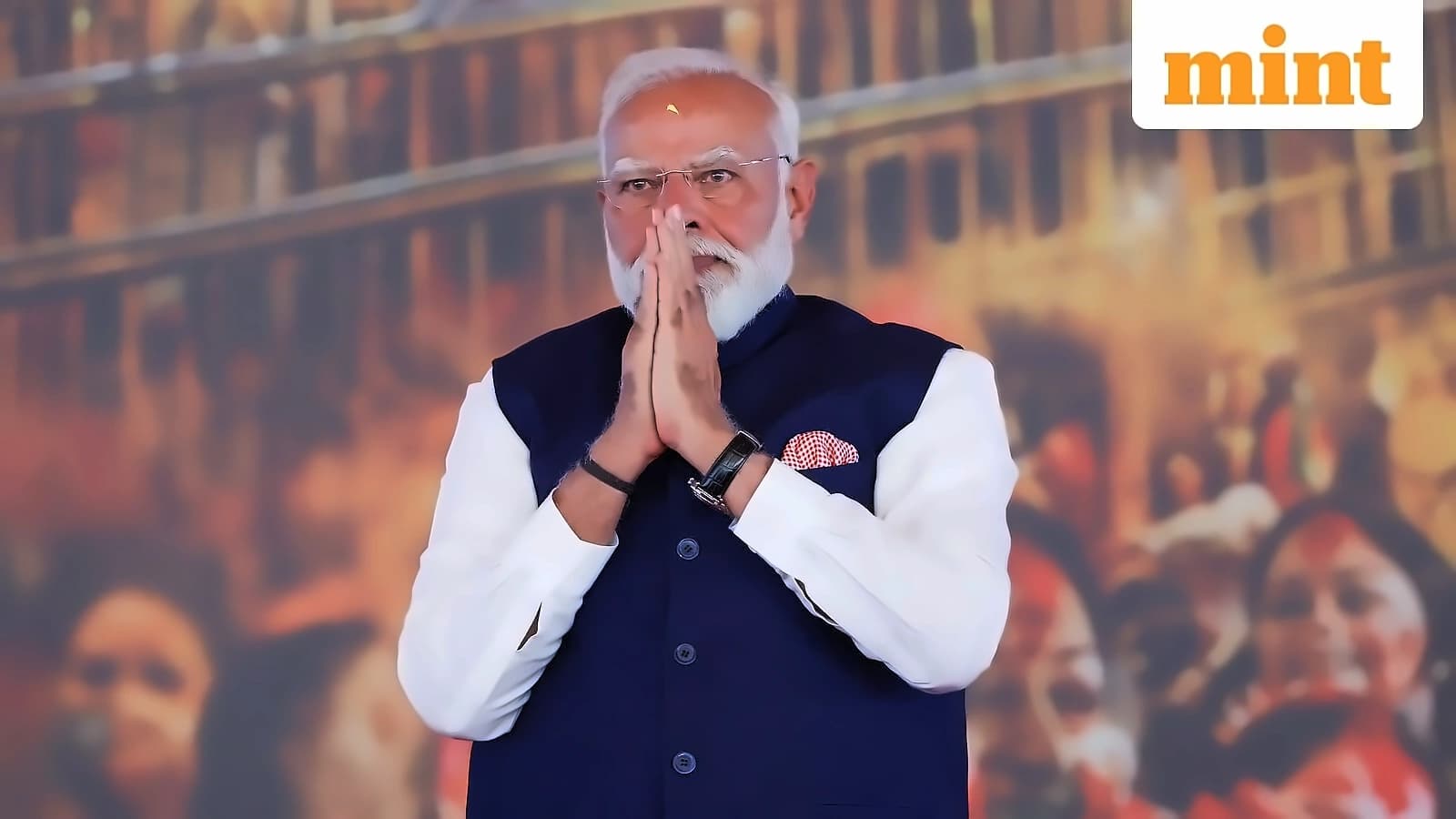
Prime Minister Narendra Modi's visit to the United Arab Emirates has secured at least $5 billion in investment commitments, according to a statement by the Ministry of External Affairs (MEA). As an outcome of discussions between PM Modi and UAE President Sheikh Mohamed bin Zayed Al Nahyan, Abu Dhabi Investment Authority (ADIA) and the National Infrastructure & Investment Fund (NIIF) of India will explore investments of up to $1 billion in India's infrastructure sector. Additionally, Emirates New Development Bank (ENDB) will invest $3 billion in RBL Bank of India, and the International Holding Company (IHC) will invest $1 billion in Sammaan Capital of India, a large non-banking financial company. As per the PMO statement, these investments underscore UAE's sustained and long-term commitment to India's growth story, while strengthening the bilateral strategic investment partnership.
The discussions led to the signing of a Memorandum of Understanding (MoU) on strategic collaboration between Indian Strategic Petroleum Reserves Limited (ISPRL) and Abu Dhabi National Oil Company (ADNOC). This pact enables storage of ADNOC's crude oil in India's strategic petroleum reserves of up to 30 million barrels, including participation in facilities in Visakhapatnam, Andhra Pradesh, and development of reserve facilities in Chandikhol, Odisha. The leaders agreed to promote new initiatives for a comprehensive energy partnership, with the UAE maintaining its role as an important partner in India's energy security, including crude oil, LNG and LPG supplies. The UAE was India's fourth largest source of crude oil last year, meeting nearly 11% of India's requirement, while the UAE is India's largest source of LPG, catering to nearly 40% of the requirement. The MoU also provides for potential storage of crude oil in Fujairah, UAE, to form part of the Indian strategic petroleum reserve, and potential collaboration in liquefied natural gas (LNG) and liquefied petroleum gas (LPG) storage facilities in India.
The two sides signed a framework for a strategic defence partnership covering key areas including defence industrial collaboration, innovation and advanced technology, training, exercises, maritime security, cyber defence, and secure communications. The strategic defence partnership stipulates that both nations will deepen defence industrial collaboration and cooperation on innovation and advanced technology, training, exercises, maritime security, cyber defence, secure communications and information exchange. The leaders acknowledged the steady and strong bilateral defence cooperation as an important pillar of the Comprehensive Strategic Partnership. They welcomed the signing of the Framework for the Strategic Defence Partnership between the two countries during the visit. Under this framework, the two sides have agreed on deepening defence industrial collaboration and cooperation on innovation and advanced technology, training, exercises, maritime security, cyber defence, secure communications and information exchange. Another crucial outcome was an MoU between Cochin Shipyard Limited (CSL) and Drydocks World (DDW) for setting up a ship repair cluster at Vadinar in Gujarat, including offshore fabrication, under the Maritime Development Fund Scheme. CSL and DDW also signed an MoU with the Centre of Excellence in Maritime & Shipbuilding (CEMS) to promote skill development in ship repair, aiming to enhance Indian maritime workforce capabilities.
Modi's visit to the UAE came amid heightened tensions between Abu Dhabi and Tehran, with the UAE recently coming under Iranian missile and drone attacks. Addressing President Sheikh Mohamed bin Zayed Al Nahyan, Modi expressed India's support for efforts to restore peace and stability in the region, stating that India stands 'shoulder to shoulder' with the UAE and is ready to extend all possible support to bring peace in West Asia. The meeting comes after the UAE accused Iran of targeting its eastern coast emirate of Fujairah with drones and missiles, setting an oil refinery on fire and injuring three Indian workers. Modi condemned the strikes in a post on X and said during the meeting that he "renewed my emphasis on our condemnation of the attacks that targeted the United Arab Emirates in the strongest terms". There are around 4.3 million Indians living or working in the UAE, a country that has been heavily targeted in rocket and drone strikes by Iran during the war. Modi also noted that the impact of the West Asian conflict is being felt globally, emphasizing that India is ready to extend all possible support to bring peace in West Asia.
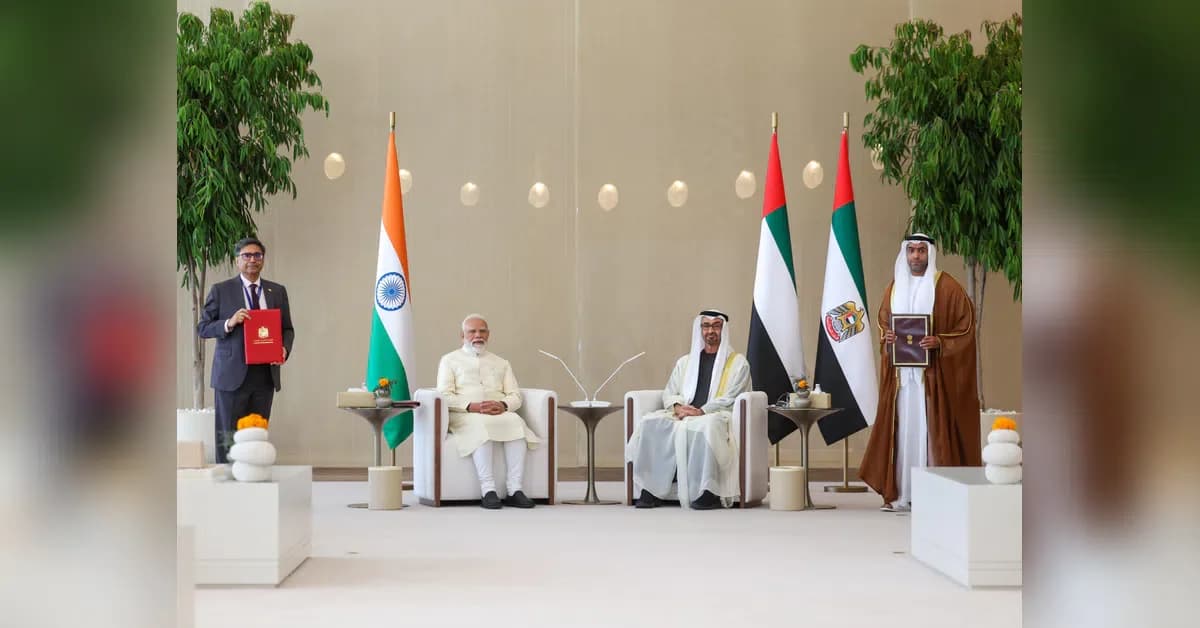
The agreements were signed during a meeting between India's Modi and UAE President Sheikh Mohamed bin Zayed Al Nahyan in Abu Dhabi, the latest in a series of steps to strengthen ties between the two countries. Sheikh Mohamed bin Zayed said in a post on X that talks with Modi explored "measures to give new momentum to cooperation in energy, technology, and other priority sectors". India, like many countries across the world, has felt the bite of rising fuel crisis due to the US-Israeli war on Iran and the continued blockade of the Strait of Hormuz. Recently, India was forced to raise its fuel prices by 3 percent. With 90 percent of its oil imported and roughly half passing through the Strait of Hormuz, India, the world's third-largest oil importer, has been among the hardest hit by the resulting energy crisis. The UAE's strategic location and energy partnerships become crucial for India's energy security amid these global tensions. The government has also signed a bilateral trade deal with the UAE regarding oil imports, with crude petroleum and petroleum products accounting for 37% of total imports in FY26.