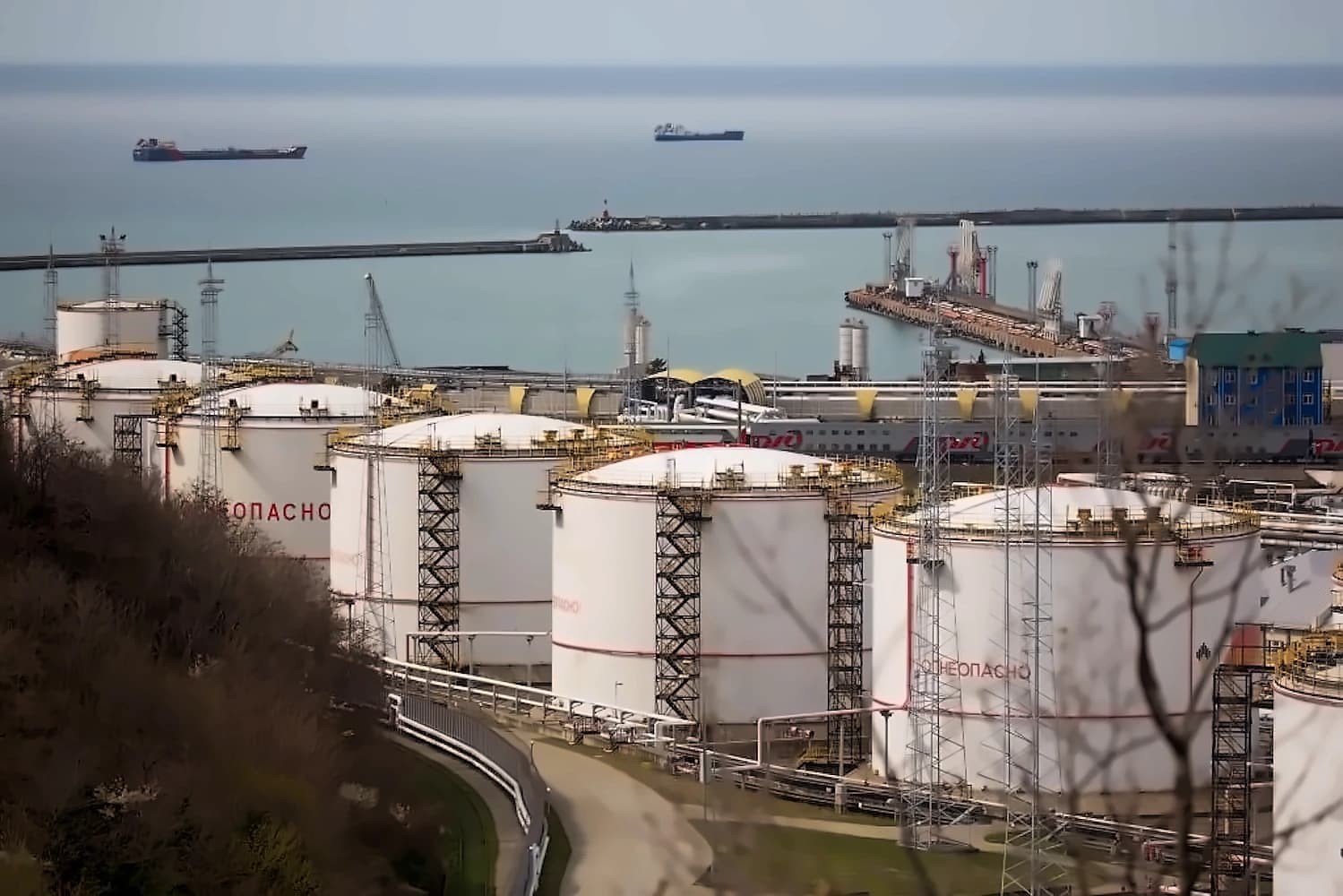
The United Arab Emirates has completed nearly 50% of a second pipeline designed to bypass the Strait of Hormuz, according to Abu Dhabi National Oil Company CEO Sultan Ahmed Al Jaber. Speaking at the Atlantic Council, Al Jaber announced that the new pipeline will double ADNOC's export capacity through Fujairah, a port on the Gulf of Oman just beyond the strait. The pipeline is expected to become operational in 2027. The development comes as the ongoing blockade of the world's most critical oil chokepoint continues to drain global energy supplies at a pace never seen before. Al Jaber explained that the project is part of a long-term strategy to strengthen energy security by reducing dependence on vulnerable maritime routes, particularly the Strait of Hormuz, through which a significant portion of global oil flows.
The development comes as Iran has blockaded the Strait of Hormuz since early March, choking off oil and gas exports from the UAE and other Gulf producers. According to reports, more than one billion barrels of oil have been lost since the strait's closure, with nearly 100 million additional barrels lost every week it remains shut. Before the war, roughly 20% of the world's oil supply passed through the narrow waterway daily, with around 20 million barrels of oil per day typically passing through the waterway. The announcement comes against the backdrop of one of the most severe energy crises in modern history, with the blockade representing a significant disruption to global energy flows. Al Jaber warned that the disruption has already resulted in the loss of over one billion barrels of oil from global supply, with ongoing weekly losses estimated at around 100 million barrels.
Al Jaber revealed that it would take at least four months to ramp oil flows back up to 80% of normal levels even if the conflict ends immediately. Full normalisation of oil flows will not happen until the first or second quarter of 2027. The UAE currently operates an existing pipeline — the Abu Dhabi Crude Oil Pipeline — running to Fujairah, but it is estimated to handle only 1.5-1.8 million barrels per day, a fraction of what previously moved through Hormuz. This existing pipeline capacity is significantly inadequate to meet the UAE's export requirements during the crisis period. Al Jaber also highlighted concerns about global spare capacity, estimating it at around three million barrels per day, while stating it should ideally be closer to five million barrels per day to ensure market stability.
The crisis has created significant ripple effects across global energy markets, with Brent crude prices remaining significantly elevated compared to pre-closure levels. Al Jaber described the situation as a systemic supply chain shock, affecting everything from food systems to aviation and electronics. The impact extends beyond oil to include liquefied natural gas, jet fuel, fertilizers, ammonia, urea, aluminium, helium, critical minerals, plastics and broader global trade flows. He emphasized that energy security is no longer defined solely by production capacity, but increasingly by the reliability of transport routes, access to markets, storage systems and redundancy in global supply chains. The UAE has increasingly rerouted exports through Fujairah to bypass the strait, strengthening its position as a key global energy exporter with diversified logistics routes.