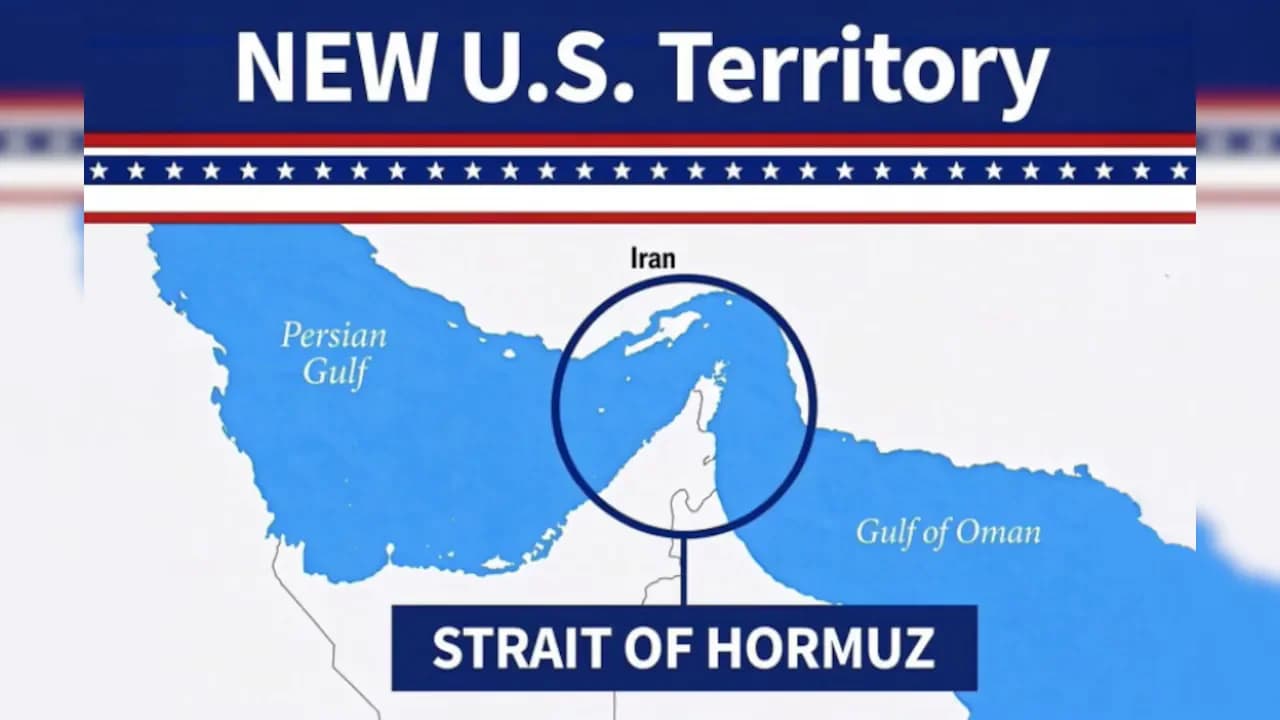
Iran has officially laid out its conditions for reopening the Strait of Hormuz, with top security official Mohsen Rezaei announcing the demands on Wednesday. As reported by Reuters, Rezaei, secretary of Iran's Supreme National Security Council, said Tehran was preparing a list of conditions after mediators asked it to set them out. Ending the regional war was among the key demands, with Rezaei making the remarks in an interview with Al Manar TV, the Hezbollah-affiliated broadcaster. Iran and Oman are finalizing details of a shipping corridor arrangement through the strait, with parts of the route passing through Omani waters and parts through Iranian waters, according to Rezaei. Ships would use a designated central channel if Washington met Tehran's conditions, as reported by Reuters.
US President Donald Trump has announced that the US Navy has removed or detonated all mines from international waters in the Strait of Hormuz, according to his latest Truth Social post. Trump stated he had been informed by the US Navy that 'all mines have been removed and/or detonated' from the strategically important waterway. In his latest announcement, Trump emphasized that 'there is a Zero Tolerance policy on mine placement in full force and effect' and warned that any ship or boat placing new mines will be destroyed. This development represents a significant escalation in US military operations in the region, as the Navy appears to have successfully cleared the waterway of Iranian naval mines that had previously disrupted shipping operations. Trump has also revealed that the United States is watching 'every square inch' of the Strait of Hormuz through its Space Force, as reported by Business Standard, demonstrating enhanced surveillance capabilities.
The Iranian Revolutionary Guards have reportedly agreed with Oman on sharing control of the strait and its revenues, according to a senior official who spoke to Reuters. An IRGC spokesperson reportedly said Iran would not allow the strait to reopen unless the US lifted what Tehran calls a blockade of Iranian ports, paid compensation, and removed sanctions. The arrangement would allow ships to use a designated central channel if Washington met Tehran's conditions. A senior official told Reuters that Iran and Oman were still finalizing details of the arrangement, indicating that the logistics of the shared control mechanism are being worked out between the two countries.
Trump has provided updated figures on oil transit through the Strait of Hormuz, claiming 24 ships passed through the strait the previous night and that millions of barrels of oil are coming out of the strait every day. Speaking at the White House, Trump disputed any disruption, stating 'The Strait of Hormuz is open. We have control, and we have the blockade.' However, this contradicts Iranian claims about the strait's operational status. As reported by Reuters, Trump's claims come despite Iran's assertions about the strait's current condition, highlighting the ongoing dispute over the waterway's operational status.
Speaking on the Glenn Beck programme, Trump questioned Iran's claims about Supreme Leader Mojtaba Khamenei's death, stating he does not believe the Iranian leader is dead despite reports of serious injuries. 'I don't think Mojtaba Khamenei is dead. He was very seriously wounded, left side of his body, the arm, the leg, the whole thing was seriously wounded. But I don't think he is dead,' Trump said. He suggested that if Khamenei were dead, Iran would be putting on a 'pretty good show' by continuing to reference obtaining his final approval for potential talks. During the South Carolina rally, Trump indicated that Iran wants to make a deal 'so badly' but that the US does not know if it wants one, according to NDTV Profit reports. Iranian officials have previously warned nations against participating in the US campaign, saying countries that impose economic restrictions on Iran could be treated as enemies.