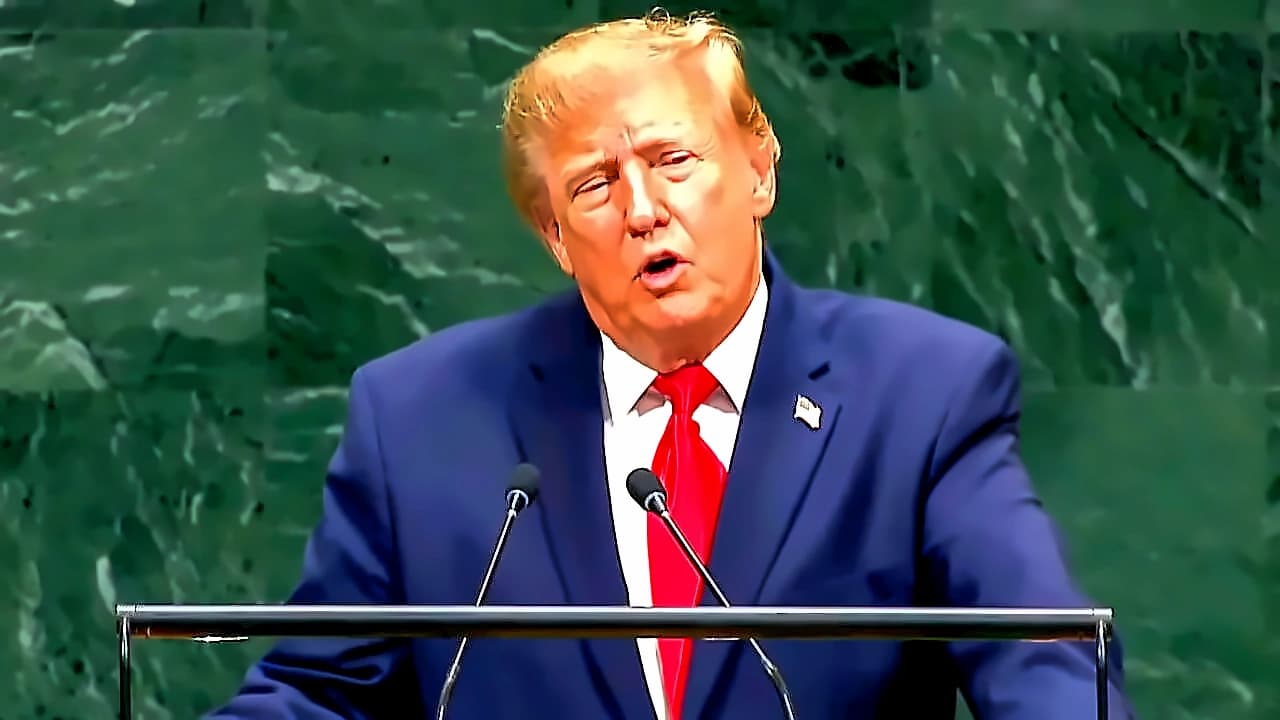
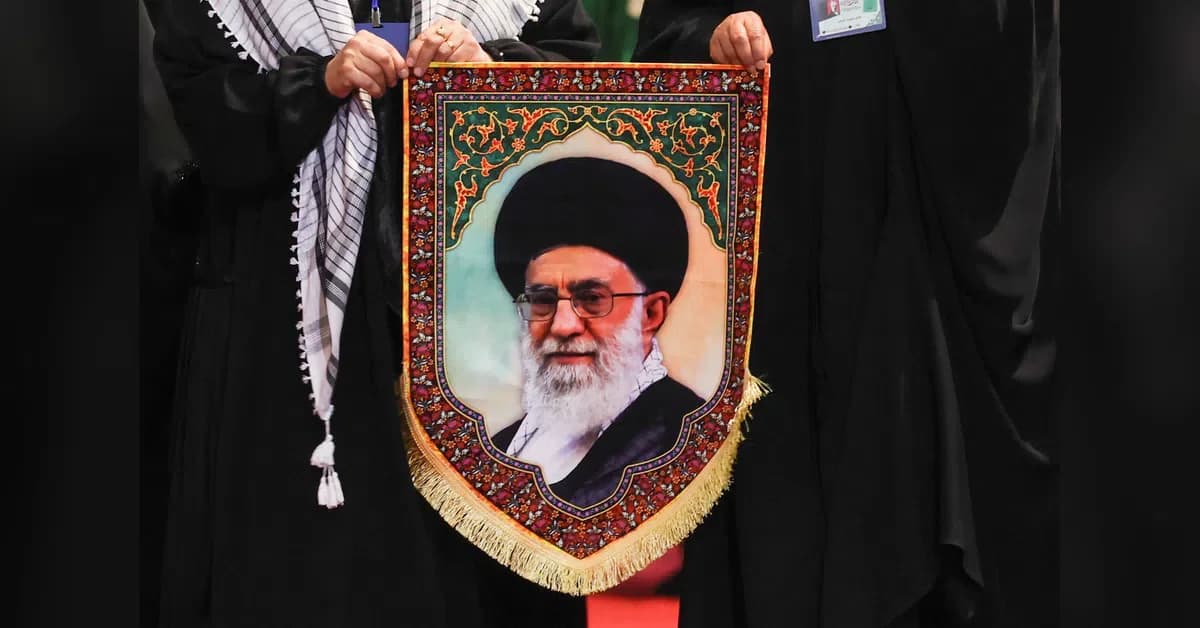
US President Donald Trump and Iranian President Masoud Pezeshkian engaged in dueling speeches at the UN General Assembly, with Trump threatening to 'annihilate' Iran while Pezeshkian insisted Tehran would never surrender to the US. The diplomatic contact in New York caused significant backlash in Iranian media associated with hardliners. An opinion piece run by the semi-official Tasnim news agency, associated with the Revolutionary Guards, criticized Foreign Minister Abbas Araqchi for having contacts with Trump officials, calling it 'a major gift to Trump' as Iran had already conveyed its terms. According to Reuters, Iranian sources indicated the delegation had been ordered not to meet the Americans face-to-face by the Supreme National Security Council, a body that includes figures selected by Ayatollah Mojtaba Khamenei. One Iranian journalist covering the visit told Reuters that some hardliners viewed the trip to New York itself as an insult to the memory of the slain leader, Ali Khamenei.
In a potential new flashpoint, Iran threatened to act against its neighbours if they abide by new US sanctions intended to ground Iranian civilian aircraft worldwide. As reported by Business Standard, Mohsen Rezaei, secretary of Iran's Supreme National Security Council, told state TV that Iran would ensure neighbouring countries' airports could not function if they stop Iranian flights. Washington has said it will impose so-called secondary sanctions against any country that allows Iranian flights after Wednesday. The diplomatic opening helped keep oil prices near two-week lows, with Brent crude hovering around $100 a barrel after surging earlier this month when Yemen's Iran-backed Houthis launched a major offensive. The war, launched by Trump in February alongside Israel as 'Operation Epic Fury', has lasted nearly seven months, killing thousands of people and disrupting global energy supplies.
US President Donald Trump announced at the UN General Assembly that the United States and Venezuela have signed what he described as the 'largest oil deal in history' covering 65 billion barrels of oil. According to reports from The Times of India, Trump stated that the agreement would benefit both Venezuela and the US while helping drive down energy costs worldwide. The deal centers on Venezuela's vast oil reserves and efforts to revive its oil industry, with the two countries together possessing more than 60% of the world's oil reserves. Trump will meet with Venezuela's interim leader Delcy Rodriguez in a pull-aside meeting on Tuesday, marking the first time leaders will meet in-person since the US operation in Venezuela that captured then-President Nicolás Maduro. The meeting comes just a few weeks after the landmark oil deal, giving the US government majority control of over 65 billion barrels of proven oil reserves.
The agreement covers 17 oil fields with proven potential of 65 billion barrels, as reported by The Times of India. Venezuela's interim President Delcy Rodriguez stated that the deal aims to increase the country's oil production to 1.5 million barrels per day. The US government and an unnamed private operator in Venezuela have established a new company with rights to untapped oil fields for 100 years. The deal could bring $100 billion in investment into Venezuela's oil industry and generate more than $209 billion in taxes for Caracas. Despite current elevated oil prices, Trump insisted they are 'a transitory problem that will fade one the war ends', stating 'Oil prices will come plummeting down even lower than they were at the start of the conflict' and were 'very low in the United States. They were really low.'
Trump will meet with Ukrainian President Volodymyr Zelenskyy, who said in a social media post on Sunday that the meeting 'could change a lot,' hinting that the meeting might help push forward stalled talks to end the Russia-Ukraine war. As reported by ABC News, Zelenskyy wrote that 'the peace track is our number one priority' and there are ideas for de-escalation steps and addressing fundamental security issues – energy security, food security, and the protection of human life. The president will also meet with France's Macron and New York City's Mayor Zohran Mamdani at Gracie Mansion on Monday. On Tuesday, Trump will deliver his address to the assembly and then have meetings with global leaders, including the United Kingdom's Burnham who recently took office, and Japanese Prime Minister Sanae Takaichi. Trump will also sign a recently announced security deal with the prime ministers of Denmark and Greenland in a ceremony in New York, though details of the deal have not been provided. The deal, announced last week, came together after Trump repeatedly threatened to 'take over' Greenland by military force if necessary. Trump said Tuesday the U.S. will immediately begin the process of developing a larger military presence in Greenland including 'building two very major military bases' - under the deal, Greenland remains Denmark's territory.