Tea exports during January–April declined by 18.9%, falling from 86.08 million kg to 69.81 million kg, according to the Tea Board. However, as reported by The Hindu BusinessLine, a closer examination reveals that exports to conflict-affected regions fell by as much as 41%, significantly higher than the overall decline. Among the affected markets, exports to Iraq registered the sharpest contraction at 67%, followed by UAE at 21%. The comparatively lower decline in total tea exports suggests the Indian tea industry was able to partially offset losses in traditional West Asian markets by diversifying into alternative destinations.
Cardamom exports during January–March 2026 recorded an impressive 216.22% growth, increasing from 1,108 tonnes to 3,506 tonnes compared to the corresponding period in 2025. According to The Hindu BusinessLine, the bulk of this increase was driven by Saudi Arabia, whose imports of Indian cardamom rose by 201.39%, from 398.8 tonnes to 1,202 tonnes. The resilience of cardamom exports can largely be attributed to supply-side constraints in competing origins, particularly Guatemala, the world's largest cardamom producer, which reportedly experienced a substantial crop decline of nearly 50% due to adverse climatic conditions and pest infestations.
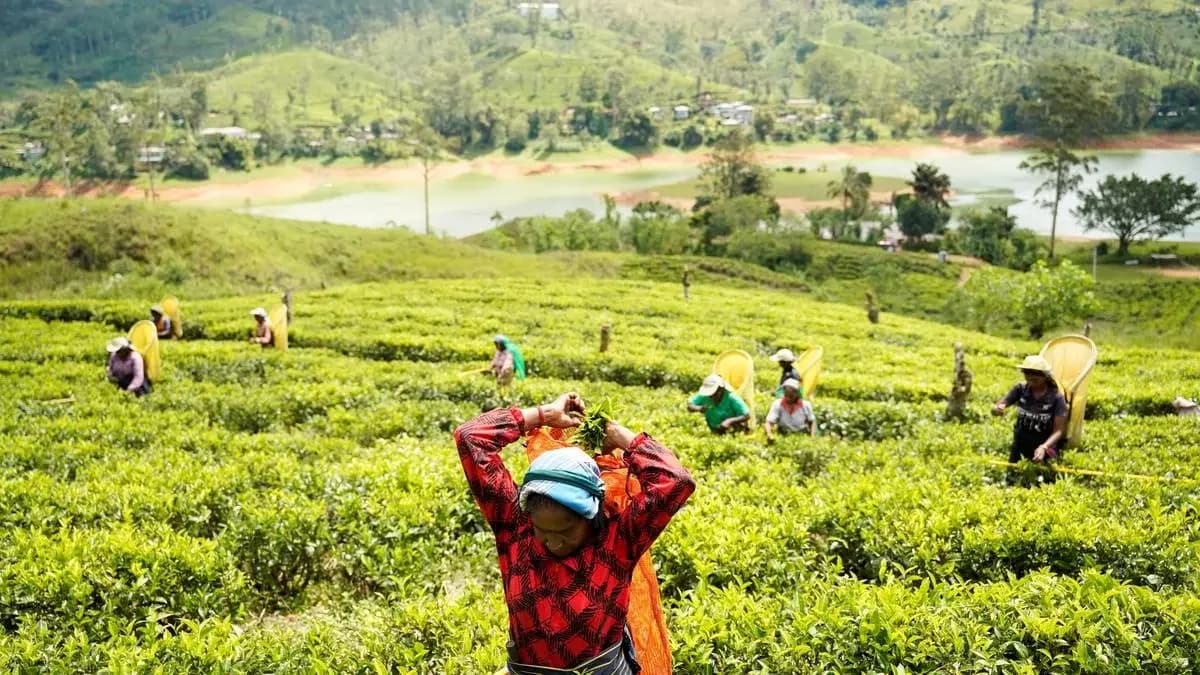
Pepper exhibited considerable exposure, with exports to the UAE, Saudi Arabia, and Oman accounting for around 44.46% of total shipments. Similarly, the UAE, Iraq, Iran, and Saudi Arabia collectively accounted for about 43.91% of India's tea exports. As reported by The Hindu BusinessLine, coffee was the notable exception, with exports to the region accounting for only 7.79% of total coffee shipments. The bulk of Indian coffee exports are destined for European markets and routed primarily through the Suez Canal or the Cape of Good Hope, resulting in the sector remaining relatively insulated from direct trade disruptions.
The varying impact across different plantation commodities has exposed the varying levels of dependence that South Indian plantation commodities have on West Asian markets. According to R. Sanjith, secretary general of UPASI, as reported by The Hindu BusinessLine, the experience underscores the growing importance of export diversification, supply-chain flexibility and global market dynamics in safeguarding India's plantation sector against geopolitical shocks. The contrasting performance highlights the strategic importance of maintaining diversified market access and alternative supply routes for long-term sector stability.