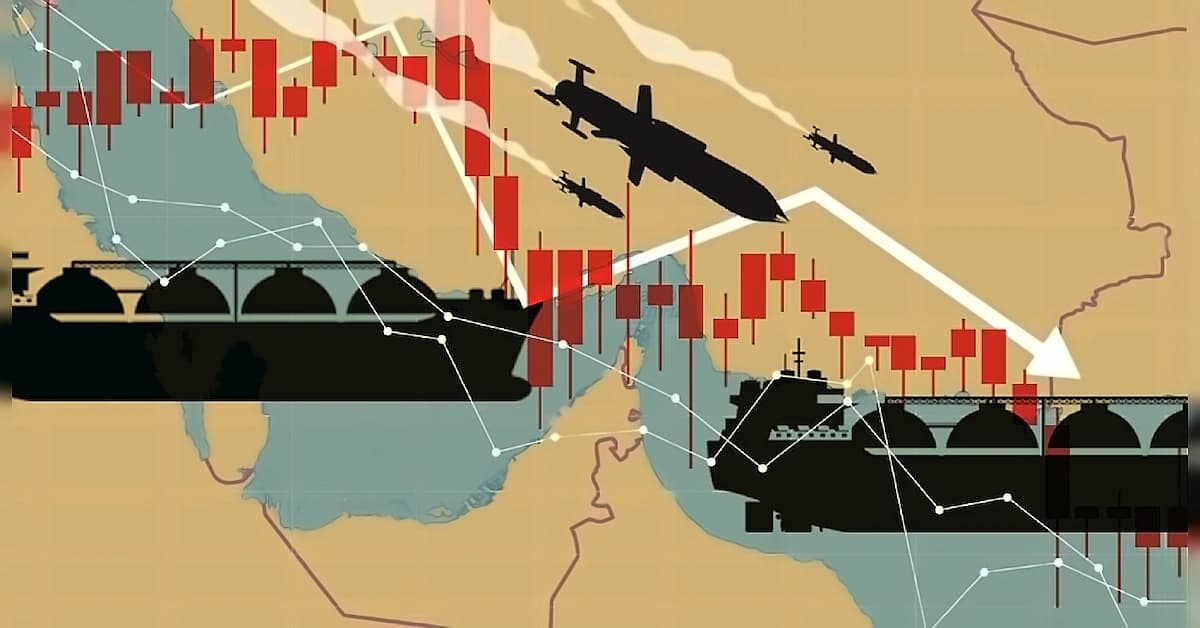
The war situation in West Asia is creating a severe crisis in global refining capacity, with nearly 10% of the world's ability to refine crude oil effectively offline. According to ExxonMobil and Chevron, the Strait of Hormuz largely closed, continued Ukrainian attacks on Russian refineries, and China's export ban have knocked refineries offline. This means refineries are running at 95-97% utilization rates, with Shell operating at 102% capacity in the second quarter. As ExxonMobil CEO Darren Woods noted, "I've never seen the available capacity relative to demand as low as it is today." The crisis is so severe that ExxonMobil, which operates the world's biggest refinery network outside of China, sees the trend advancing for the foreseeable future because about 5 million barrels a day of refining capacity is unable to reach the global market. As Chevron CFO Eimear Bonner explained, "The geopolitical uncertainty has tightened markets and is reinforcing the importance of reliable supply."
A prolonged war in West Asia is creating significant challenges for Indian businesses in managing their operational costs. According to reports from The Times of India, companies are facing persistent volatility across multiple cost categories, making long-term planning difficult. Commodity inflation, freight charges, and exchange rate fluctuations are all contributing to the uncertainty that businesses must navigate. The crisis is particularly evident in fuel prices, with gasoline prices above $4 per gallon in the US and retail diesel prices just 6% below 2026 highs despite oil price drops. In their recent quarterly earnings, companies have confirmed that commodity inflation continues to be a major headwind, projecting more price hikes going ahead. The situation is compounded by the fact that gasoline prices are beginning to disconnect from oil prices, instead trading on storage levels according to Tortoise Capital Advisors. As Rob Thummel, senior portfolio manager at Tortoise Capital Advisors, noted, "The gasoline price is not as much being represented by the movement in oil prices but more so the movement in inventories."
The war situation is forcing companies to fundamentally rethink their supply chain strategies. As reported by The Times of India, Shrikant Kanhere, MD & CEO at AWL Agri Business, highlighted that the biggest uncertainties stem from volatility in commodity prices, raw material costs, freight costs, and shipping timelines. These factors are forcing companies to double down on execution, enforce cost-discipline, and diversify sourcing to maintain operational stability. The refining crisis is compounding these challenges as refined product inventories approach historical lows. According to Neil Mehta, an analyst at Goldman Sachs Group, "Refining is obviously the bottleneck in the petroleum system right now, and margins are exceptionally high." The real pain point is in middle distillates, which includes diesel, jet fuel and heating oil, according to Chevron CEO Mike Wirth. Retail diesel prices are just 6% below their highs in 2026 even though the drop in WTI has been four times as much, with Chevron expecting upward pressure on product pricing into the third quarter and perhaps beyond.

The cost pressures are creating significant challenges for product pricing strategies across industries. According to The Times of India, Mayank Shah, chief marketing officer at Parle Products, noted that pricing products is becoming a challenge because there is no stability in rates. This pricing volatility is particularly concerning for companies that rely on predictable cost structures for their business models. The trend is accelerating as gasoline prices begin disconnecting from oil prices, instead trading on storage levels according to Tortoise Capital Advisors. For consumers, supply chain volatility will translate into more price hikes across the board, potentially making festive shopping pricier. As Ashish Goenka, group CFO at Tata Consumer Products stated, "if need be we will also make further pricing interventions because we're also coming to terms with the exact inflationary impact on the margins." The situation is particularly frustrating for drivers and politicians, including US President Donald Trump, who has criticised Big Oil in recent weeks for not bringing down costs fast enough. In the US, the average price of gasoline has crept up above $4 a gallon to the frustration of drivers.
The cost pressures are expected to have broader implications for business performance throughout the fiscal year. As reported by The Times of India, B. Thiagarajan, MD at Blue Star, warned that continued uncertainty will push companies to postpone capital deployment, which could weigh on fresh job additions and broader demand. Thiagarajan emphasized that this whole FY will be strained, as when costs increase, both margins and consumer demand face impact simultaneously. The trend is expected to drive up costs for consumers while record-high fuel-making margins benefit refinery owners. According to ITC, a protracted conflict in West Asia, alongside emerging El Nino conditions that may weaken monsoons and intensify heatwaves, could weigh on growth, inflation and current account. The market is likely to tighten further as countries in the northern hemisphere restock heating oil ahead of winter, with Chevron expecting some upward pressure on product pricing into the third quarter and perhaps beyond.