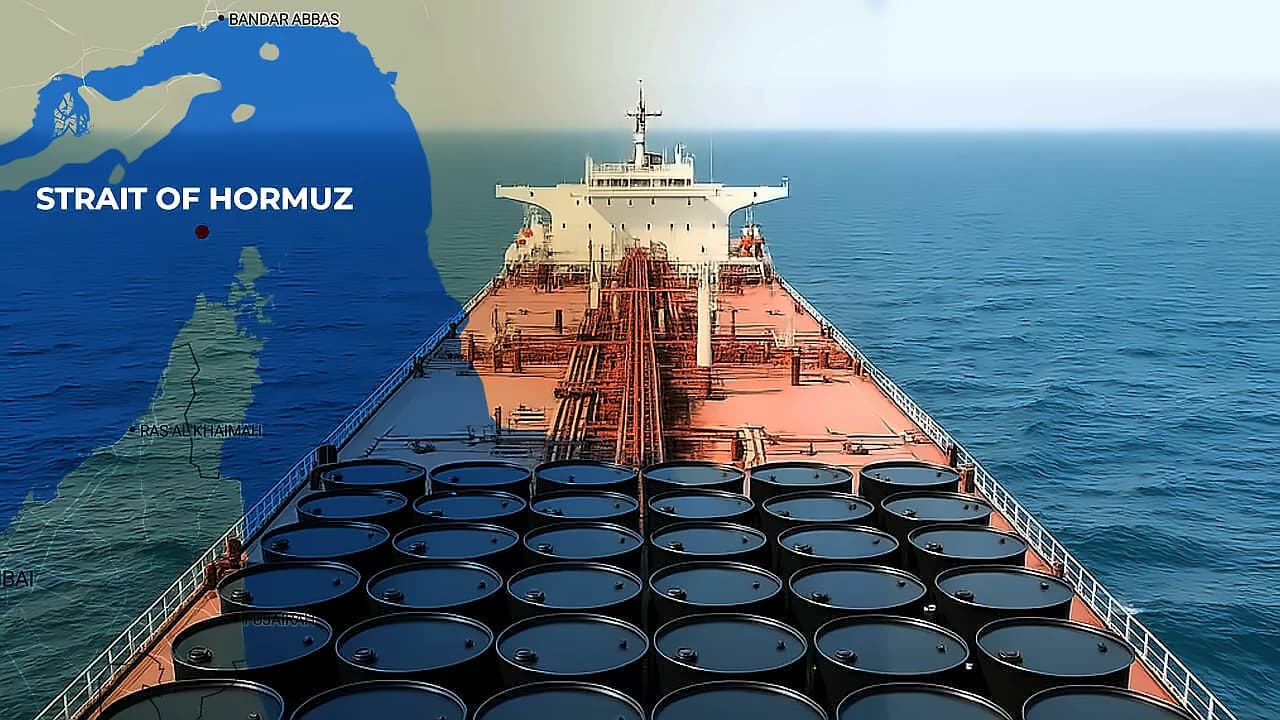
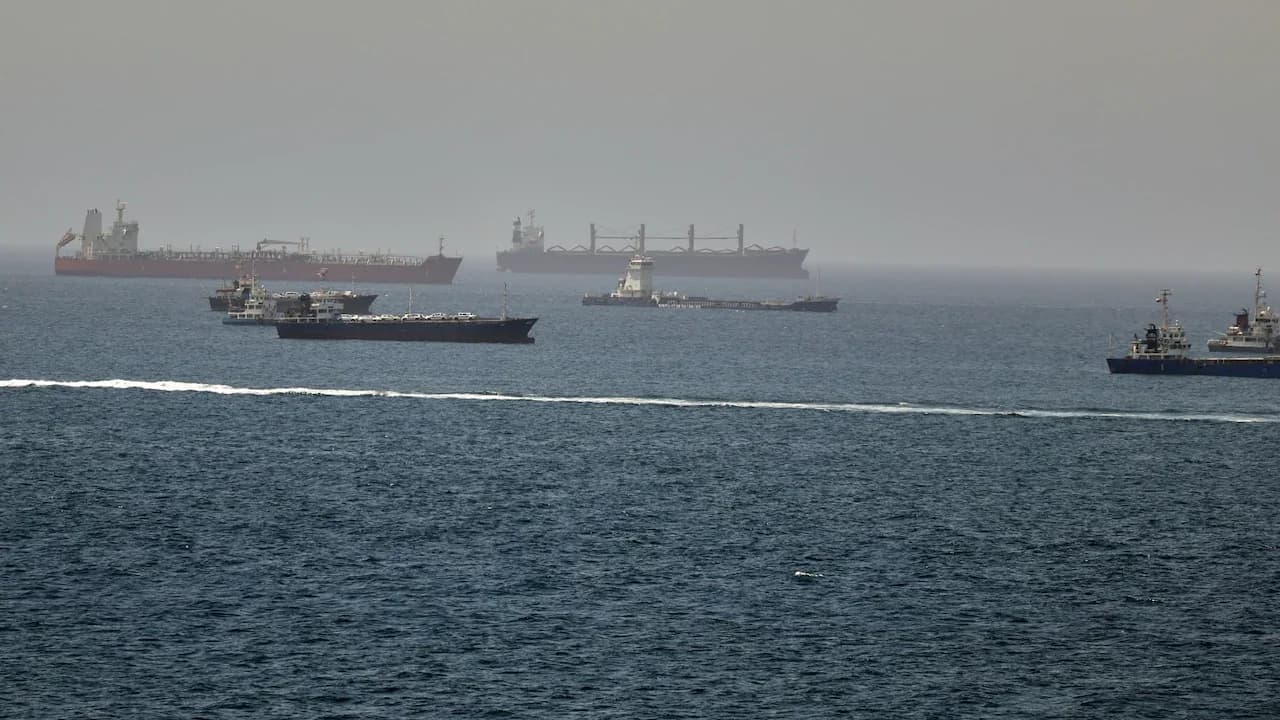
Three ships came under attack on Tuesday, including a Qatar gas carrier and a Saudi oil tanker - the largest number of incidents since a US-Iran peace deal came into effect last month. According to latest reports, naval forces in the region have raised the threat level to severe from substantial, with the strikes reducing transit numbers compared to the spike after the June agreement. The attacks have left shipowners struggling to assess the risk of operating in the vital waterway, with visible oil transits continuing but dominated by laden supertankers. Six were beginning or completing Hormuz crossings, mostly sailing along a US-supported corridor nearer to the Omani coastline, according to ship-tracking data. At least one India-flagged supertanker, Lila Vadinar, reversed course after reaching the tip of Oman's Musandam Peninsula, an example of heightened concern among ship operators.
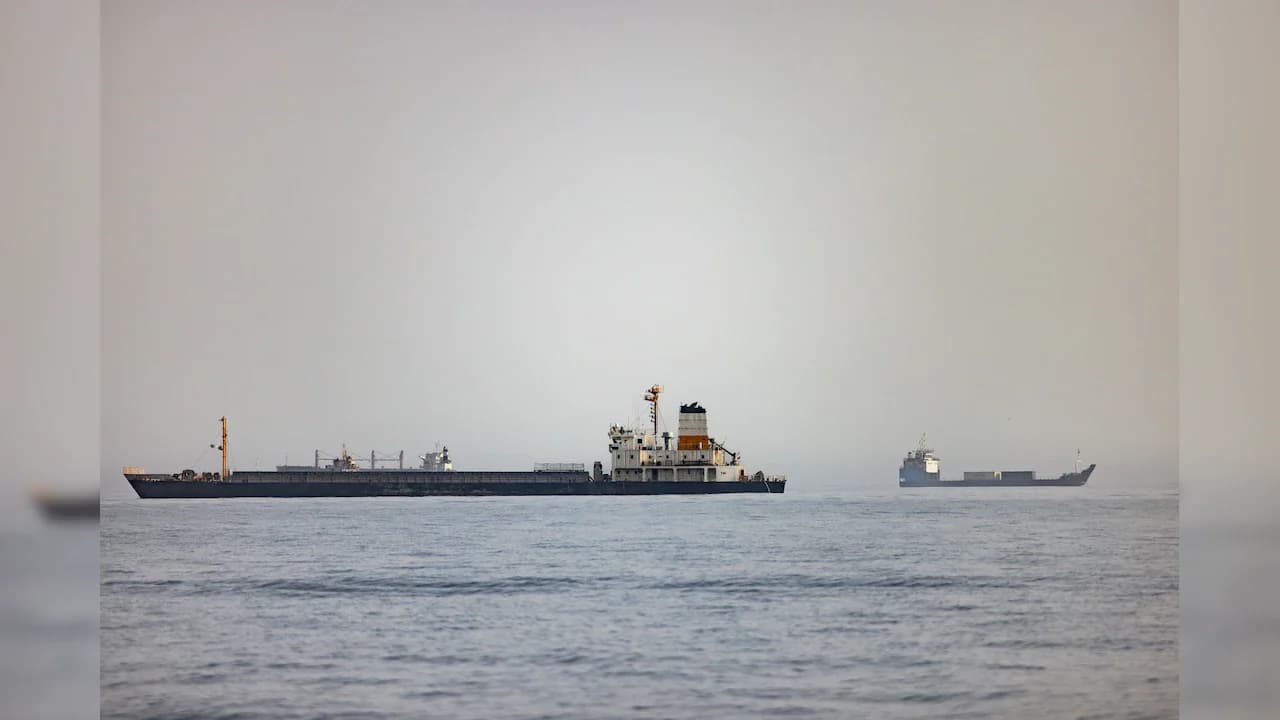
Prime Minister Narendra Modi's government is closely monitoring movement of vessels loaded with crude oil and liquefied petroleum gas, with India considering options including holding talks with Iran to secure safe passage for at least nine laden tankers waiting in the Persian Gulf. The country's foreign ministry will contact Iranian authorities over the safety of Indian seafarers in the region, with hundreds stranded for months since the Strait of Hormuz was effectively closed. India is particularly concerned about crews after at least three Indian seafarers were killed in US strikes on commercial ships in the Gulf of Oman in June. Since the war started in late February, only about 50 India-bound vessels have transited the strait, with shipments remaining well below normal because Indian buyers have yet to fully resume imports of crude oil, liquefied petroleum gas and liquefied natural gas from Middle Eastern suppliers.
The corridor that hugs the Omani coastline is supported by US military presence but has increasingly come under attack by Iran. Liquefied natural gas traffic largely halted after the Qatar tanker attack, with about a fifth of global LNG supply going through Hormuz. The disruption in the strait has pushed European gas prices up 10% over the last two days. The other option is a path that goes closer to the middle of the strait, a route which Tehran says it controls, but safe passage requires seeking the country's approval, exposing those who use it to compliance and secondary sanctions risks.
Iran's Islamic Revolutionary Guard Corps (IRGC) has taken direct control of vessel routing in the Strait of Hormuz, with Fars news agency reporting that Iran's IRGC instructed an Indian oil tanker via radio communications to abandon the Omani corridor and instead sail through the route designated by Iran. The development comes after Oman and the UN's International Maritime Organization (IMO) on June 24 announced a temporary maritime corridor along Oman's coastline to facilitate the evacuation of vessels stranded in the Gulf and is overseen by the US. According to Fars, the IRGC continues to issue radio warnings to vessels seeking to use the Omani corridor, directing them to transit through the Iranian-designated shipping lane instead. All vessels that passed through the Strait of Hormuz on Tuesday morning used the corridor approved by Iran, as reported by ship-tracking data.
Iran has significantly expanded its naval presence and operational area around the Strait of Hormuz. A senior IRGC official declared that "the Strait of Hormuz has grown larger and has turned into a vast operational area... It has expanded from a width of 20 to 30 miles in the past to over 200 to 300 miles, that is, 500km, from Jask and Sirik to beyond Qeshm Island and Greater Tunb." The Islamic Republic of Iran is "carefully and authoritatively monitoring all regional movements and will not allow any kind of encroachment upon its waters and interests." An IRGC official warned that "if America and Trump personally want to do something stupid, we will turn the Persian Gulf into the largest blue graveyard of American marines." Underscoring the threat to the existing temporary agreement, US President Donald Trump, speaking at NATO's annual summit in Ankara, called peace talks "a waste of time."