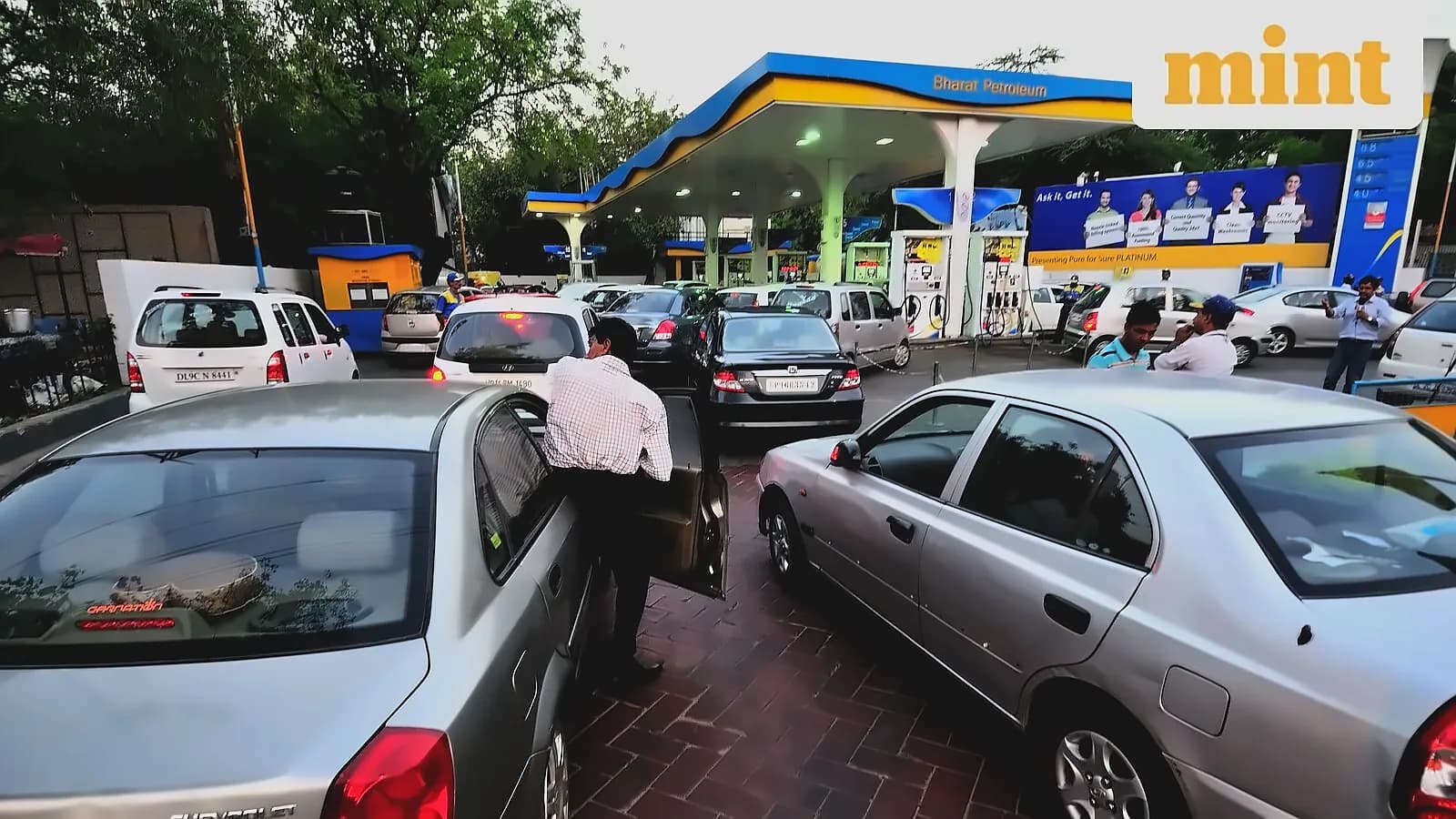
Oil marketing companies (OMCs) increased petrol and diesel prices by ₹3 per litre from May 15, ending the suspense over fuel price adjustments. According to informedofficial, this move comes amid a surge in global crude oil prices driven by escalating tensions between the US and Iran. In Delhi, the price of petrol has been hiked to ₹97.77 while diesel prices have increased to ₹90.67, as per IOCL. This marks the first time retail fuel prices have been hiked in four years. The previous pricing data from Mint showed petrol at ₹94.77 and diesel at ₹87.67 per litre, indicating the actual increase from the earlier levels.
At current crude levels, OMCs were estimated to be losing ₹20 per litre on petrol and close to ₹100 per litre on diesel, said market veteran Sunil Subramaniam. As reported by Mint, IOC, BPCL, and HPCL were together incurring under-recoveries of ₹1,600–1,700 crore every day by selling below cost. India is the world's third biggest oil importer and consumer, making oil one of the biggest macro variables for the country with multi-faceted impacts on Indian Inc margins, inflation and RBI's rate trajectory.
According to experts, the hike is modest enough that its direct inflation impact will be limited, with the likely impact in the 10–15 basis points range on headline inflation. According to Mint reports, diesel is the more consequential fuel since it powers goods transport, tractors, and commercial vehicles. Subramaniam noted that even a ₹3/litre diesel hike will feed into freight costs and farm input costs, putting mild upward pressure on food inflation over a 4–8 week lag, especially vegetables and perishables. The latest hike is expected to push up transportation costs and household expenses, with experts warning that fuel prices could climb further if instability in the Middle East continues.
India's retail inflation (Consumer Price Index) rose to 3.48% in April 2026 from 3.40% in March, while wholesale price inflation (WPI) surged to 8.3%, a 42-month high, driven by a sharp rise in fuel and energy prices. As reported by Mint, higher inflation impacts the RBI's rate cut trajectory, with the central bank having cut the repo rate by a cumulative 125 basis points from 6.5% to 5.25% since February 2025. Analysts believe that if the pass-through remains limited, the RBI may look through it, but if it becomes broad-based, the rate cycle can stay tighter for longer.
Corporations are likely to be impacted more due to higher fuel consumption, with the first impact on freight, packaging, logistics, power backup and working-capital costs. According to Mint reports, if fuel inflation stays persistent, leadership could shift away from consumption-heavy sectors toward energy, power, banks and businesses with clearer cash flows. For retail investors, analysts believe the impact will likely be contained given the smaller magnitude of the fuel price hike, as it might not yet dent purchasing power significantly.