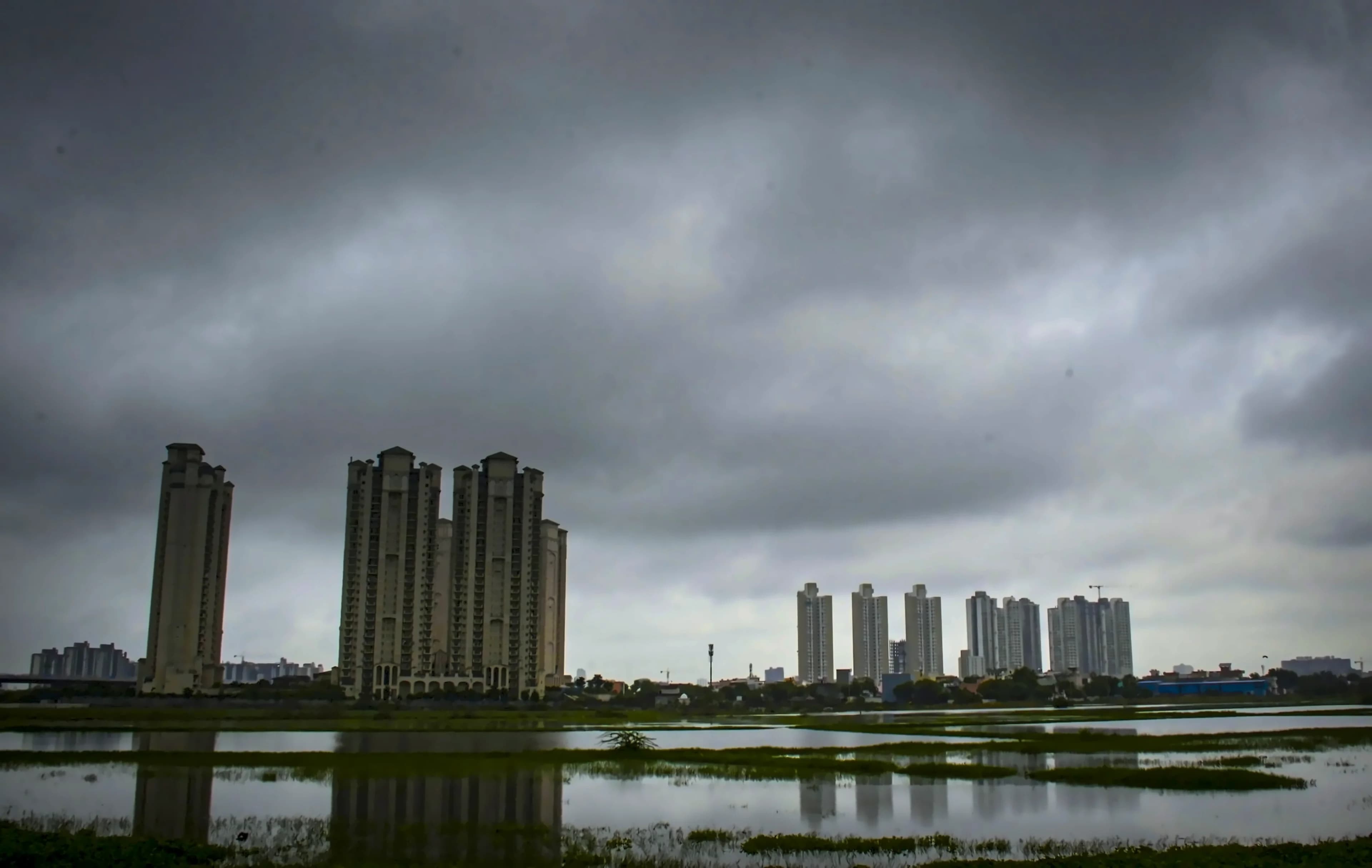
The India Meteorological Department (IMD) has officially declared the onset of southwest monsoon over Mumbai on June 23, marking the end of a nearly 14-day delay from the normal onset period. According to the latest IMD forecasts, the southwest monsoon has further advanced into parts of the central Arabian Sea, Maharashtra, Telangana, Karnataka, Chhattisgarh, Odisha, Jharkhand and Bihar. The Northern Limit of Monsoon (NLM) currently passes through Alibag, Pune, Nizamabad, Dantewada, Balangir, Sundargarh, Chatra, Gaya and Muzaffarpur, indicating that the monsoon is now officially established in Mumbai. IMD believes conditions are favorable for further advance of southwest monsoon into some more parts of Maharashtra (including Mumbai), remaining parts of Telangana and Odisha, some more parts of Chhattisgarh, Jharkhand and Bihar during next 48 hours. The announcement came after three days of widespread rainfall across Mumbai and surrounding areas, which led to waterlogging, traffic snarls and an orange alert from the weather department.

The IMD forecasts scattered rainfall across Chhattisgarh, East Madhya Pradesh, West Madhya Pradesh and Vidarbha this week, as reported by Business Standard. Additionally, the southern parts of the country are expected to continue receiving heavy showers, suggesting a concentrated pattern of rainfall activity in the southern regions while more scattered precipitation is anticipated in the central and western regions. The latest forecasts indicate that isolated heavy rainfall over Konkan and Goa is expected from June 22 to June 27, with thunderstorms accompanied by lightning and gusty winds of 40-50 kmph likely over Konkan and Goa during June 22-25. Meanwhile, PAGASA's regular daily forecast shows the southwest monsoon may bring scattered rain and thunderstorms to the Visayas, Mindanao, and Palawan on Monday, with the rest of Luzon experiencing only localized thunderstorms.
Mumbai is set to receive fairly consistent rainfall with occasional heavy showers for the remainder of June, according to Skymet's latest forecast. The city experienced its first spell of moderate showers on June 1, measuring just 13 mm, followed by a second spell on June 21 with 19 mm of rain. Yesterday, the Santacruz Observatory registered 32.3 mm of rainfall, which is far below normal for the current season but represents a significant improvement from the previous rainfall activity. The Regional Meteorological Centre (RMC), Mumbai, has forecast generally cloudy skies with spells of rain or thundershowers over the next five days, with light to moderate rainfall expected across Mumbai, Thane and adjoining areas, while some parts of Maharashtra could receive heavier showers as monsoon activity strengthens. Maximum temperatures are expected to remain between 37°C and 39°C across these regions.
Recent rainfall data shows Mumbai received 12.3 mm on June 23 and 18.8 mm on June 22, according to Colaba observatory records, as reported by Business Standard. The Colaba observatory recorded 49.0 mm of rainfall on June 23, while Santacruz received 12.3 mm. IMD Director General of Meteorology Dr Mrutyunjaya Mohapatra explained that the weather department examines three key indicators before announcing monsoon onset: rise in rainfall that persists for at least two days, presence of southwesterly winds, and sufficient depth in the southwesterly wind flow. Heavy rainfall alone is not sufficient for official declaration, with IMD's formal criteria including at least 60 per cent of 14 specified stations in Kerala, Lakshadweep and coastal Karnataka recording 2.5 mm or more rainfall for two consecutive days after May 10, westerly winds established deep enough up to 600 hPa with lower-level zonal winds of around 15-20 knots, and INCAT-derived Outgoing Longwave Radiation (OLR) below 200 W/m² indicating deep convective clouding.
Despite the recent showers, Mumbai's water reserves remain under pressure with the combined useful water stock in the seven lakes supplying drinking water to the city standing at just 8.34% of total capacity as of 6 a.m. on Monday, significantly lower than the 26.84% recorded during the corresponding period last year. The expected arrival of the southwest monsoon is likely to provide much-needed relief to the city's water supply as well as bring down humid conditions. For the remainder of June, Mumbai is likely to receive fairly consistent rainfall with occasional heavy showers, though Skymet notes that triple-digit rainfall totals are unlikely anytime soon, which would be a welcome development as extremely heavy rainfall often results in widespread waterlogging, flash floods, traffic snarls, and major inconvenience for daily commuters. The El Niño Watch remains in place, and its influence is predicted to become more evident during July and August.