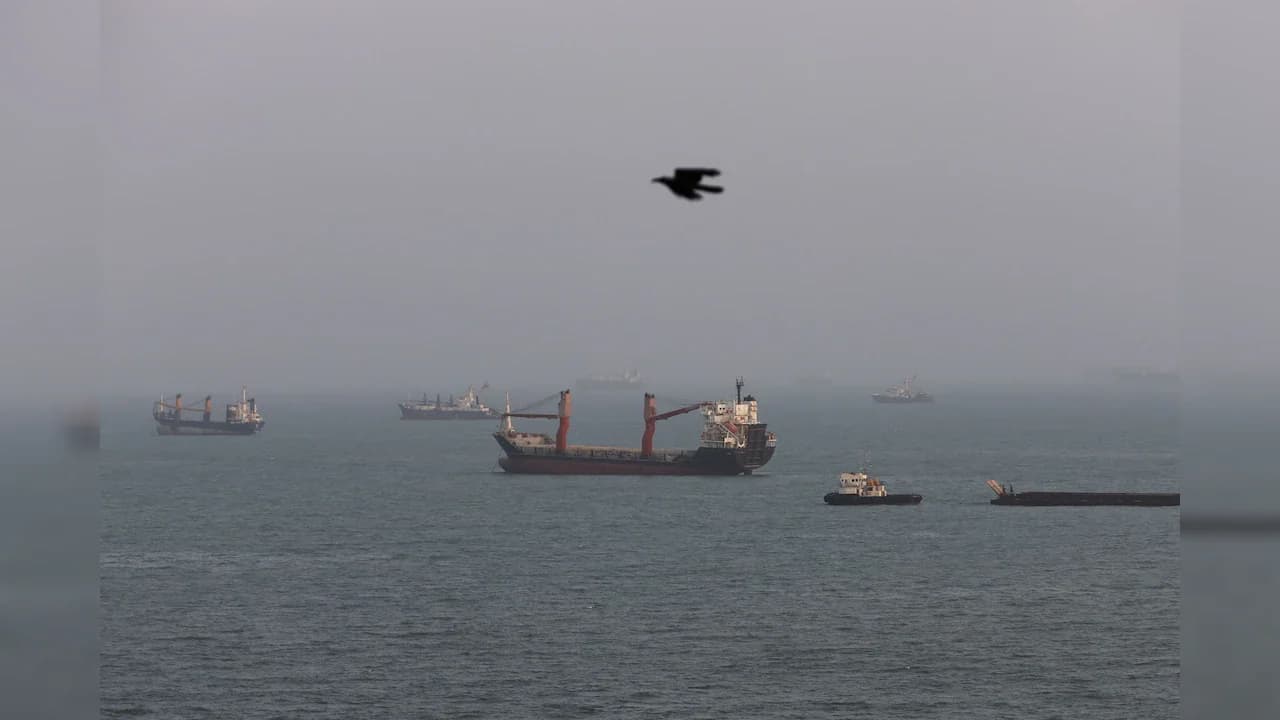
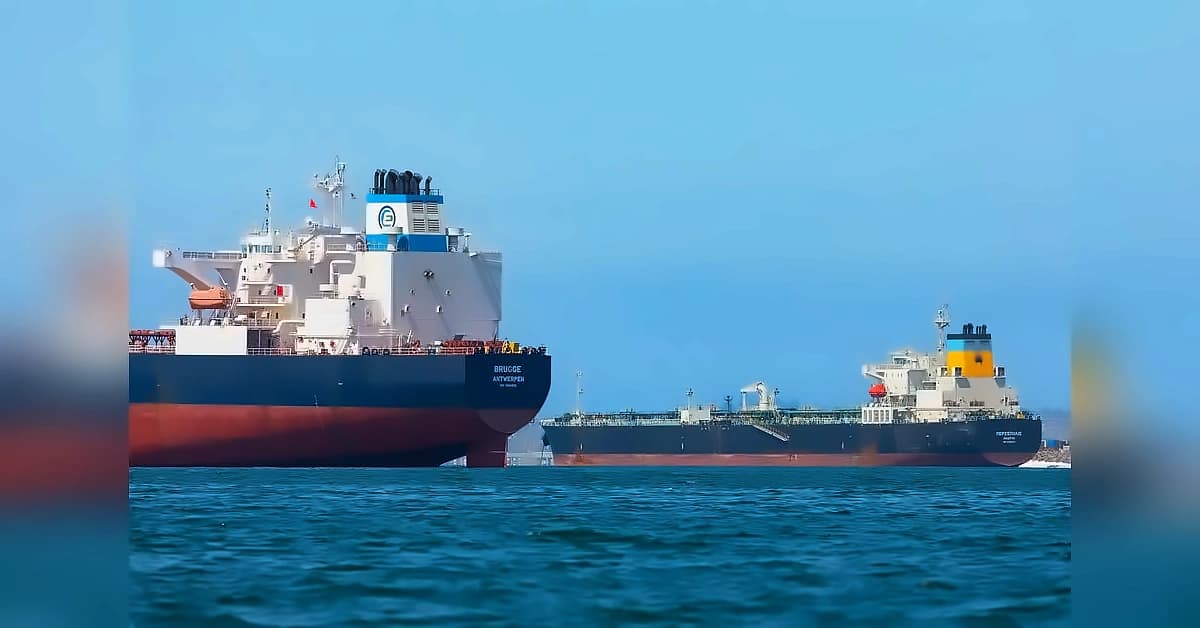
The fresh imports include barrels released after the US and Iran agreed to a now collapsed ceasefire in June, allowing supplies to flow through the Strait of Hormuz for several weeks. As reported by Bloomberg, the shipments also encompass barrels from the so-called shuttle-trade, which has enabled Middle Eastern producers to move barrels through the vital energy chokepoint despite it remaining largely blocked. The oil comes from a range of countries including the United Arab Emirates and Saudi Arabia, with some barrels arriving from Kuwait for the first time in six years. Some Middle Eastern cargoes are heading to the US from the Mediterranean, where Saudi shipments are beginning journeys to avoid attacks by Yemen's Houthi rebels. As reported by Bloomberg, at least one ship sailed from the Saudi Red Sea port of Yanbu to the US, while others began signaling at the Egyptian port of Sidi Kerir. The Yanbu cargo may have been passed on by typical Asian buyers due to added costs and transit time concerns from Houthi threats in the Bab el-Mandeb Strait.
A significant wave of Middle Eastern crude oil is making its way to US shores, providing relief to a market strained by wartime demand for American exports. According to reports from Bloomberg, at least 9 million barrels from the region are set to arrive at US ports throughout August, as tracked by maritime intelligence firm Kpler. While this represents a substantial increase, it still remains only about half of the average level from before the conflict began. The latest developments show this influx comes as West Texas Intermediate crude oil prices stood at around $81 per barrel for next month's deliveries, compared to less than $70 in February and over $110 in April, as reported by The Wall Street Journal.
Months of blockades and uncertainty around the Strait of Hormuz have pushed energy exporters to look for ways to bypass the key shipping lane. Saudi Arabia has demonstrated remarkable success in redirecting substantial volumes away from the Strait of Hormuz, with cargo shipments from its Gulf coast falling from 47.5 million tons a year earlier to just 6.3 million tons during April and May, according to data from the International Monetary Fund's Portwatch platform. Over the same period, exports through the Red Sea rose from 29.6 million to 54.8 million tons, replacing roughly 61% of the volume lost on the Persian Gulf side. The United Arab Emirates (UAE) has had less success despite possessing ports and pipelines specifically designed for bypassing Hormuz. UAE Persian Gulf coast traffic during April and May fell to 12 million tons from 68.5 million tons in the same period of 2025, with alternative UAE ports also declining from 13.7 million tons to 6.3 million tons.
The influx comes as US commercial crude inventories hover near an eight-year low, creating additional market pressure. According to the Energy Information Administration, US crude inventories rose by 17.4 million barrels last week, marking the second-largest build ever after imports surged to the highest level since late 2024. The US had been exporting barrels at a record pace during the early months of the Iran conflict, at one point sending out 6 million barrels per day to offset disrupted Middle Eastern flows. Despite the current oil price recovery, gasoline prices remain elevated at $4.07 per gallon nationwide, compared to $3.16 a year ago, with prices having surpassed $4.50 per gallon in May, as reported by AAA. Vice President JD Vance appeared to be lowering expectations for the Strait of Hormuz to return to pre-war conditions, predicting in an interview on Fox News Channel that the war will end with the U.S. in a stronger position, with Iran not having a nuclear weapon, and with the Strait of Hormuz "returned to a place where oil and gas prices are stable for the American people."

Oil spills spreading off the coasts of Iran and Oman are raising concerns about environmental damage as oil shipments have come under fire in the Iran war. Iran said Thursday it's working to clean up an oil spill off Qeshm Island in the Persian Gulf, with images distributed by Iran's semiofficial news agency ISNA showing oil fouling the island's beaches. While Iran hasn't said what caused the spill, the firm TankerTrackers.com says it appears to have started with an Iranian attack on a bulk carrier off Oman. The situation is further complicated by Iran's demand for compensation for the environmental harm, with Iran's Department of Environment demanding that "Every party that benefits from commercial shipping through the Strait of Hormuz carries both a legal and a moral obligation to remediate the environmental harm." Defense Secretary Pete Hegseth says the US military can maintain the blockage of Iranian ports "indefinitely" amid increasing reports of morale and supply issues aboard an aircraft carrier in the region. Hegseth, speaking to reporters in Panama, said that "the United States Navy can maintain a blockade like that because we'll rotate ships in and out, as we have and we'll continue to."
Governments and industry experts are discussing bigger alternatives to address the Hormuz closure crisis, but these projects face significant obstacles. Economist Hassan Mansour told DW that suggestions include new pipelines connecting Iraq with Oman and Jordan, as well as longer sea routes around the entire African continent via South Africa's Cape of Good Hope. However, these projects would be expensive and take years to build. Mansour estimates that a Basra-Aqaba pipeline could require five to seven years and cost around $8 billion to $10 billion, while a Basra-Oman connection could cost $10 billion to $15 billion. He noted that rerouting ships around the Cape of Good Hope can add hundreds of thousands of dollars in transport costs to every single voyage. "The bottom line is that these projects cannot solve the oil market's immediate problem," said Mansour. The Red Sea route also has its own security weakness, as ships moving toward the Suez Canal must pass Bab al-Mandab, where Houthi attacks have repeatedly threatened commercial shipping. Israeli Prime Minister Benjamin Netanyahu has argued that the region needs "alternative routes instead of going through the chokepoints of the Hormuz Strait and the Bab-al-Mandab Strait," suggesting oil pipelines through the Arabian Peninsula to Israel's Mediterranean ports.