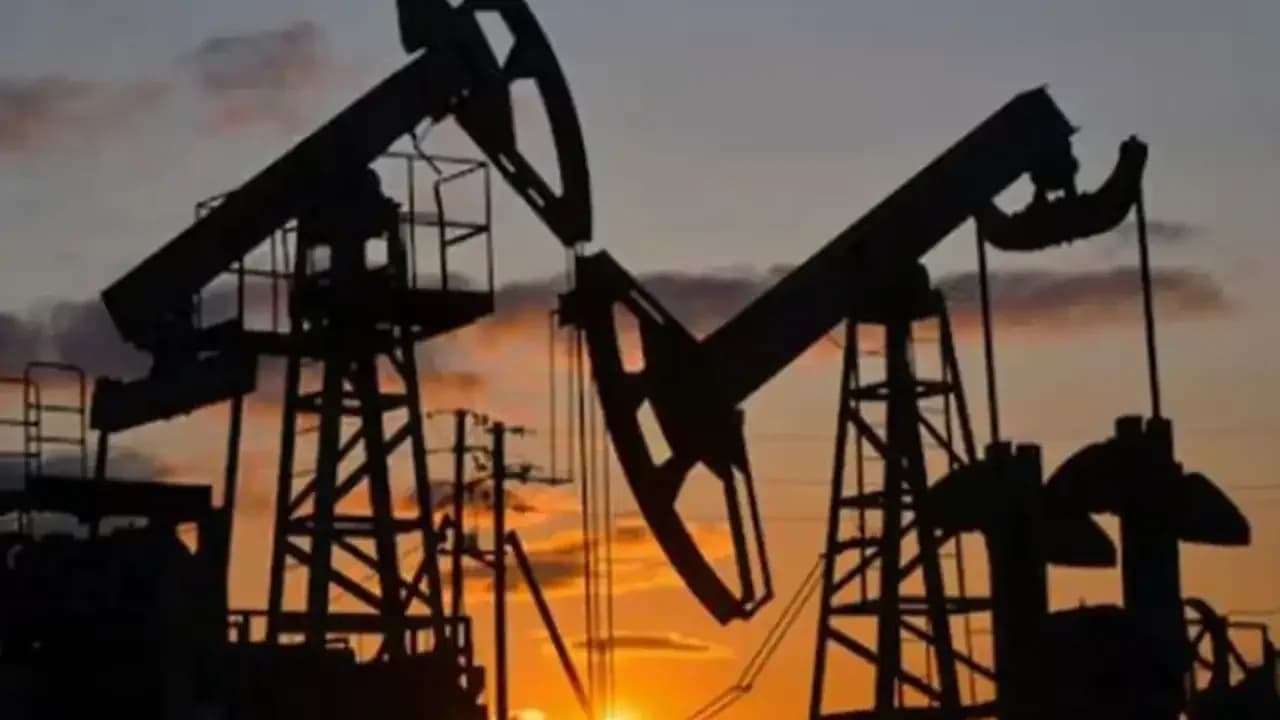
Oil prices continued their downward trajectory on Monday, with Brent crude futures falling 35 cents, or 0.34% to $101.90 per barrel by 0115 GMT, while US West Texas Intermediate crude dropped 62 cents, or 0.68% to $90.49 per barrel. According to Reuters, oil prices slipped as rising crude exports from the Middle East and a release of oil stocks from Group of Seven nations are adding to supplies despite concerns over further damage to Gulf oil infrastructure amid the Iran war. The latest decline extends the five consecutive sessions of price drops as Middle East crude flows continue their recovery trajectory. Commodity markets traded mixed on October 5, with oil prices slipping as rising crude exports from the Middle East and a release of oil stocks by G7 nations added to supply, while gold prices edged higher as softer economic data lowered expectations of a Federal Reserve rate hike in October. In domestic markets, crude oil futures for October delivery slipped by ₹256, or 2.87% to ₹8,660 per barrel on the Multi Commodity Exchange with a business turnover of 12,220 lots, as participants offloaded holdings amid weak demand in the spot market.

The oil stockpiles that cushion the world from supply shocks have become "scarily thin," putting markets at risk of worsening unless the Strait of Hormuz reopens, according to Saudi Aramco CEO Amin Nasser speaking at the Energy Intelligence Forum in London on Monday. "Oil inventories that normally cushion markets against shocks have become scarily thin," Nasser stated, as reported by Zee News. He added that more than 1 billion barrels from those stocks have already been used to offset lost oil supplies, with most of the oil coming from onshore commercial inventories that Nasser described as the "last major tool in the box." The world has entered the current crisis with almost 10 billion barrels of oil in stocks, but the practical availability has dropped significantly. Rebuilding depleted inventories could take as long as two years even after the critical shipping route reopens fully, Nasser warned. The Group of Seven countries agreed to release 100 million barrels of diesel and crude from emergency reserves last week, following pressure from US President Donald Trump, providing additional market relief alongside Middle Eastern supply improvements. However, Nasser warned that these emergency reserves could provide temporary relief but would not resolve the supply-demand imbalance.
The disruption of normal oil transportation has significantly increased costs for moving barrels to market, but recent developments show substantial progress. According to The Wall Street Journal, Saudi Arabia's crude exports from the Red Sea port of Yanbu could restart within a couple of days as state-controlled Aramco runs tests on its East-West pipeline. This represents a significant step forward from the record tanker rates of more than $1.2 million per day that were being charged to haul oil from the Persian Gulf to China. Saudi Aramco has increased crude shipments from its main export terminal at Ras Tanura in the Persian Gulf over the past month, while the company also restored flows on its East-West pipeline to about 80% of capacity after a temporary shutdown following an attack. The restoration gives Aramco more oil that can be shipped from the Red Sea, while the company has reacted quickly to a temporary halt to its main cross-country pipeline after an attack last month. The company has also been looking for alternative crude export routes and additional international storage facilities to avoid relying too much on any single method of reaching global buyers. Aramco has brought flows on the East-West pipeline back to about 80% of capacity, meaning it also has more oil to ship from the Red Sea, while the company has reacted quickly to a temporary halt to its main cross-country pipeline after an attack last month.
While supply recovery offers some relief, traders remain cautious about potential escalation in the US-Iran conflict. The US continues to deploy additional aircraft carrier and troops to the Persian Gulf, maintaining pressure on the region. Recent developments include Houthis launching ballistic missiles and drones at Saudi Aramco sites in Riyadh and the Khurais area of Saudi Arabia, responding to 50 Saudi-led air and missile strikes in Yemen over the previous 12 hours. Additionally, Yemen's Saudi-backed, internationally recognised government said on Sunday that it was beginning a major military campaign to retake all areas of the country controlled by the Iran-backed Houthis. The Iran-backed Houthis in Yemen have also declared a blockade of Saudi Arabian shipping in the Red Sea through the Bab el-Mandeb Strait, threatening another key oil route. Despite these tensions, Brent crude has traded around $100 a barrel over the past month, even as more tankers transited Hormuz, demonstrating that oil markets are still pricing in security risks to supply in the Persian Gulf and Red Sea. The higher flows have provided limited relief to oil markets, which continue to price in risks to supplies from the Persian Gulf and the Red Sea.
Despite current supply improvements, Goldman Sachs has outlined a scenario in which oil prices could climb as high as $120 a barrel if attacks on vessels in the Middle East intensify. According to Daan Struyven, co-head of global commodities research at Goldman Sachs, recent attacks had demonstrated that disruptions to shipping could spread and become more severe. The bank expects oil prices to move back towards $80 a barrel if exports return to normal. Supply shocks in gas and fuels are larger than those in the crude market, according to the analysis, with shipping risks becoming a key driver of oil prices. Aramco's oil supplies have proved resilient through the conflict by relying on international storage and working to quickly repair damaged infrastructure, as noted by CEO Amin Nasser. Nasser said the company could make 12 million barrels per day available within days if required, demonstrating the company's operational flexibility during crisis situations.