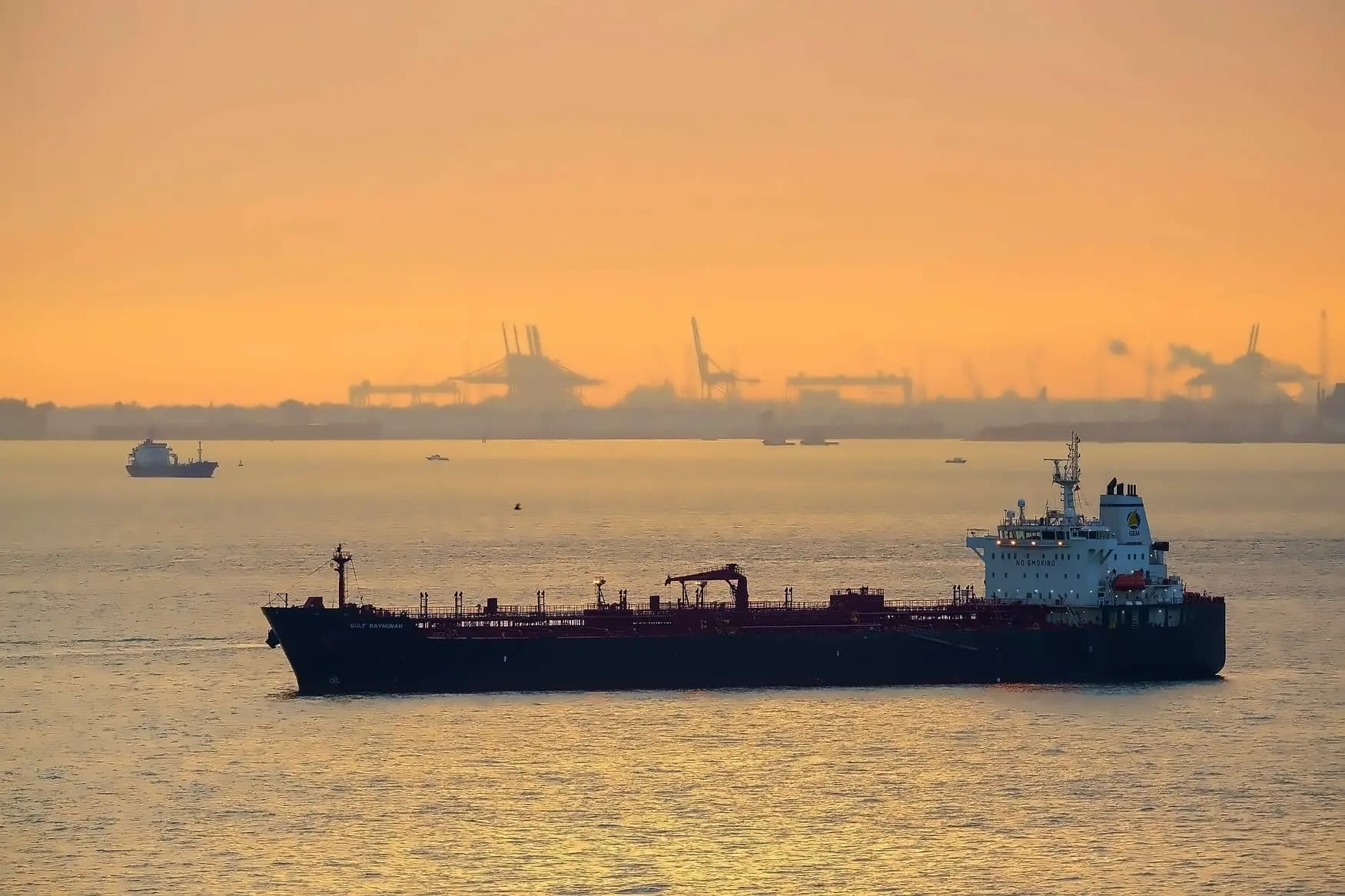
Iran has dramatically increased attacks on tankers in the Strait of Hormuz, with UK Maritime Trade Operations reporting nine attacks already this month. This represents half the total amount reported for all of September in the Strait of Hormuz and Persian Gulf combined, with last month's figure boosted by four assaults in the final two days. As per Marisks CEO Dimitris Maniatis, Iran appears to be seeking to assert greater control through "fear and uncertainty," stating that "Iran does not need to stop every vessel; it needs the maritime industry to believe that any vessel could be next." The latest assaults have led to a fresh surge in freight rates, with the cost of carrying oil from inside the Persian Gulf to China rising to a record $1.3 million a day on Monday, compared to close to $60,000 a day last year.
Oil shipments through the Strait of Hormuz have steadily picked up since the start of summer, with top commodity traders seeing Middle East flows at around 80% of pre-war levels. Latest data shows West Asia crude exports exceeded pre-war levels on four days in late September, reaching between 19.5 million barrels per day and 22.5 million bpd. The seven-day moving average for crude exports stood at 18.5 million bpd on October 1, with the overall tally for crude, oil products, chemicals and non-gas liquids averaging 22.4 million bpd in the seven days to September 30. This recovery has helped Brent crude back below $100 a barrel, though maritime security officials and shipping executives remain uncertain about whether the latest escalation will cause shipments to fall.
Liquefied natural gas shipments through the Strait of Hormuz reached their highest monthly level since the US-Iraq war began, with 19 LNG cargoes shipped in September, comprising 13 from Qatar and 6 from the United Arab Emirates. Despite persistent security worries, the recovery demonstrates resilience in energy trade through the strategically important waterway. Most tankers transiting Hormuz do so using a corridor near the coast of Oman, with vessels generally crossing with their digital signals switched off, leaving traders and analysts poring over satellite images to determine exact supply movements. The uptick in LNG flows has been slower than in oil, reflecting the fact that LNG is transported in a much smaller fleet of highly specialized carriers that keep the fuel cryogenic.
Iran's parliament speaker Mohammad Baqer Qalibaf announced that the Strait of Hormuz will remain closed until seven Iranian conditions set out in a June interim agreement with the US are met. As reported by Reuters, Qalibaf stated that "the period of dragging out the process and dictating one-sided demands is over," emphasizing that Iran's position remains "completely clear and firm." The conditions are based on the Islamabad Memorandum of Understanding, marking a significant development in the ongoing negotiations between Tehran and Washington. Qalibaf accused Washington of sending mixed messages publicly while concurrently making proposals through a mediator, warning that Iran would no longer accept delays in negotiations or one-sided demands from the US.
Before the Iran war started on February 28, the Strait of Hormuz typically handled approximately 125 large commercial vessels per day, including tankers, gas carriers, bulkers and container vessels, accounting for some 20% of the world's daily crude oil and LNG supply. The current recovery demonstrates remarkable resilience in energy trade despite ongoing security challenges. Recent data shows an even higher total of 21 LNG cargoes exiting the Strait of Hormuz in September, up from 15 in June, with three additional Qatari vessels reappearing after switching off their Automatic Identification System transponders during passage through the strait. How much energy flows through Hormuz is vital for oil and gas prices, particularly ahead of winter months in the Northern Hemisphere, with any pullback in flows adding to inflationary pressure concerns.