The gap between kharif crop area coverage this season and the corresponding period last year narrowed further to 4.7 per cent during the week ended July 24, according to latest agriculture ministry data. As of July 24, 2026, kharif crops had been sown in around 78.73 million hectares, which was 4.7 per cent lower than the area covered during the same period last year. For the whole season, kharif crops are sown in around 110.44 million hectares, meaning that until July 24, sowing had been completed in around 71.28 per cent of the normal area. However, the situation had been more concerning earlier, with sowing area being 16 per cent below last year's level until a fortnight ago, as reported by Financial Express.
Gaps in the area under all crops including oilseeds, pulses, soybean, groundnut, urad, moong and maize narrowed compared to the previous week, as reported by Business Standard. Among major crops, paddy covered 23.44 million hectares compared to 24.06 million hectares last year, representing a 2.6 per cent decline. Pulses showed a more significant drop with 8.45 million hectares versus 9.16 million hectares last year, down 7.8 per cent. Cotton covered 9.87 million hectares compared to 10.27 million hectares last year, declining 3.9 per cent. However, Tur (pigeon pea), a key kharif pulse, has been sown across 3.11 million hectares so far, still over 11 per cent lower than last year, due to delayed monsoon arrivals in Maharashtra and Karnataka this season, according to Financial Express.

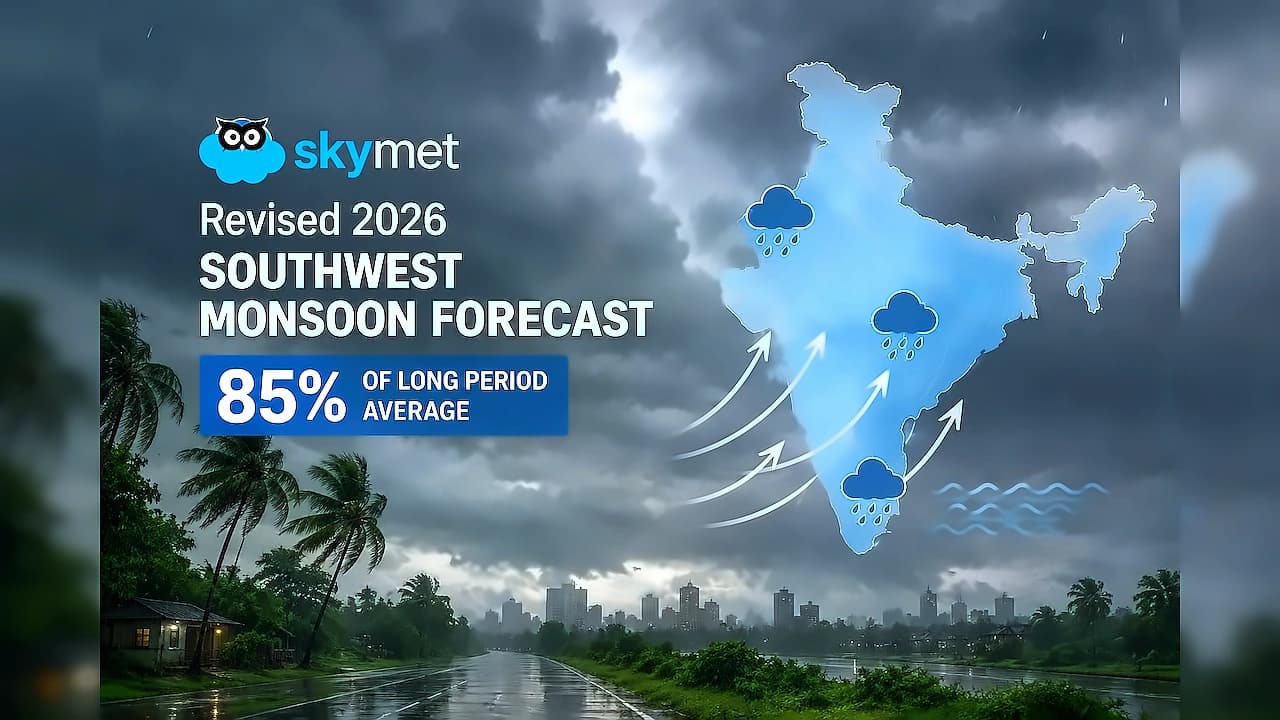
The continued laboured run of the southwest monsoon across the country has supported the narrowing of sowing gaps, according to Business Standard reports. In some parts of western India, particularly in states such as Gujarat, heavy rains caused flooding, which should further aid kharif crop sowing once the waters recede. The monsoon performance has shown significant improvement, with overall monsoon deficit this season at 13 per cent as of July 24, down from nearly 40 per cent at the end of June, as reported by Financial Express. However, recent data from the India Meteorological Department shows that while rainfall improved in the third week of July, cumulative rainfall across the country was still 19 per cent below the long-period average as of July 22. Cumulative rainfall during June 1-July 27 is 342.5 millimetres against the benchmark longer period average of 408.9 mm, which is still in the 'deficient' range but represents substantial improvement from earlier months. Water levels in the 166 reservoirs as of July 23, 2026, were at 38.37 per cent of full reservoir level, lower than 60.21 per cent last year but higher than the 10-year average of 41.22 per cent.
The India Meteorological Department's forecast for below-normal rainfall in August could upset farmer hopes if it materializes, amid a prediction for a further strengthening of the El Niño weather event. According to IMD's Director-General M Mohapatra, "The country as a whole may receive 'below normal' rainfall in both August and August-September together as well." He noted that a moderate El Niño may continue in August, and it may move towards a strong El Niño in September, while the Indian Ocean Dipole (IOD) may turn positive in September, which experts said may negate the adverse impact of the El Niño on the monsoon. The country has received 389.8 mm rainfall during June-July, which is 13 per cent below its long period average of 445.8 mm. During July alone, India received 283.3 mm rainfall against the LPA of 280.5 mm, with the south peninsula reporting 23 per cent deficiency and the east and north-east regions showing 30 per cent shortfall.
The normal July rainfall has boosted kharif crop sowing across the country, helping to ease food price inflation fears despite the 4.7 per cent decline in total sown area, according to Financial Express. Consumer Price Index inflation rose to an 18-month high of 4.38 per cent in June, led by higher food and fuel prices. Finance Minister Nirmala Sitharaman had earlier noted that apart from imported inflation on account of high crude oil prices, a monsoon that is less than normal could also add to inflation. However, the improved sowing progress and normal rainfall in July have helped allay these concerns about major food price increases. Sowing activities this season is likely to continue till the end of August, officials said.