Saudi Arabia's crude oil exports fell to a record low of 3.43 million barrels per day in May, marking the third consecutive monthly decline and the lowest level since official records began in 2002, according to data released by the Joint Organizations Data Initiative (JODI). The decline comes against the backdrop of heightened geopolitical tensions in the Middle East and increased domestic crude consumption. Saudi Arabia exported around 3.434 million barrels per day in May, down sharply from 3.986 million bpd in April, with the latest figures representing the lowest monthly export level since JODI began publishing Saudi oil data more than two decades ago. Market analysts believe regional geopolitical developments continued to weigh on Saudi crude exports, with UBS analyst Giovanni Staunovo noting that the decline was likely influenced by the ongoing conflict in the Middle East.
While exports declined, Saudi Arabia increased crude oil production during the month, with output rising to 6.560 million bpd in May from the record low of 6.316 million bpd recorded in April, as reported by Reuters. The divergence between rising production and falling exports suggests that a larger share of crude was consumed within the country rather than shipped overseas. Saudi Arabia also increased refinery activity during the month, with crude throughput at domestic refineries climbing to 2.386 million bpd in May from 2.211 million bpd in April. Direct crude burning also rose by 107,000 bpd to 647,000 bpd, indicating stronger domestic energy demand.
Adding to market uncertainty, Yemen's Iran-aligned Houthi movement announced on Monday that it would impose a naval blockade on Saudi Arabia, potentially creating another flashpoint in the region. Saudi Arabia rejected the allegations made by the Houthis, with the country's foreign ministry stating that claims of a maritime blockade on Yemen were false. The ministry added that the kingdom would take all necessary measures to safeguard its vessels and maritime interests. The latest developments have heightened concerns over the security of shipping routes that are critical to global crude oil trade, with the Gulf region witnessing increased disruptions to shipping routes following the escalation of tensions involving the United States and Iran, raising concerns over the movement of energy supplies through the Strait of Hormuz, one of the world's busiest oil transit corridors.
India's crude sourcing has already been reshaped amid the West Asia crisis, with refiners ramping up imports from Russia, Brazil, Venezuela, Angola and the US. According to Business Standard reports, in June, India's imports of Russian crude climbed to a record 2.58 million barrels per day (bpd), accounting for over half of the country's crude oil imports in the month. The United Arab Emirates and Venezuela were among other major suppliers, with India importing about 510,000 bpd and 360,000 bpd, respectively. As Sumit Ritolia from Kpler notes, Russian crude will continue to be the mainstay, but if the threat expands into a wider Red Sea or Bab el-Mandeb disruption, Russian crude will also become India's biggest concern.
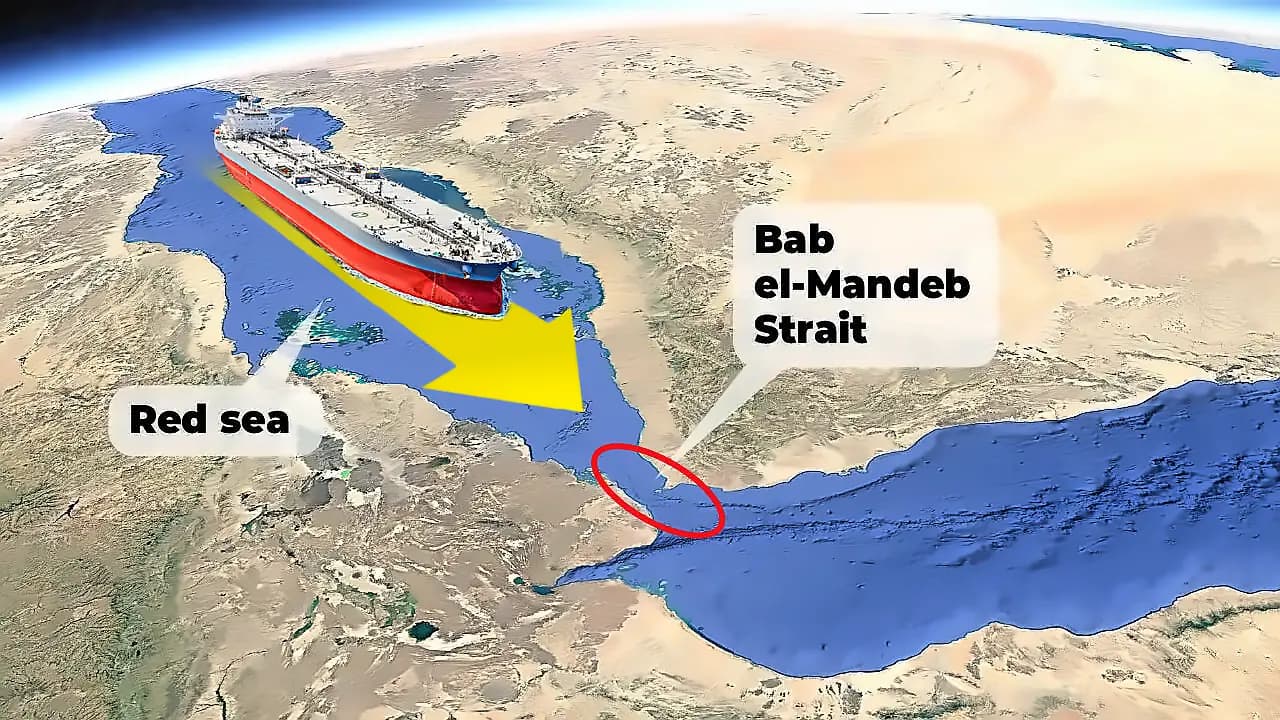
The potential disruption of both the Strait of Hormuz and Bab el-Mandeb Strait could significantly impact global oil prices, with crude oil futures trading near $89 per barrel. As Prashant Vasisht from ICRA warns, with Hormuz and Bab el-Mandeb Strait disruptions, Saudi Arabia will see its crude exports hit, which in turn would constrain global supply and could send crude oil prices soaring again. Despite current disruptions, the International Energy Agency (IEA) expects global oil supply to expand by 7.5 million barrels per day next year after an estimated contraction of 3.7 million bpd this year, though the agency has indicated that the projected recovery depends significantly on the uninterrupted movement of oil tankers through the Strait of Hormuz. Despite current threats, vessels are still going to Saudi Arabia's Red Sea ports and at least some Asian buyers are still sending their tankers there to pick up cargoes, though a Saudi-led coalition has begun implementing operational measures to protect ships in the Bab el-Mandeb Strait.