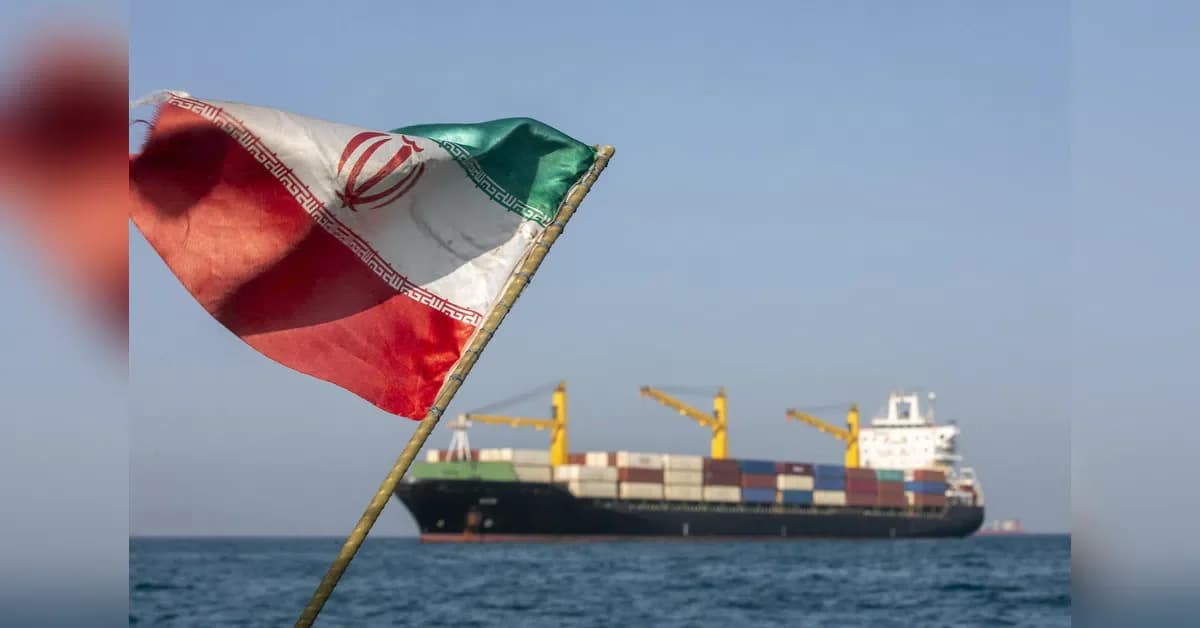
US President **Donald Trump has claimed that Iran informed Washington it was in a 'state of collapse' and wanted the Strait of Hormuz reopened as soon as possible while working through a leadership situation. As reported by Upstox, Trump posted on his Truth Social platform: "Iran has just informed us that they are in a 'State of Collapse.' They want us to 'Open the Hormuz Strait,' as soon as possible, as they try to figure out their leadership situation (Which I believe they will be able to do!)." There was no immediate confirmation from Tehran and it remained unclear how such a message was conveyed. The comments come amid a continuing two-month conflict that has severely disrupted shipping through the Strait of Hormuz, a vital chokepoint for global oil supplies.
Iran's proposal, conveyed by Foreign Minister Abbas Araqchi during visits to Islamabad over the weekend, envisages a phased approach according to senior Iranian officials cited by Reuters. The first stage would require an end to hostilities and guarantees that the US would not resume military action. Subsequent steps would address the US Navy's blockade of Iranian trade and the future of the Strait of Hormuz, which Iran seeks to reopen under its own control. Only then would negotiations move to other issues, including Tehran's nuclear programme and its demand for recognition of its right to enrich uranium. According to a Reuters report, quoting an unnamed US official, Trump is unhappy with the Iranian proposal because it did not address Iran's nuclear programme, with the official stating "He (Trump) doesn't love the proposal."
The killing of Supreme Leader Ayatollah Ali Khamenei on the first day of the war and the elevation of his son Mojtaba Khamenei, who was reportedly wounded, have weakened the country's traditional clerical authority. With no undisputed figure at the apex of power, hardline commanders from the Islamic Revolutionary Guard Corps (IRGC) are believed to be wielding greater influence, potentially complicating diplomatic engagement. Iranian Foreign Minister Abbas Araghchi has stepped up diplomatic outreach amid the conflict, meeting with Russian President Vladimir Putin in St. Petersburg on Monday, according to Russia's state news agency Tass. Araghchi said the United States had failed to achieve its objectives in the war and was now seeking negotiations.
The closure of the Strait of Hormuz has sent oil and gasoline prices soaring, increasing political pressure on Trump ahead of midterm elections and straining ties with Gulf allies that rely on the waterway to export energy. Crude oil futures traded higher on Tuesday morning after reports said that Trump is unhappy with Iran's proposal to reopen the Strait of Hormuz, which did not address its nuclear programme. July Brent oil futures were at $102.59, up by 0.89 per cent, and June crude oil futures on WTI were at $97.45, up by 1.12 per cent, according to The Hindu BusinessLine. May crude oil futures were trading at ₹9,205 on the Multi Commodity Exchange (MCX), up by 1.09 per cent from the previous close of ₹9,106, while June futures were trading at ₹8,808, up by 1.07 per cent from ₹8,715. The Strait of Hormuz, a key chokepoint for global oil flows, has been largely closed since the conflict started roughly two months ago, despite a ceasefire agreement that was said to be contingent on the reopening of this waterway.
The blockade's effectiveness remains a topic of debate among analysts, with independent maritime trackers painting a more complicated picture than US Central Command's claims of success. Lloyd's List Intelligence reported that at least 26 vessels linked to Iran, including 11 oil and gas tankers and two very large crude carriers, have sailed in and out of Iranian ports since the blockade began. Iran's economy faces severe deterioration following the March war, with mounting pressure from inflation, currency depreciation and damage to key industries raising the risk of a broader crisis. The economy entered the recent war from a weak starting point, with inflation already elevated above 50 percent by late 2025 and the rial losing substantial value. War-related damage to industrial infrastructure, especially in petrochemicals and metals sectors that generated roughly $25-30 billion in exports in 2024, has disrupted operations and constrained production capacity.