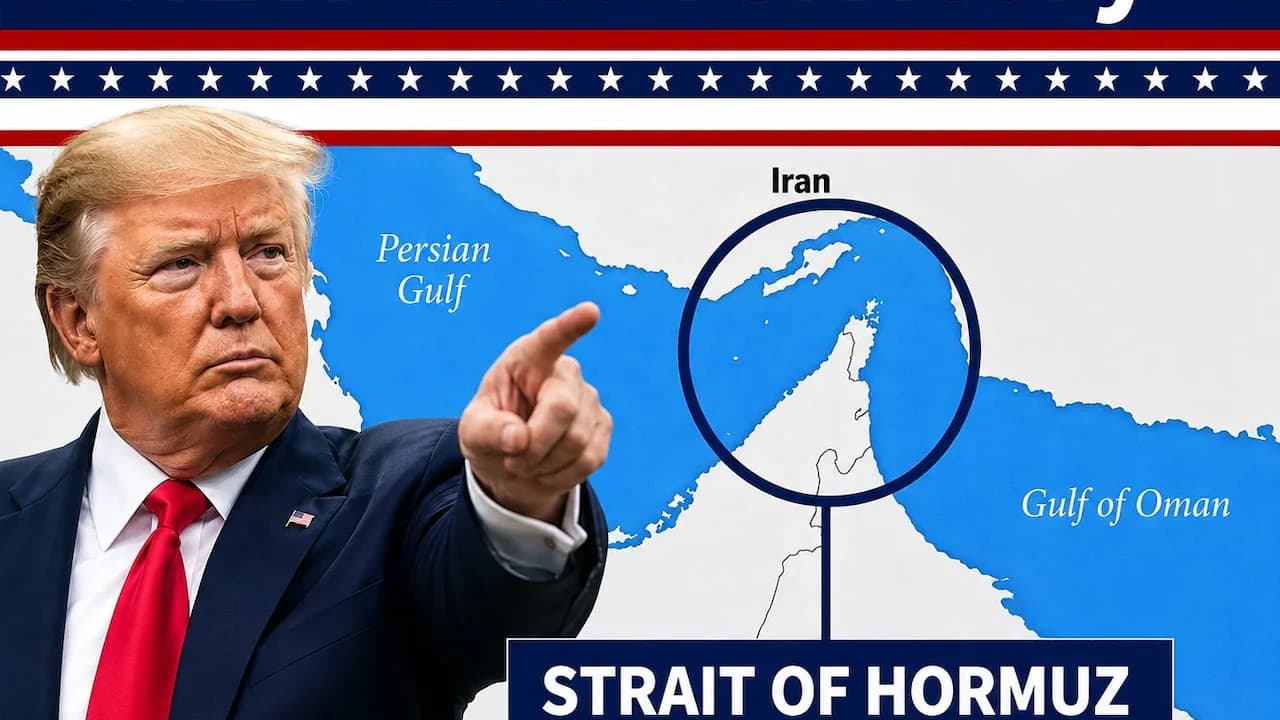
US President Donald Trump escalated tensions by threatening Iran that the country should take action against Hezbollah militants in Lebanon, or face US military action. 'Iran must immediately stop their highly paid PROXIES in Lebanon from causing trouble. If they don't, we'll hit Iran very hard again, just like we did last week, only harder!!!' Trump stated on Truth Social. Media reports suggest that over the weekend, Hezbollah fired around 50 projectiles at Israeli forces in the region, while Israeli airstrikes killed at least 20 people in less than 24 hours after the peace deal between the United States and Iran. The latest closure comes as Israeli strikes in Lebanon on Saturday killed at least 20 people, one day after a ceasefire with Hezbollah took effect, aimed at halting months of escalating violence. According to The Economic Times, the number of ships that passed the Strait of Hormuz fell sharply on Sunday after Iran announced it had again closed the waterway, citing Israeli and US violations of the interim peace deal. Speaking to Fox News on Sunday, Trump said he had delivered a direct warning to Iranian leaders regarding any move to close the Strait of Hormuz, adding to market caution as investors weighed whether strong warnings could support deterrence or deepen diplomatic strain. As per GlassRatner Advisory, 'I think we're going to see a lot of volatility' citing Trump's remarks about escalating action if Iran fails to adhere to agreements, alongside Iran's insistence on maintaining its nuclear programme.
In a dramatic escalation, US President Donald Trump declared on Monday that the United States retains 'total control' of the Strait of Hormuz and could reinstate its naval blockade within minutes if Tehran fails to honour its commitments. Speaking during an executive order signing at the White House, Trump said the blockade that choked off Iranian shipping for months had proven more effective than airstrikes. 'I think the blockade was more impactful than dropping bombs, if you want to know the truth,' he said, adding that 'not one ship got through' while it was in place. Trump said the US could reimpose it almost instantly, telling reporters it could be set up again 'in about 15 minutes,' or 'maybe half an hour' at most. Trump also warned that Washington would respond firmly to any violations of the new 60-day roadmap agreed with Iran. 'If Iran doesn't live up to their agreement, or if they're not behaving, I will do what I have to do,' he said, adding that as long as Tehran shows respect, 'we're not going to have any trouble.' However, Iran struck a different tone on who actually controls the strait, with Parliament Speaker Mohammad Bagher Ghalibaf telling Iranian state media after talks in Switzerland that 'the Strait of Hormuz will be managed by Iran, in accordance with those laws and under arrangements established by Iran.'
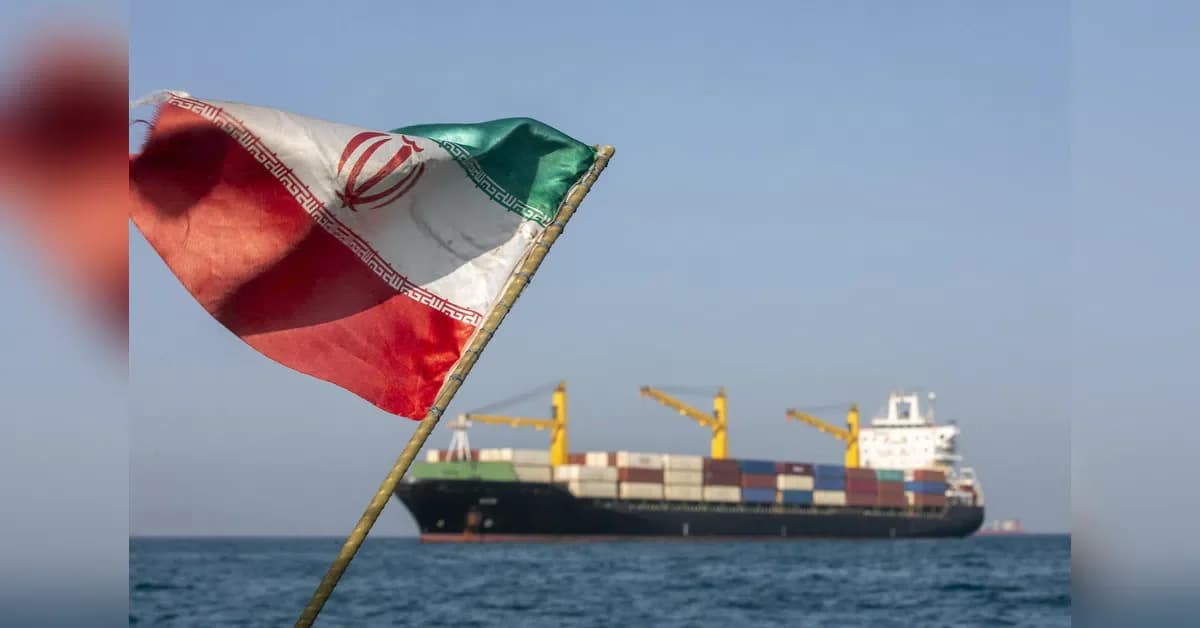
Oil prices surged to above $82 per barrel on Monday as global investors focused on US President Donald Trump's latest threats to Iran amid ongoing peace deal negotiations. Brent crude oil prices rose 2.2% during early trading to $82.30 per barrel, while West Texas Intermediate (WTI) crude oil prices moved above the $78-a-barrel mark, reflecting heightened geopolitical risk premiums in energy markets. According to CNBC TV18 and Investing.com data, crude oil futures were trading 4.18% lower over the last five days and more than 21% lower in the last one month, with prices cooling down nearly 26% in the last three months. The more active August contract rose $1.43 to $77.28 a barrel, as reported by MST Marquee head of energy research Saul Kavonic, who noted 'The market's expectation of the opening of the Strait has been premature'. Benchmark European natural gas prices climbed as much as 3.9%, while US gasoline and diesel futures also advanced, extending the uncertainty beyond crude markets. As per GlassRatner Advisory's Seth Freeman, Brent crude had fallen around $80 and prices were previously in the $60s before the latest escalation, suggesting the market remains partially elevated relative to earlier levels.
The immediate trigger for the price rise was the possibility that negotiations could face disruption. Iranian media reported that Tehran had suspended talks after Trump's warning, though people familiar with the discussions indicated that negotiations had not fully collapsed and were continuing despite a tense opening. The discussions are being held at Bürgenstock in Switzerland and are part of a 60-day negotiation window that began after Trump signed a memorandum of understanding aimed at reducing tensions. The talks are understood to be focused on maritime security, ceasefire compliance and ways to prevent a wider regional escalation. According to CNBC TV18, citing a senior US diplomat involved in the Swiss discussions, negotiators worked through the early hours of Monday on mechanisms to ensure the waterway remains open and on arrangements to uphold the ceasefire between Israel and Hezbollah in southern Lebanon. Iran, meanwhile, accused Israel of violating a ceasefire agreement in Lebanon, further complicating efforts to secure a broader regional understanding. Around 80 million barrels of crude could quickly return to global markets if the Strait of Hormuz fully reopens and regional tensions ease, creating a significant supply overhang, particularly at a time when demand growth remains subdued, especially in China, the world's largest crude importer. As per GlassRatner Advisory, 'If the ships can't get through the strait,' prices could react sharply to supply disruptions, with declining global reserves and supply pressures potentially fueling inflationary pressures including higher food prices in the coming months.
Despite the latest tensions, oil prices fell more than 8% last week on expectations of more supply from the release of cargoes stranded inside the Gulf and the potential lifting of US sanctions on Iranian oil as part of the US-Iran deal. Over 25 million barrels of Iranian oil have passed through the virtual blockade line since Monday, the head of the National Iranian Oil Company Hamid Bovard told state TV on Sunday. The conflict has disrupted supplies from a region responsible for nearly one-third of global oil production. However, experts remain skeptical about the prospects for a comprehensive nuclear deal within the 60-day timeline, with analysts noting that global oil inventories were depleted during the extended disruption and will take time to rebuild. Monday's rebound showed that the market remains vulnerable to headlines from the region, with Brent's move of as much as 2.2% at the open reflecting a reassessment of geopolitical risk rather than a confirmed supply shortage. More than 11,000 Brent crude contracts were traded across the curve during the first 10 minutes of Monday's session, marking a busier-than-usual start to the trading week, while the benchmark's prompt timespread widened slightly in backwardation, though it remains considerably narrower than levels seen in early April.