The US Energy Information Administration (EIA) has revised its oil price forecasts upward due to persistent Middle East supply disruptions. For 2026, the EIA now expects Brent crude oil prices to average $86.81 a barrel, and U.S. West Texas Intermediate crude to average $80.88 a barrel, significantly higher than the prior forecast of Brent crude averaging under $82 and WTI just over $76. Brent crude prices will fall 20.1% from 2026 to average $69.39 a barrel next year, compared to the prior forecast of a 20.9% decline, while WTI prices will decline 19.1% to $65.39 a barrel, compared to the prior forecast of a 20.3% decline. The EIA estimates about 5.5 million barrels per day of Middle East oil output, or over 5% of global consumption, was shut-in during July, with flows through the Strait of Hormuz expected to remain severely constrained through August after renewed attacks on vessels.
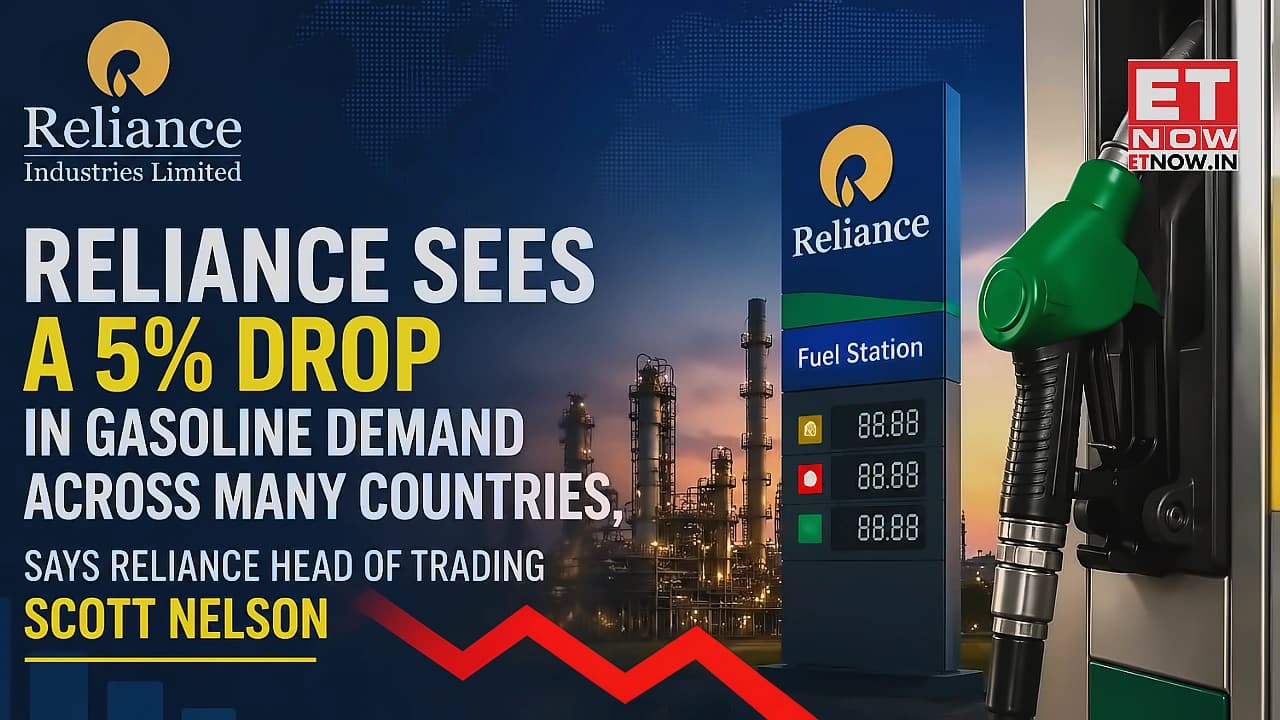
The US Energy Information Administration has released updated projections for India's liquid fuels consumption, indicating a modest decline for 2026 before a recovery in 2027. According to the EIA's latest monthly update, India's consumption is expected to reach 5.62 million barrels per day (mbpd) in 2026, representing a decrease from the 5.67 mbpd recorded in 2025. The projections show a marginal increase of 0.34 million b/d in 2027, bringing consumption to 5.97 mbpd. These consumption patterns reflect the widening supply deficit that has prompted the EIA to raise its oil price forecasts for both 2026 and 2027.
India's liquid fuel output is projected to remain relatively stable over the forecast period. As reported by the EIA, India's liquid fuel output is expected to reach 0.99 mbpd in 2026 and is anticipated to rise to 1.02 mbpd in 2027. This production increase is expected to support the projected consumption growth in the following year. The widening supply deficit has contributed to the EIA's decision to raise oil price forecasts, as global oil output is expected to average about 100.8 million bpd this year, about 1% below the forecast in July STEO, while world oil demand is expected to be about 104 million bpd, the same as the July forecast.
According to a joint study by the Confederation of Indian Industry and EY titled 'India's energy security in a volatile world: Independence, efficiency and resilience', India's energy security remains closely linked to developments in the Middle East despite diversification efforts. The report notes that while India is projected to become the world's second-largest net oil importer by 2050 with net imports poised to inch toward 10 million barrels per day, the Middle East is expected to remain the world's largest net oil exporting region through 2050. The Middle East supplied as much as 65% of India's crude oil imports before the Russia-Ukraine war began, but its share fell below 50% in fiscal year 2024-25 as imports from Russia rose significantly. Even if most Middle East oil output and global trade recover to pre-conflict levels by early 2027, about 600,000 bpd of production from the region will be shut-in through the end of 2027, according to the EIA.
India's hydrocarbon procurement strategy has evolved significantly, with imported crude rising to 246.4 million mt in FY 2025-26 from 193.8 million mt in FY 2020-21. Consequently, the share of imported crude in total crude processing increased to 90.6% in FY 2025-26 from 87.4% in FY 2020-21, indicating that nine out of every 10 barrels of crude processed in India are now sourced from international markets. In FY 2025-26, LPG accounted for about 54% of petroleum product imports by value, making it by far the largest imported petroleum product. The transport sector remains the dominant consumer, accounting for about 57% of total petroleum consumption in FY 2024-25. These import trends are particularly significant given the current Middle East supply disruptions that are driving global oil prices to multi-year highs.
The EIA's projections reflect a marginal decline in consumption for 2026, followed by a recovery in 2027, with the widening supply deficit prompting the agency to raise oil price forecasts. According to the latest monthly update from the US Energy Information Administration, this consumption pattern suggests a temporary adjustment in India's liquid fuel demand before expected growth resumes in the subsequent year. Despite short-term fluctuations, the long-term trajectory remains firmly upward, reflecting the continued role of petroleum products in supporting India's economic growth and development across transport, industrial, petrochemical and other economic activities. The current Middle East supply disruptions, which have forced oil producers across the region to sharply reduce production, are expected to keep global oil prices elevated through 2026 and into 2027.