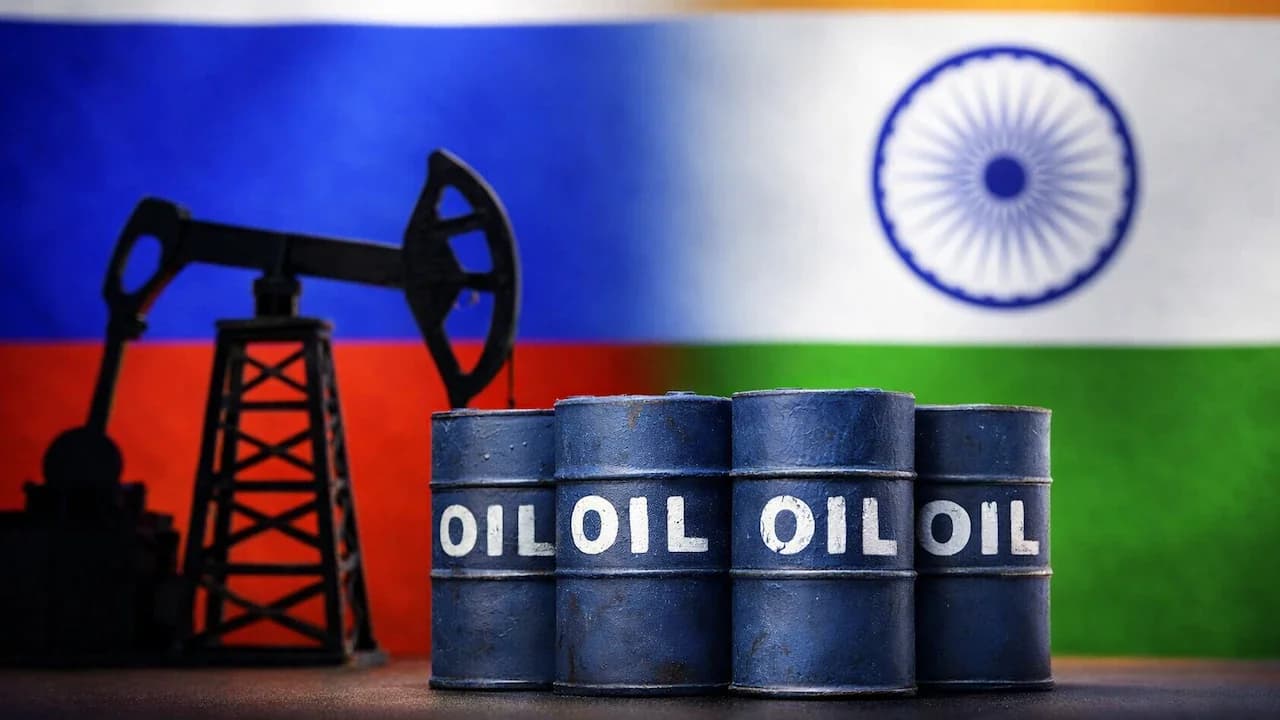
India's crude oil imports from the US are set to reach a record low in August 2026, with latest data showing imports around 52,500 barrels per day (bpd). According to Kpler data, this represents a dramatic decline from the 565,000 bpd peak in October 2025, marking a nearly 87% fall from the highest recorded level. The trend shows US crude flows dropping steadily from 295,000 bpd in January 2026 to 125,000 bpd in July, before recovering slightly to 160,000 bpd in June. As per The Hindu BusinessLine, India's crude oil imports from the US during August are expected to hit their lowest levels since December 2024, with the current levels representing the weakest monthly performance in almost two years. The shift comes as refiners increasingly favour heavier, sour grades better suited to their refinery configurations, while Russian supplies continue to gain ground.

The decline in US crude purchases is attributed to refinery economics, crude quality considerations, and logistics challenges. According to The Hindu BusinessLine, Indian refiners have been contacting lower supplies from the US, which is a light sweet crude grade that produces more petrol and naphtha. However, refineries are configured for medium-to-high sour grades such as Ural, Murban, Basrah, etc., making light US barrels less economically viable. Kpler analyst Sumit Ritolia noted that Washington's crude oil supply has become increasingly light, which does not always fit naturally into the refining diet of India's complex refining system. The higher travel time of 40-45 days adds to freight costs and reduces competitiveness compared to supplies from Russia and other closer producers. Analysts and industry sources indicate that Indian refiners may prefer medium-to-heavy sour crude over lighter US grades, which are considered a relatively poor fit for parts of India's refinery mix.
Additional logistics costs have emerged due to geopolitical disruptions affecting key shipping routes. As reported by The Hindu BusinessLine, choking of the Strait of Hormuz (SoH) and the Bab-el-Mandeb (BeM) pushed up logistics costs, making US crude imports less attractive. The disruptions to higher-API Middle Eastern Gulf barrels have increased the share and importance of medium-grade crude in India's import slate, further limiting the economics of adding incremental light US barrels. Kpler analyst Sumit Ritolia emphasized that longer voyages, elevated freight costs and competition from East Asian refiners for US barrels can make the arbitrage into India less compelling. The shift towards heavier sour grades better suited to Indian refineries represents a strategic response to optimize crude economics amid disruptions to traditional supply routes.
The current import levels represent a significant departure from historical US crude flows to India. According to The Hindu BusinessLine citing US Energy Information Administration (EIA) data, India's crude oil imports from the United States have been on the lower side since the beginning of the current calendar year. Data shows that New Delhi cumulatively imported around 759 thousand bpd of crude oil from Washington during January to May 2026, which is the second lowest on record. The lowest was recorded during January-May 2018 at around 455 kb/d. For comparison, the highest volume imported from the US by India during the first five months of a calendar year was reported in 2025 at roughly 1,561 kb/d and during the Covid-impacted 2022 at around 1,531 kb/d. The current 52,500 bpd average in August puts the country's imports on track for their weakest monthly level in almost two years.
The OPEC-7 agreed to raise output by a nominal 188k BPD in September, completing the rollback of voluntary cuts introduced in 2023. The group maintained a cautious tone on the supply outlook, expressing concern over recent attacks on energy infrastructure and disruptions to international shipping lanes amid heightened geopolitical tensions. The broader layer of roughly 2 million BPD of OPEC+ cuts remains in place through year-end, with the next JMMC meeting scheduled for 4th October and the next OPEC-7 meeting on 6th September. The official statement made no reference to Q4 supply policy for October-December, making the next meeting notable amid expectations for a pause in output hikes.
New Delhi has accelerated spot purchases from the United States and other suppliers to offset reduced Middle East supplies, with US LPG imports topping 1 million tons in June for the first time and likely to exceed India's initial 2026 annual-contract target of 2.2 million tons. As reported by Reuters, India plans to buy up to a quarter of its liquefied petroleum gas imports from the United States in 2027, a move that would cut its reliance on the Middle East and support efforts to secure a trade deal with Washington. This diversification strategy follows New Delhi's worst LPG shortage earlier this year after the Iran war and closure of the Strait of Hormuz disrupted supplies, with the government invoking emergency measures to divert petrochemical feedstocks from industry to households.