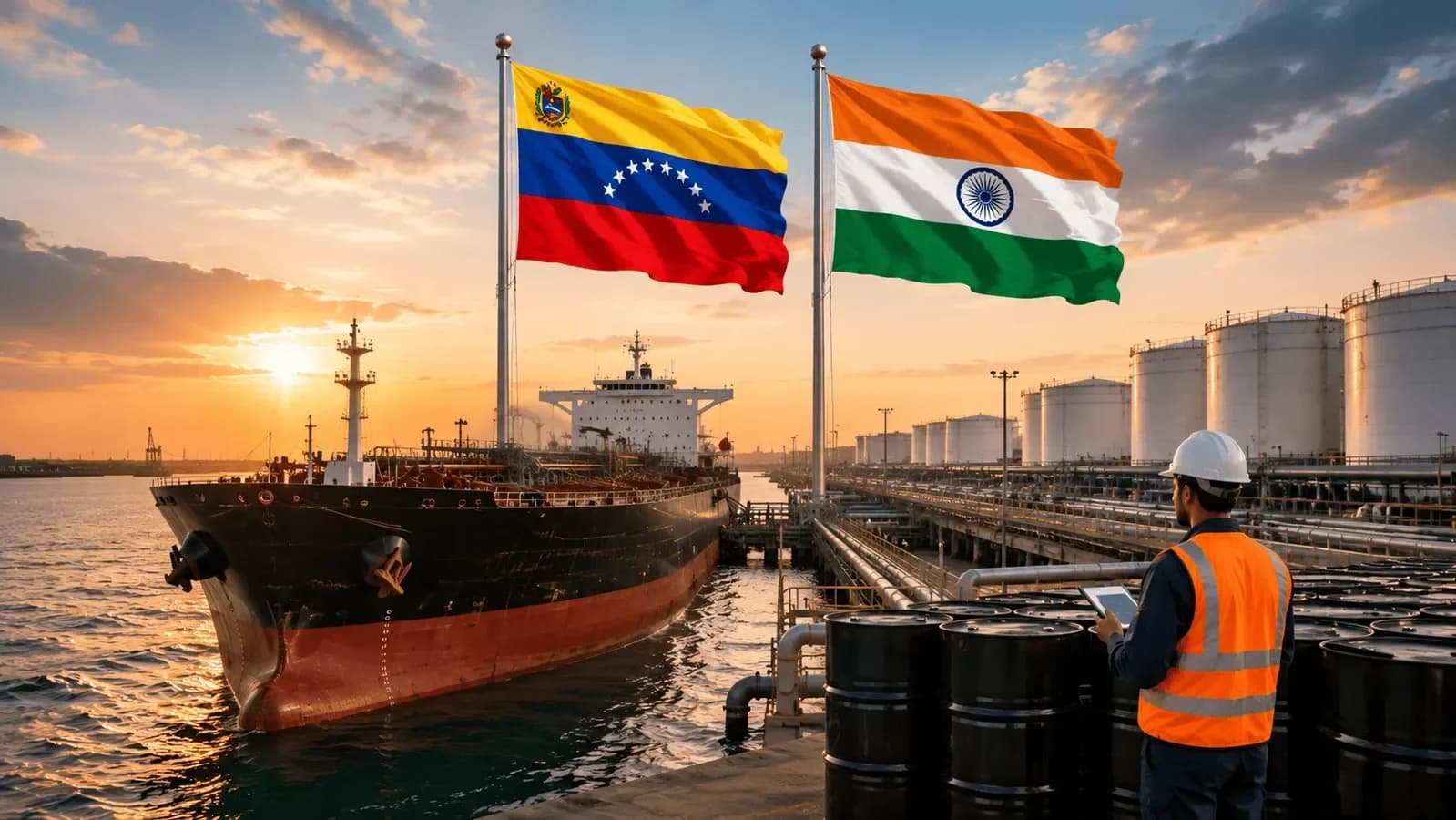
Indian crude imports from Venezuela have risen sharply in August, making the South American producer the country's fourth-largest supplier with supplies reaching about 371,000 barrels per day, according to latest ship-tracking data from Kpler. This positions Venezuela ahead of Iraq's 106,000 bpd and the United States' 138,000 bpd. Venezuela's position in India's supply mix has risen rapidly since imports resumed in April, with Indian refiners increasing purchases of Venezuelan, Brazilian and African crude after disruptions to West Asia supplies. The shift comes as India will continue to act as Asia's swing supplier when regional markets tighten, according to Lin Ye, a vice president at consultancy Rystad Energy, with consistently high utilization at export-focused refineries such as Reliance and Nayara enabling India to respond to tightening regional balances.
Russia remains the dominant supplier with imports close to 2 million bpd in August, maintaining its position as the world's third-largest oil consumer's primary source. Russian crude imports reached around 2.6 million bpd in June-July, accounting for more than half of India's crude intake and effectively providing a hedge against disruption to traditional West Asia supply routes. Indian refiners dramatically increased Russian purchases as the Iran conflict disrupted Gulf flows, with Russian crude accounting for more than half of India's imports in July. In the U.S., refiners exported distillate fuels at a record pace of 1.9 million barrels a day in the week ended August 7, with jet fuel exports of 443,000 bpd just shy of the record 455,000 bpd hit in May, as reported by government data.
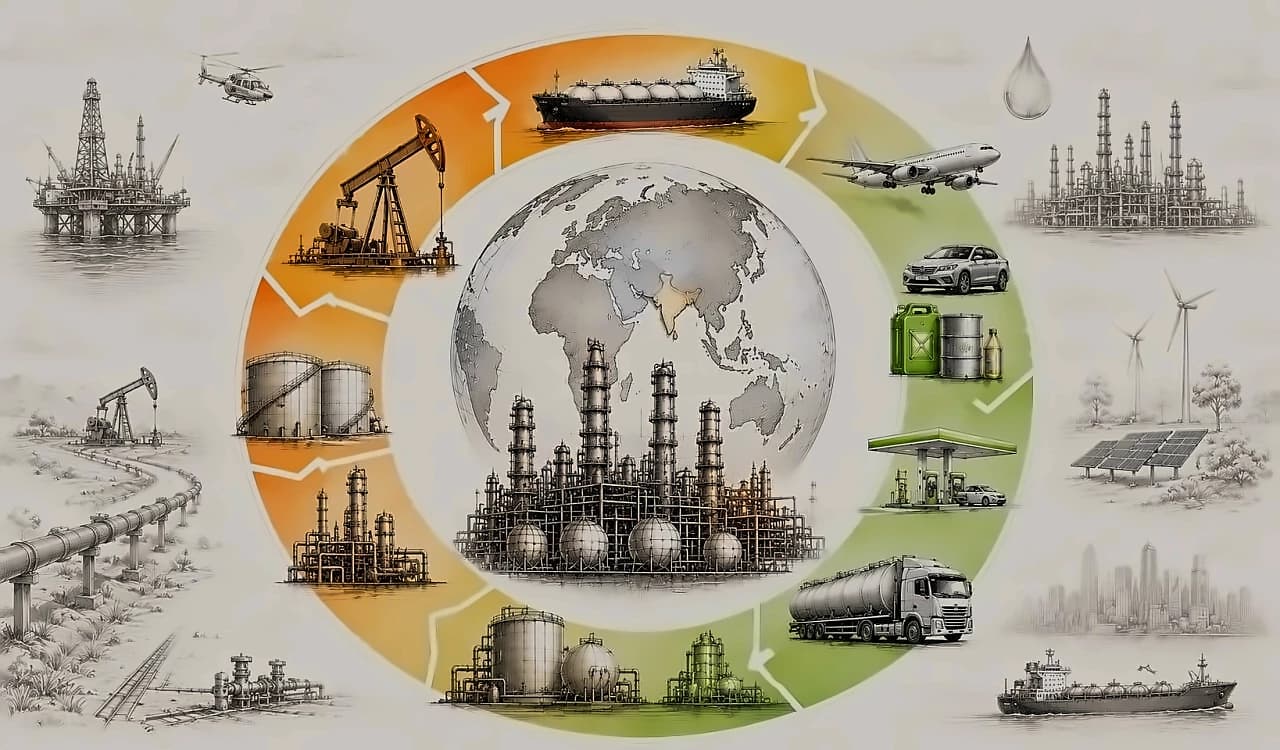
Indian refiners have shown considerable flexibility in switching between West Asia, Russian and Atlantic Basin barrels, with overall crude imports remaining around 5 million bpd in recent months. Latin American supplies, including Venezuela and Brazil, rose to 12.7 per cent over the April-July period from 3.5 per cent a year earlier, while supplies from the West Asia fell to about 30 per cent of the country's import basket during April-July, from 43 per cent a year earlier. According to Kpler's Sumit Ritolia, India's strategy involves increasing domestic upstream production, diversifying overseas crude suppliers and transportation routes, building strategic and commercial inventories, and accelerating alternatives such as gas, biofuels, EVs and renewables. In the U.S., refiners have prioritized jet fuel production over gasoline due to stronger export demand, with gasoline inventories at 208.7 million barrels as of August 7, about 6% below the five-year seasonal average.
The shift highlights a broader strategy emerging from the disruption: India is not moving away from oil in the near term, but is seeking to make the crude it still needs more secure and resilient by widening its supplier base and transportation options. As reported by Kpler, geopolitical disruption can raise India's oil import bill even when refiners are able to secure sufficient physical crude, with longer voyages from Venezuela, the US, West Africa or Latin America increasing freight and insurance costs. India remains one of the largest sources of global oil-demand growth, supported by rising vehicle ownership, mobility, aviation, industrial activity and petrochemical consumption, making oil likely to remain an important part of the energy mix for a long time. Global refining throughput fell to about 89 million barrels per day in July, down 5 million barrels per day from last year, according to International Energy Agency data, with global oil demand over 100 million bpd.