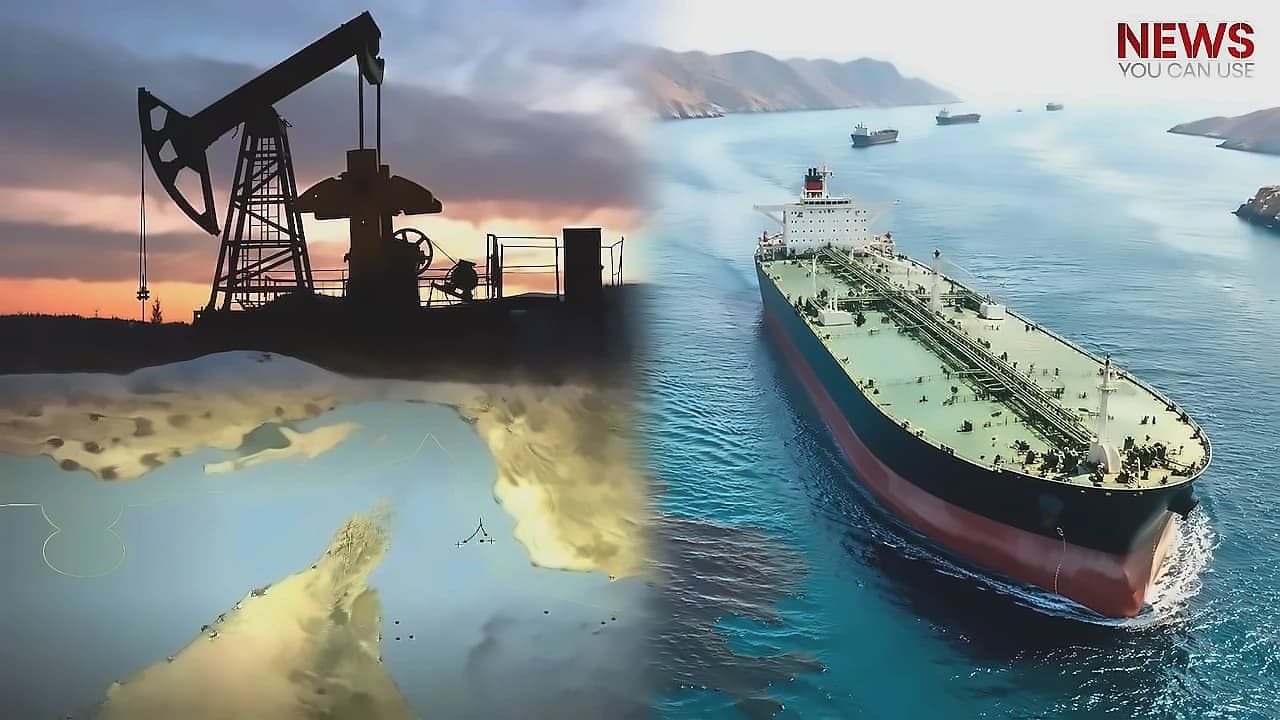
The latest exchange of fire in the Strait of Hormuz, following US President Donald Trump's comments on a ceasefire, has renewed concerns over the security of one of the world's busiest energy shipping lanes. However, the impact on India's crude supplies is likely to be limited because refiners have diversified their sourcing over the past few years, according to Kpler analyst Sumit Ritolia. As reported by The Economic Times, crude flows through the Strait had not fully recovered before the latest escalation, but for India, it has largely been business as usual over the past 100 days, with refiners successfully managing supply through a diversified import portfolio. This latest escalation has reinforced India's strategic positioning through its diversified import portfolio, with cargoes that can safely transit the Strait of Hormuz still expected to move, although freight rates and insurance costs could increase if regional tensions persist. The situation has been further complicated by Iran's military striking at least three ships in recent days, prompting extensive US strikes against Iranian targets on July 7 followed by retaliatory attacks from Iran on Gulf countries that harbour American bases.
India's crude oil imports reached a record 4.93 million barrels per day (bpd) in June, driven by a sharp increase in purchases from Russia as refiners sought to bolster supplies amid disruptions around the Strait of Hormuz. According to The Economic Times, Russian crude imports climbed to about 2.7 million bpd, accounting for more than half of India's total crude imports during the month. This surge cemented Russia's position as the country's largest oil supplier by a wide margin, with the diversified sourcing strategy proving effective in maintaining supply security. The diversified sourcing approach has provided India with multiple supply routes and alternative suppliers, with supplies from Saudi Arabia and the United Arab Emirates routed through bypass infrastructure providing additional security, while West African and Latin American grades have helped diversify refinery feedstock. As reported by Moneycontrol, India has been a major buyer of Iranian crude, importing significant volumes of light and heavy grades due to strong refinery compatibility and favourable commercial terms, with Iran accounting for around 11.5 percent of India's imports at peak before sanctions were tightened in 2018.
The diversified sourcing approach has provided India with multiple supply routes and alternative suppliers. As reported by The Economic Times, Russia continues to account for a significant share of India's crude imports, while supplies from Saudi Arabia and the United Arab Emirates routed through bypass infrastructure provide additional supply security, with West African and Latin American grades helping diversify refinery feedstock. This multi-pronged approach has enabled India to maintain crude supply stability even as regional tensions have disrupted traditional shipping routes through the Strait of Hormuz. The latest developments show that India's strategic diversification has successfully insulated the country's crude supplies from regional disruptions, with the focus shifting to liquefied petroleum gas (LPG) and liquefied natural gas (LNG), which have fewer short-term alternatives and remain more vulnerable to Gulf supply and shipping disruptions. According to Kpler analysis, a prolonged period of instability could tighten availability, increase freight costs, and add pressure to regional prices again, as seen over the last few months, with analysts noting that unlike crude, these markets have fewer short-term substitution options and remain more exposed to Gulf supply and shipping disruptions.
While crude supplies remain secure, analysts warn of potential vulnerabilities in other energy sectors. According to Kpler analysis reported by The Economic Times, a prolonged period of instability could tighten availability, increase freight costs, and add pressure to regional prices again, as seen over the last few months. Iranian crude is unlikely to emerge as a meaningful source for Indian refiners despite any potential disruptions, with uncertainty around US sanctions policy, compliance risks, and commercial considerations making Iranian barrels unlikely to become a meaningful part of India's crude slate in the near term. The situation has become more complex with the US revoking sanctions relief on July 7 that had allowed oil imports from Tehran, with refiners who placed orders for Iranian crude putting their plans on hold due to uncertainty over payments and letters of credit. As reported by Moneycontrol, Shell India and BPCL are among the companies that have released payments or issued LCs, with companies now either looking to reroute shipments or exploring options for third-party providers. For now, India's crude supply story remains one of diversification and resilience, not immediate scarcity, with the key variables to watch being how long regional tensions persist, the impact on shipping and insurance costs, and whether LPG and LNG markets begin to experience more meaningful disruptions.