Gulf crude supplies to India have demonstrated remarkable resilience, rebounding to 1.52 million barrels per day in September from 1.03 mb/d in June, according to Kpler data shared with NDTV Profit. The September level represents a significant recovery from June's 1.03 mb/d, which was the lowest recorded in Kpler's data since 2017. This rebound indicates that Gulf producers and buyers are successfully finding ways to maintain crude flows despite disruption risks around the key shipping route. The recovery comes as the International Energy Agency (IEA) warns that global oil markets are facing renewed upward price pressures due to continued disruptions to Middle East exports. Recent developments show that Saudi exports had risen above 4 million barrels per day in September, compared with 2.4 million bpd in August, as reported by Reuters.
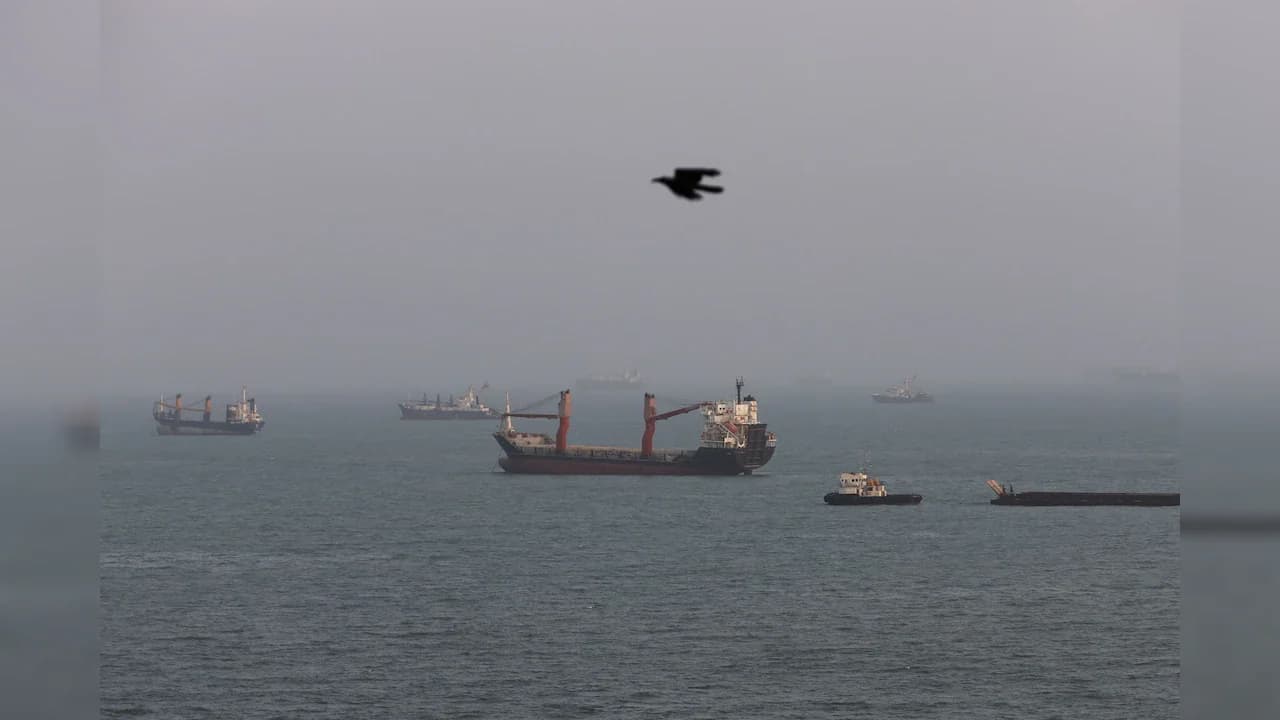
The recovery has been facilitated through innovative logistics arrangements, with producers using ship-to-ship transfers near Sohar and Fujairah to bypass Strait of Hormuz risks. As reported by NDTV Profit, these alternative arrangements allow crude to be moved through logistics arrangements that avoid the traditional shipping route. Sellers are also absorbing some of the risks associated with transporting barrels through the region, demonstrating their commitment to maintaining crude availability despite heightened shipping risks. The IEA notes that Saudi Arabia and the United Arab Emirates moved quickly to redirect available crude through routes that bypass the Strait of Hormuz, with exports from Saudi Arabia's Red Sea port of Yanbu and the UAE's Gulf of Oman port of Fujairah increasing from 4.1 mb/d in February to a peak of 7.8 mb/d in June. Saudi Arabia has been forced to adjust its export routes after damage to its East-West pipeline disrupted the kingdom's ability to move crude to the Red Sea port of Yanbu, increasing reliance on routes through or around Hormuz. Recent developments show that Saudi Arabia has shifted to the US-guided corridor in the Strait of Hormuz after the East-West pipeline was attacked earlier this month, with six supertankers loading 12 million barrels at Saudi terminals on Monday according to shipping data company Kpler.
Iraq, UAE, and Kuwait have led the supply growth in September, with Iraq shipping around 7.8 million barrels to India on six tankers during the first three weeks of September, compared with 5 million barrels on five tankers in August. According to NDTV Profit, UAE crude supplies have remained resilient with around 9 million barrels arriving in India so far in September. Meanwhile, Kuwait has returned to India's crude import mix, supplying around 5 million barrels during September so far, marking its return to the Indian market. The IEA reports that oil flows through the Strait of Hormuz averaged just 7.6 million barrels per day in August, about 13.1 mb/d below pre-war levels, with cumulative export losses through the strategic waterway approaching 2.8 billion barrels. Analysts estimate that some 6 million barrels of oil per day or more have been passing through the southern route on average, representing 40 per cent or more of pre-war flows through the US-guided corridor in the Strait of Hormuz.
The supply shock has been cushioned by significant contributions from non-Gulf producers, with the IEA estimating that non-Gulf producers have added a cumulative 420 million barrels, equivalent to approximately 2.3 mb/d of additional oil supply, since the beginning of the conflict. Between February and August, the largest production increases came from the United States, which added about 520,000 barrels per day, followed by Brazil with 470,000 barrels per day, Kazakhstan with 440,000 barrels per day, Venezuela with 300,000 barrels per day and Nigeria with 200,000 barrels per day. The IEA estimates that the bypass routes have offset more than 500 million barrels of lost supply from the Strait, equivalent to about 2.8 mb/d. However, the agency warns that these measures have not fully replaced the volumes lost from the Gulf, with the actual supply deficit estimated at around 2.2 mb/d in Q2 2026 and 1.7 mb/d in Q3. The IEA has consequently pushed back expectations for a full recovery in Gulf production to 2027, while forecasting a 5.7 million bpd decline in global oil supply in 2026.
Oil prices have edged lower in early Asian trading on Monday (Sept. 21), but remained at historically elevated levels as markets balanced signs of recovering Saudi supplies against continuing disruption around the Strait of Hormuz. A snapshot from OilPrice.com at 10am Tokyo time showed WTI falling to about $99.4 and Brent remaining above $103, with the fact that WTI was just below $100 while Brent remained above that threshold illustrating how tightly the market is balancing physical supply concerns with expectations of eventual diplomatic and logistical relief. The Strait of Hormuz remains severely constrained, with only four commodity vessels detected moving into or out of Hormuz on Sept. 17, well below normal traffic. The IEA said in its September Oil Market Report that more than 10 million barrels per day of Gulf production remained shut in during August because of heightened security risks. Global observed oil inventories fell another 95 million barrels in August, bringing cumulative draws since February to 507 million barrels. However, analysts estimate that the market is very tightly balanced, with Rystad Energy forecasting oil at $85-$90 per barrel in the last three months of the year, and falling to $80-$82 next year if Hormuz is reopened. The workarounds are expensive, with spot charter rates for Hormuz transits reaching $1 million per day on Sept. 11, equivalent to roughly $26 per barrel - making shipping a quarter of the usual cost instead of the typical 1-3 per cent.