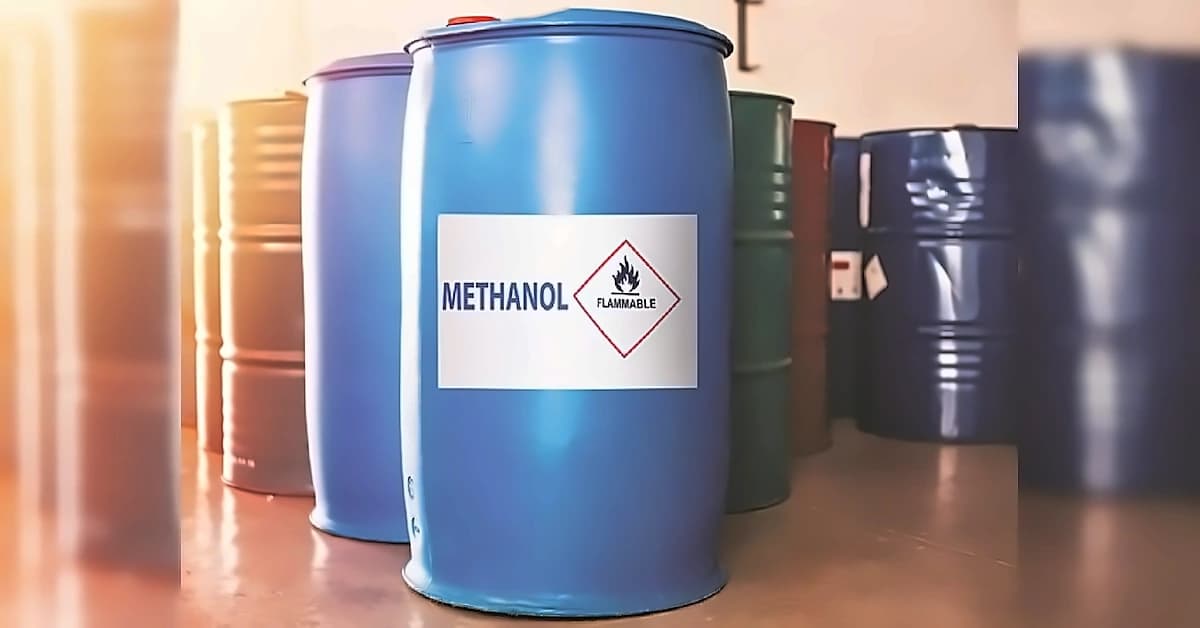
India has significantly diversified its methanol import sources following the West Asia conflict, reducing its dependence on the Middle East while substantially increasing purchases from China. According to the latest data from Directorate General of Foreign Trade (DGFT), India sourced only 51% of its imports from the Middle East during March-May 2026, down from approximately 88% during April 2025-February 2026. The shift comes after the conflict disrupted production and logistics across the Gulf, forcing Indian buyers to seek alternative suppliers. During the last fiscal year, India imported around 3.57 million tonnes of methanol, with the Middle East accounting for nearly 88% of imports before the conflict outbreak.
China emerged as one of the biggest beneficiaries of India's diversification strategy, accounting for around 12% of India's methanol imports in April and approximately 26% in May. As reported by Crisil Intelligence, China's coal-based methanol producers capitalised on relatively stable domestic coal prices and widening export margins. Unlike most global producers that rely on natural gas as feedstock, nearly 70-75% of China's methanol output is produced through coal gasification, enabling the country to maintain stable production despite disruptions in global natural gas markets. India also sourced methanol from Venezuela, Malaysia, Russia, Japan and Algeria during the March-May period to offset supply disruptions from the Gulf.
Country-wise sourcing patterns showed dramatic shifts during the conflict period. According to Crisil, Saudi Arabia's share of India's methanol imports dropped sharply to 6% in March from 34% in February 2026 and fell to zero by May. In contrast, imports from Oman nearly doubled in March from the previous month as the country's export terminal is located outside the conflict-sensitive Strait of Hormuz. Oman's exports rose 95% month-on-month by volume, primarily because its facilities are located outside the troubled Gulf transit routes. The conflict significantly altered global methanol trade flows, with industry estimates suggesting that by the end of May, more than 4.5 million metric tonnes of global methanol production had been affected as leading Gulf producers declared force majeure and curtailed operations.
The geopolitical conflict triggered unprecedented price increases across the methanol market. As reported by Crisil, cost-and-freight (CFR) prices for India rose about 130% year-on-year in April and 141% in May, driven by higher war-risk insurance premiums. Domestic methanol prices climbed around 182% year-on-year to ₹73,950 per tonne in May, while average CFR India prices during the first quarter of the current financial year were 114% higher year-on-year at $569 per metric tonne. The supply shock was particularly severe during April and May when imports declined amid production outages and higher shipping costs. The temporary closure of the Strait of Hormuz further aggravated supply concerns, as the strategic waterway handles roughly one-third of global seaborne methanol trade.
To address supply pressures, the government announced a three-month tariff waiver on methanol and 40 critical petrochemical products in early April, which was later extended until July 15. Looking ahead, Crisil expects methanol CFR India prices to remain elevated, averaging $380-420 per tonne in FY27, amid a tighter global supply-demand balance and continued uncertainty in West Asia. The recent supply disruptions have reinforced the importance of strengthening domestic manufacturing capabilities. The government has been promoting coal and lignite gasification as part of its broader strategy to improve energy security, reduce import dependence and expand indigenous methanol production. Over the longer term, India's ₹37,500 crore coal and lignite gasification programme, along with investments in green methanol and e-methanol projects, could substantially reduce the country's dependence on imports and shield downstream industries from future global supply disruptions.