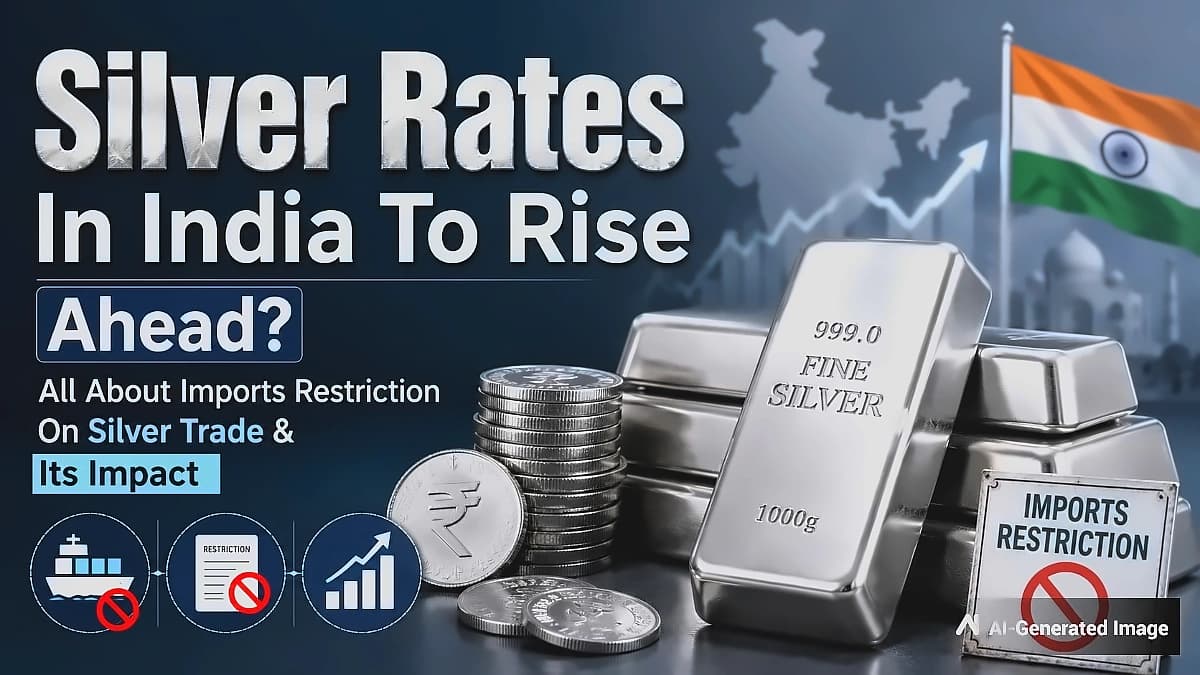
The Indian government has doubled gold and silver import duties from 6% to 15% effective May 13, 2026, adding roughly $704 per ounce to gold import costs at current prices. According to the India Ministry of Finance notification, the new structure includes 10% basic customs duty plus a 5% Agriculture Infrastructure and Development Cess. This follows the earlier hike in customs duty on gold and silver to 15% from an earlier 6%, with silver bars of 99.9% purity and all other semi-manufactured forms of silver placed under restriction category from May 16, 2026. These two silver categories accounted for 90% of India's total silver imports in the previous year. As per Mirae Asset Mutual Fund, the measures are aimed at curbing imports, preserving foreign exchange reserves and stabilising the rupee during a period of global uncertainty and elevated crude oil prices.
As reported by Goodreturns, India spent a record ₹1,00,000 crore ($12 billion) on silver imports in financial year 2025-26, compared to ₹2,160 crore ($4.8 billion) in 2024-25 fiscal. In April 2026, silver imports recorded a 157% jump to ₹3,500 crore ($411 million) compared to the same month last year. India imports silver primarily from markets including the UAE, Britain, and China. The duty hike is expected to suppress near-term buying, with some retail purchases getting delayed and wedding-season orders getting postponed. However, historical precedent from 2013 suggests that deferred demand is not destroyed demand, as similar duty increases in that year triggered a smuggling surge and sharp recovery once duties eased.
According to Mirae Asset Mutual Fund, silver import restrictions raise ETF supply concerns as gold and silver ETFs are backed by LBMA-certified physical bullion, meaning asset management companies must procure and store physical metal for every ETF unit created. The restrictions on silver bar imports may affect the supply chain for silver ETFs if approvals are delayed or imports slow meaningfully. Market participants are closely monitoring whether the import restrictions eventually affect the functioning and pricing of silver ETFs. As per DSP Asset Managers, the impact remains a wait-and-watch situation, with supply conditions currently comfortable but limited clarity on exact implications of moving silver bars from the 'free' to the 'restricted' category. The market has already started witnessing discount compression in silver ETFs between May 15 and May 18, 2026, with the domestic premium-discount gap narrowing sharply from negative ₹11,840 per kilogram to negative ₹5,000 per kilogram during this period.
According to Jateen Trivedi, VP Research Analyst-Commodity and Currency at LKP Securities, as reported by Goodreturns, the silver import restriction means entry is now guarded rather than shut, with supply being channeled through nominated agencies like RBI banks and DGFT-approved entities. For the domestic market, this translates into higher premiums for consumers. As of now, 1 kg silver price in India stands at ₹2.80 lakh, while 100 grams and 10 grams silver rates are at ₹28,000 and ₹2,800 respectively. The gold import duty hike adds roughly $704 per ounce to gold import costs at current prices of $4,689.74 per ounce. Mirae Asset notes that prices of precious metals in India are dependent on International Prices, Forex Rate, Custom Duty, and Domestic Premium/Discount, which depends on local supply and demand.
The government's decision to double import duties comes as India faces mounting pressure on its currency reserves. As reported by multiple sources, India pays for oil in US dollars and Brent crude is trading around $107 a barrel since the Strait of Hormuz disruption since late February. Gold imports, typically 700 to 900 tonnes annually, compete directly with oil for the same foreign exchange reserves keeping the rupee afloat. The duty hike aims to slow dollar outflow and prevent further rupee depreciation, though analysts note that when governments tax gold to defend their currency, it confirms that citizens have already chosen gold over paper money. This pattern reflects a broader global trend, with central banks globally purchasing a net 244 tonnes of gold worth a record $193 billion in Q1 2026, up 74% year-on-year according to the World Gold Council.