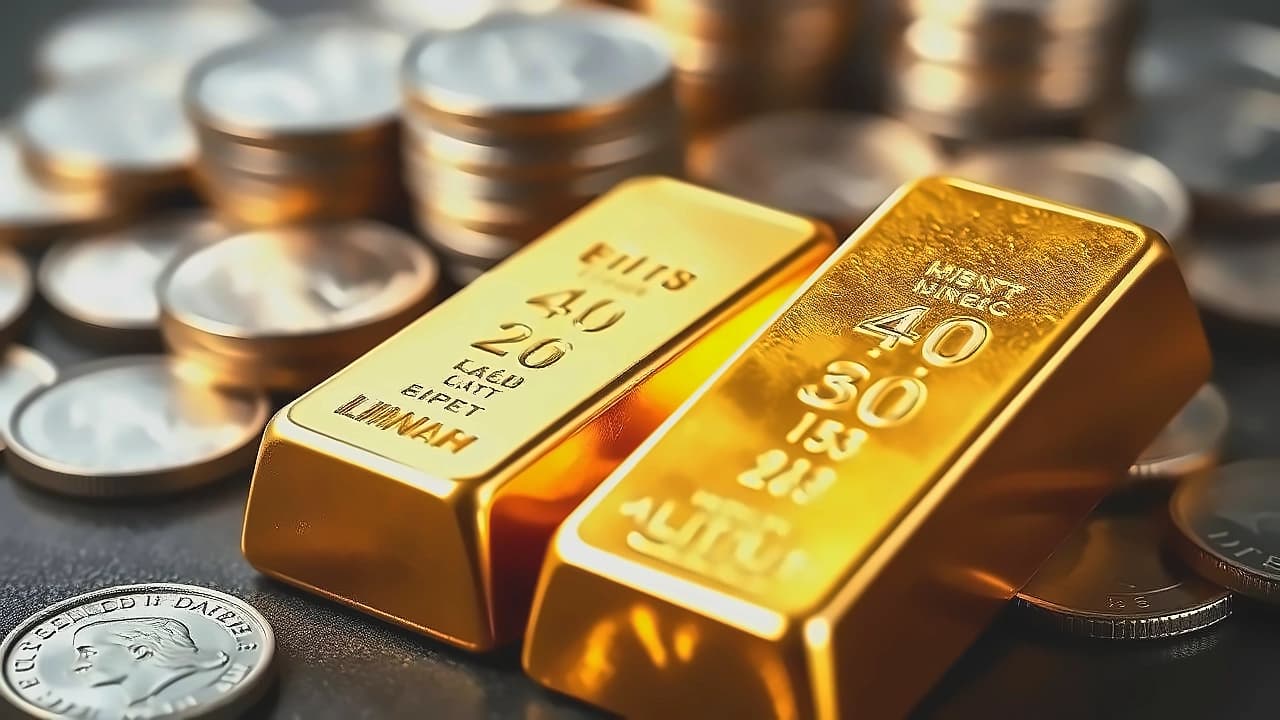
Gold and silver exchange-traded funds (ETFs) traded higher on Friday despite global precious metal prices remaining under pressure. Gold ETFs rose around 1.5% while silver ETFs gained more than 3%, with the gains coming despite weakness in global bullion prices. As per Moneycontrol, spot gold was down 0.5% at $4,193.58 per ounce on Friday and was on track for a weekly decline of about 3.1%. The metal had fallen to a more than six-month low a day earlier before recovering some losses after US President Donald Trump called off planned military strikes on Iran and signalled that a peace deal could be imminent.
The central government on Friday, June 12, cut the base import price of gold by $80 per 10 grams to $1,343, and slashed the silver base import price by $276 per kg to $2,092 per kg. As per GoodReturns, the revision was notified by the Central Board of Indirect Taxes and Customs (CBIC) and aligns India's customs duty calculation base with the ongoing correction in global bullion markets. The revision was announced a day after gold prices crashed sharply in domestic markets, though gold rates have since staged a strong rebound with 24-carat gold price rising ₹294 per gram to ₹14,858 per gram on June 12. The base import price, also called the tariff value, is revised roughly every fortnight by CBIC and influences the cost of gold for importers and bullion dealers, though it does not directly set retail gold rates.
The rise in gold and silver ETFs came amid a broader risk-on mood in domestic equities. As per Moneycontrol, at around 11:19 am, the Sensex was up 770 points and the Nifty had gained nearly 200 points, while India VIX fell more than 4.5%. The gains in precious metals ETFs came despite weakness in global precious metal prices, with the tariff value reduction providing additional support to investor sentiment. The tariff value is a reference price used for calculating customs duty on imported precious metals and does not reflect the actual market price. A lower tariff value reduces the assessable value on which customs duty is calculated, potentially lowering import costs for bullion importers.
The impact of higher gold import duties is beginning to show results, with government sources confirming that gold imports have declined following the recent duty increases. According to NDTV Profit, the overall import tax on gold and silver has been significantly raised from about 6 per cent to over 15 per cent in May. The duty hike includes a 10 per cent basic customs duty and a 5 per cent agriculture infrastructure cess, making the total import tax close to 15 per cent. Additionally, under a set quota system, the government has raised the levy on gold imports from the United Arab Emirates, which were previously subject to reduced duty rates. This moderation in imports suggests that the duty increase is beginning to influence demand and import trends, marking an early effect of the government's latest measure aimed at curbing inbound shipments of the precious metal.
Among silver-linked funds, Nippon India Silver ETF (SilverBeES) gained 3.05% to ₹228.14, while ICICI Prudential Silver ETF rose 3.05% to ₹238.08. SBI Silver ETF advanced 3.02% to ₹233.62 and Tata Silver ETF climbed 3.11% to ₹23.18. Among gold-linked funds, Nippon India ETF Gold BeES gained 1.56% to ₹121.14, ICICI Prudential Gold ETF rose 1.50% to ₹125.54, SBI Gold ETF added 1.51% to ₹124.86, while Tata Gold ETF was up 1.43% at ₹14.22. The performance came despite global precious metal prices remaining under pressure, with the tariff value reduction providing additional support to investor sentiment.
The tariff changes have significantly impacted the refining sector, with James Jose, managing director of refiner CGR Metalloys, noting that refiners typically operate on margins of around 0.65 per cent. As reported by The Hindu BusinessLine and Business Standard, with discounts now well above that level, refiners have little incentive to import dore. The alloy has also been affected by the tariff change, with New Delhi levying a 0.65 per cent lower import duty on gold dore compared to refined gold, but the alloy has been impacted by the overall tariff increase. As per Business Standard, Kolkata-based bullion dealers noted that even if grey-market operators sell at a 4 per cent discount, they are still making substantial profits, with one dealer stating it's natural for people to try to make quick bucks given the significant margins available. This represents a significant shift from the previous decade when gold refiners operated on more favorable market conditions.