A USIBC-Grant Thornton Bharat report released on Wednesday highlights how the India-US energy relationship is evolving into a strategic partnership spanning trade, investment, infrastructure and energy security across the hydrocarbon value chain. The report, titled 'Strengthening the India-US Energy Partnership: Unlocking Hydrocarbon Opportunities through Investment and Collaboration', points to significant opportunities to deepen collaboration across LNG, crude oil, LPG, ethane and propane, while unlocking new avenues for investment, strengthening energy security and enhancing supply-chain resilience for both countries. As per Grant Thornton, the findings point to hydrocarbons being a key driver of the shared ambition between India and the United States to expand bilateral trade to $500 billion by 2030.
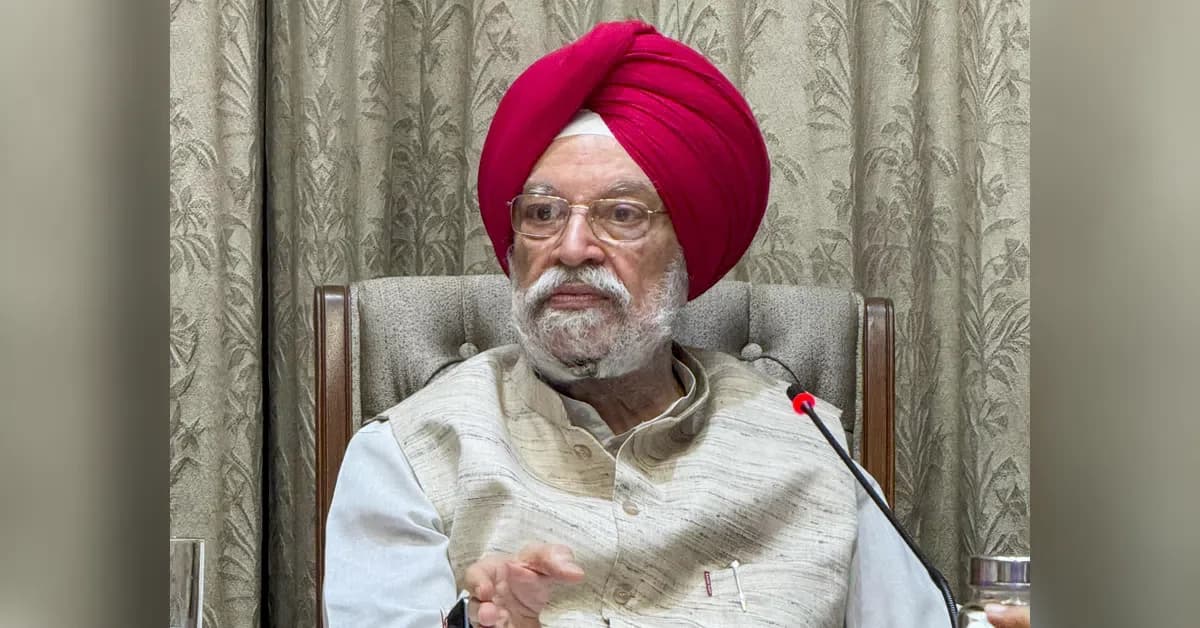
India is significantly increasing crude oil purchases from Russia compared to November last year, according to Petroleum and Natural Gas Minister Hardeep Singh Puri. Speaking to NDTV, Puri emphasized that this strategic shift demonstrates India's successful diversification of energy sources by importing crude oil from as many as 41 countries. The minister stressed that India's energy requirements remain adequately met despite ongoing geopolitical uncertainties, crediting the leadership of Prime Minister Narendra Modi for ensuring both availability and affordability of fuel for Indian consumers. This enhanced sourcing strategy comes as India expects fuel prices to drop in the coming months despite ongoing geopolitical tensions, with Russia continuing to be the largest supplier of crude oil for India in May according to Kpler data, with daily procurement levels nearing 2 million barrels per day when US sanctions waivers were in place.
India maintains total oil and gas reserves sufficient for 76-80 days of consumption, with the country currently meeting around 60 days each of crude oil, natural gas and LPG cover, according to Oil Minister Hardeep Singh Puri. Speaking to CNN-News18, Puri emphasized that 'we all have domestic situations, we have stocks' and highlighted that the reserves include strategic petroleum reserves, refinery inventories, and commercial stocks. The minister noted that 'I don't expect oil prices to be this high for a very long time' and expressed confidence that global supply shortages would be addressed by producers outside the Gulf region. Nearly 60% of LPG and 90% of crude oil imports transit via the Strait of Hormuz, making India's diversified sourcing strategy critical for energy security, with the country now switching to imports from the US during the ongoing West Asia crisis for LPG and LNG supplies. The report recommends deeper cooperation on strategic petroleum reserves, recognising their growing importance in safeguarding economies against global supply disruptions.
Despite US President Donald Trump's February announcement that India would stop buying Russian crude oil and step up energy ties with the United States, India's Russian oil imports are near record highs and the US still doesn't feature among India's top five crude suppliers. However, experts note that India has stepped up LPG and LNG imports from the US, with India's purchases of LNG, LPG, and ethane from the US showing the strongest growth in bilateral energy trade. As per Kpler's Sumit Ritolia, the future of India–US energy trade is increasingly about gas, not crude oil, supported by rising domestic demand, expanding petrochemical capacity, and India's push to diversify energy supplies. US Secretary of State Marco Rubio visited India in late May where he emphasized energy ties between the two countries, while Venezuelan crude has emerged as an important supplier, ranking among the top five suppliers in the three-month period since the conflict began, with Venezuelan crude being heavy and sour and therefore cheaper for Indian refineries. The report identifies opportunities for US investment across India's hydrocarbon ecosystem, including upstream exploration and production, LNG infrastructure, city gas distribution networks, gas-based power generation and downstream petrochemical development.
India's energy demand is expected to grow significantly in the coming decades, with oil demand projected to rise from approximately 4.05 million barrels per day in FY22 to 7.2 million barrels per day by 2030 and further to 9.2 million barrels per day by 2050. Overall petroleum consumption is projected to grow at a compound annual growth rate (CAGR) of 4.59%, reaching nearly 500 million tonnes by FY40 from about 223 million tonnes in FY23. The country currently operates 24 refineries, providing one of the world's largest refining networks, while the number of LPG connections has increased dramatically from around 14 crore in 2014 to more than 33 crore today. India's gas demand is expected to rise rapidly as the economy expands, supported by industrial growth, city gas expansion, petrochemicals, and cleaner-fuel policies, with US LNG exports usually pegged to Henry Hub which has been cheaper than Brent linked LNG imports, making them economically viable for Indian consumers. The report also advocates establishing an India-US AI-powered Energy Task Force to accelerate the adoption of advanced technologies across the hydrocarbon sector, with priority areas including AI-driven energy forecasting, seismic interpretation, predictive maintenance and digital twin technologies for real-time asset monitoring.