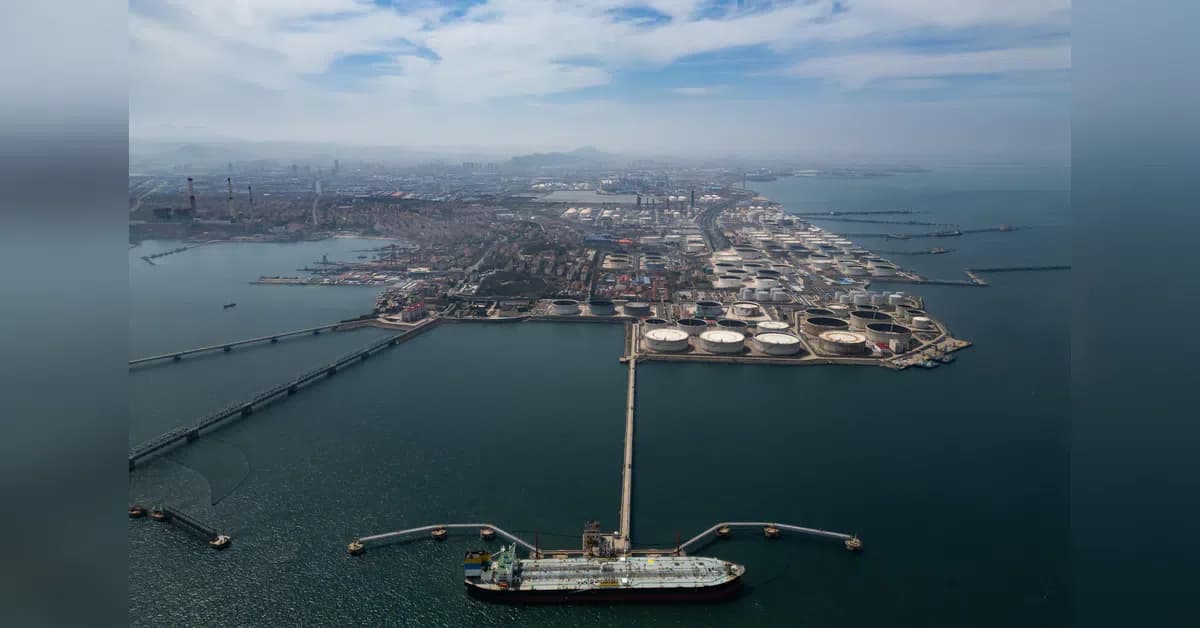
India's current strategic petroleum reserves are equivalent to just 9-10 days of the country's net crude imports, according to a new report by the Council on Energy, Environment and Water (CEEW) released on Wednesday. This figure falls significantly short of other major import-dependent countries, with Japan and South Korea maintaining reserves sufficient for over 200 days. The report, titled 'How Secure is India's Energy Future? Assessing Accessibility, Reliability, and Affordability,' highlights the vulnerability of India's energy security infrastructure. As per The Hindu BusinessLine, the report emphasizes that disruptions in crude oil, LNG, LPG, coal, or key shipping routes can quickly affect cooking costs, transport fuel prices, fertiliser subsidies, industrial competitiveness, and inflation.
The CEEW report revealed that over 85 per cent of India's crude oil imports come from just six countries, including Russia and key West Asian suppliers, limiting flexibility during supply shocks. This concentration risk compounds the reserve shortage, as the country relies heavily on crude imports for its energy needs. The near-closure of the Strait of Hormuz has upended a long-held assumption among Indian policymakers that proximity to the oil-rich Persian Gulf almost obviates the need for large strategic petroleum reserves. According to The Hindu BusinessLine, this import concentration creates significant vulnerabilities that can quickly impact multiple sectors of the economy.
For gas, India imports nearly half its supply as LNG but has no dedicated strategic gas storage facilities, leaving fertiliser plants and city gas networks exposed, according to the CEEW report. This gap in gas storage infrastructure creates additional vulnerabilities in India's energy security framework. The report also highlighted that the country's coal security risks are increasingly influenced by its continued dependence on imported coking coal - particularly from Australia - for steelmaking, and exposure to Indonesian export policies for non-coking coal imports. On the domestic side, declining coal quality and rising production costs signal a narrowing cost advantage for coal power over firm renewable power, as noted in the report.
India is weighing a China-style policy to mandate domestic refiners to build and maintain significantly larger crude oil inventories to cushion the country against future supply disruptions such as those triggered by the Iran war. The proposed stockpile would be in addition to the roughly 15 days of crude that refiners hold at their facilities for operational needs. The proposal remains at a preliminary stage and key details have yet to be finalised, with no final decision taken on its implementation. Refiners are likely to push back against the plan, citing the substantial cost of building new storage facilities and filling them with crude oil.
The report argues that clean energy can reduce India's exposure to continuously imported fossil fuels, but warns that this transition creates different strategic dependencies on critical minerals, technologies, and industrial inputs. According to The Hindu BusinessLine, CEEW fellow Hemant Mallya emphasized that India's next phase of energy security must move beyond securing fossil fuels to a clear transition plan including optimising gas system utilisation, avoiding further refinery expansion, accelerating viable EV adoption, electrifying industry, reconfiguring refineries for lower gasoline demand, and building resilient green technology supply chains. The report concludes that managing these new dependencies requires domestic manufacturing, supply-chain diversification, recycling, and strategic international partnerships.