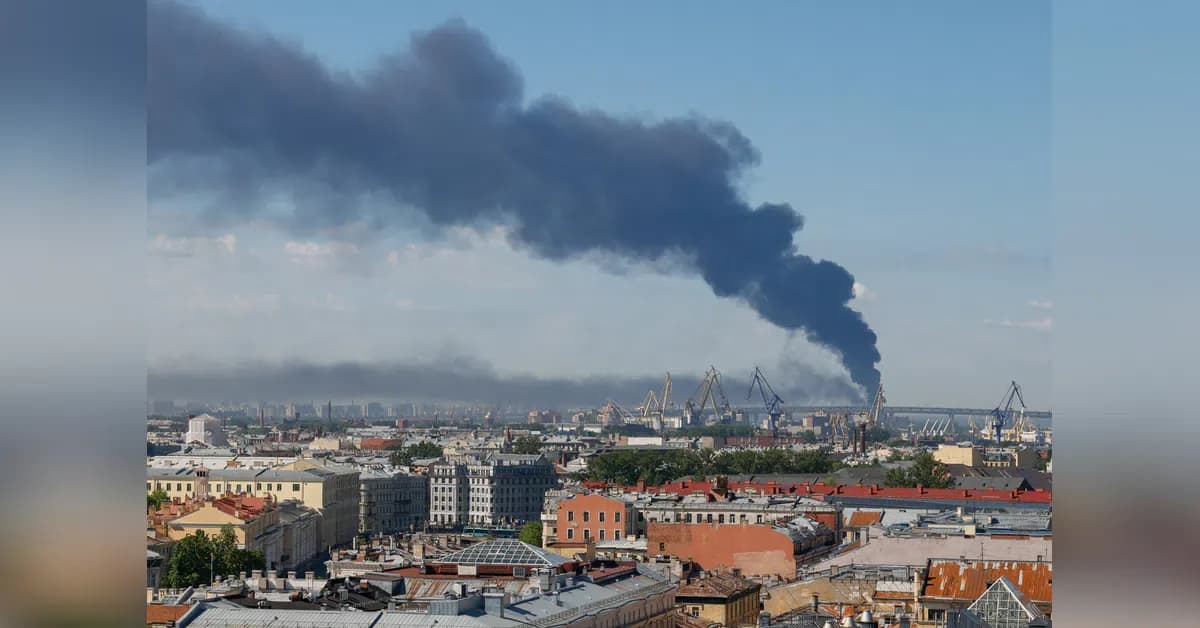
India has emerged as a crucial supplier of gasoline to Russia following a surge in Russian fuel imports triggered by Ukrainian drone attacks on refineries. According to reports from The Hindu BusinessLine, Business Standard, and The Times of India, Indian refiners supplied as much as 1 million barrels of gasoline in the last two months, with supplies primarily coming from the Vadinar refinery in Gujarat operated by Nayara Energy, which is half owned by Russia's Rosneft. This development highlights India's growing role in supporting Russia's energy infrastructure amid domestic production disruptions, with India being among three countries supplying gasoline to Russia during August alongside Turkey and Morocco. Latest data from Vortexa shows that Russia's seaborne gasoline imports surged to a record of around 125,000 barrels per day in August, equivalent to an estimated 470,000 tonnes for the month, as attacks on its energy infrastructure disrupted refinery operations. The fuel from India was sourced mainly from the Vadinar refinery in Gujarat, operated by Nayara Energy, which is half owned by Russia's Rosneft.
The global fuel crisis has reached unprecedented levels, with global refinery throughput falling to 81 million barrels per day in July, nearly 5 million bpd or 6% below the same period last year according to the International Energy Agency (IEA). This collapse stems from the closure of the Strait of Hormuz following a U.S.-Israeli air campaign against Iran in late February, which disrupted a fifth of global oil supply, and relentless Ukrainian attacks on Russian refineries that caused Moscow to suspend diesel exports in July. The U.S., as the world's largest crude producer and second-largest refiner after China, has responded by ramping up exports of crude, gasoline, diesel and jet fuel to record levels, helping avert a truly cataclysmic supply shock.
U.S. refiners are operating at unprecedented levels, with utilization rates hovering above 95% for 11 consecutive weeks — a sustained level not seen in more than 25 years. According to the U.S. Energy Information Administration (EIA), U.S. refinery throughput has averaged around 17 million bpd since the start of the conflict, significantly above its five-year average. Benchmark margins for converting crude into transportation fuels have averaged more than $50 per barrel since the start of the war, more than double their 10-year average, enabling major U.S. refiners including Valero, Phillips, Marathon Petroleum and Exxon Mobil to post record or near-record second-quarter earnings. However, this period of sustained maximum production carries significant risks, as refineries have only achieved such prolonged high utilization rates three times in EIA records going back to 1990.
Since 2022, India has pivoted towards Russia to meet a bulk of its crude oil requirements, with India's purchases of Russian crude oil hitting a record high as the conflict in the Gulf squeezes supply from other sources. According to The Hindu BusinessLine, Business Standard, and The Times of India, India imported more than 2.6 million barrels per day of Russian crude in June and July, up from a low of 1 million bpd in February and accounting for more than half of the country's crude imports. It's likely that fuel exported to Russia may have been made from Russian crude, reflecting the integrated nature of this energy relationship, with India's refiners potentially using Russian crude to produce gasoline subsequently shipped back to Russia. This also raises the possibility that some of the petrol shipped from India to Russia was produced using Russian crude oil. The country imported more than 2.6 million barrels per day of Russian crude in June and July, compared with 1 million bpd in February, with Russian oil accounting for more than half of India's total crude imports during the two months.
According to Vortexa, around 40% of Russia's August gasoline imports moved via ship-to-ship transfers, with the majority conducted in the dark, with vessels switching off their automatic identification system (AIS) signals. India, Turkey, and Morocco supplied gasoline to Russia in August, as Moscow grappled with a growing mismatch between domestic fuel supply and demand. Russia extended its complete ban on gasoline exports for both producers and non-producers in July, keeping the restriction in place until the end of January 2027, with its ban on diesel exports also extended through September 1, 2026. Vortexa recorded 32 attacks on Russian refineries during July and August, averaging roughly one attack every other day, causing domestic production to fall by as much as 70%. Russia's seaborne diesel/gasoil exports stood at around 150,000 bpd through August 25, broadly unchanged from the previous month but 610,000 bpd lower than a year earlier and 81% below the five-year seasonal average. Vortexa expects Russia to continue importing some gasoline in the near term, reflecting the country's historically lower gasoline-to-diesel production yields.