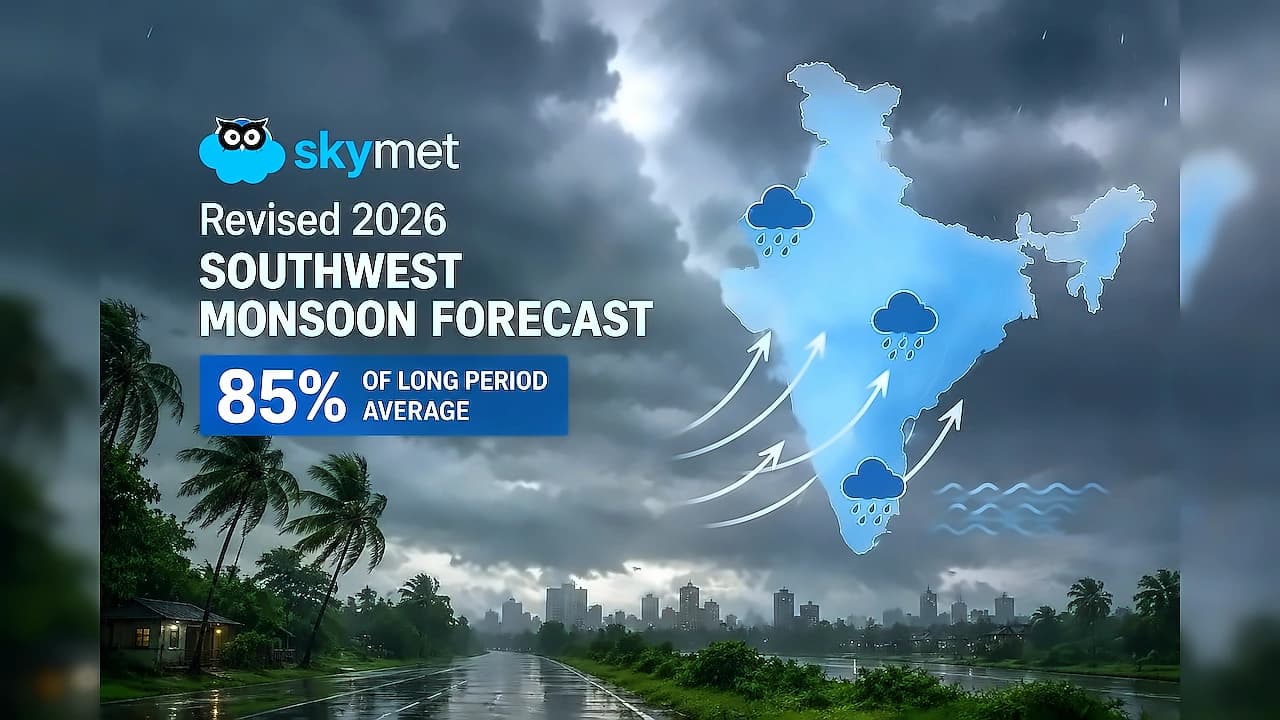
The government has moved to 'alert mode' as Union Agriculture Minister Shivraj Singh Chouhan reviewed the progress of southwest monsoon and directed officials to maintain constant monitoring of monsoon status. According to the latest reports, Chouhan has asked officials to ensure better coordination with states and take prompt action to tackle potential El Nino impacts on kharif crops. The minister emphasized the need for timely advisories and essential assistance to farmers, with officials from all concerned departments present in the meeting to discuss measures for safeguarding farmer interests and mitigating crop impact. The southwest monsoon is now expected to onset over Kerala around June 4, which is two days later than the typical June 1 arrival date. This delay, combined with the IMD's forecast of 90% of normal rainfall, has heightened concerns about crop-risk pressure, particularly for rain-fed agricultural areas.
The India Meteorological Department has officially confirmed that monsoon rainfall in India will be below normal in 2026, with rainfall expected to be 90% below the long period average. According to the latest forecast, India is likely to receive 80 cm of rainfall during the season - significantly below the long-period average of 87 cm (1971-2020). The weather forecasting agency had previously predicted monsoon rainfall at 92% of the average in April 2026, indicating a deteriorating outlook for the upcoming season. The southwest monsoon has not yet reached Kerala by its expected onset date of May 26, though conditions are favorable for further advance into additional parts of the Arabian Sea and Bay of Bengal. After reaching the Andaman and Nicobar Islands on May 16, against the normal of May 20, the progress of monsoon has been erratic, stalling for two days after its onset and five days from May 18-22. The IMD has now reiterated warnings about below-normal rainfall across most parts of India, with the latest forecast indicating that below normal rainfall is most likely over the country as a whole during the monsoon season (June to September), 2026. The forecast comes with a model error margin of plus or minus 4%, as per the IMD.
The India Meteorological Department has confirmed that El Nino conditions are likely to develop during the southwest monsoon season, with the latest climate model forecasts indicating this development. Neutral El Nino-Southern Oscillation (ENSO) conditions are currently transitioning towards El Nino conditions over the equatorial Pacific Ocean, as per the IMD. The conditions are projected to be moderate in August 2026 and will intensify to moderate to strong category in September 2026. The World Meteorological Organization (WMO) has indicated a probable return of El Nino conditions as early as May-July 2026, while the US-based National Oceanic and Atmospheric Administration (NOAA) in its May 11 ENSO update said El Nino conditions are likely to emerge during May-June and persist through year-end. This timeline aligns with the WMO's forecast that a 'super' El Niño event is likely to develop from mid-2026. El Nino occurs when ocean surface temperatures in the central and eastern Equatorial Pacific become warmer than normal, and the 2023-24 El Nino was one of the key factors behind 2024 becoming the hottest year on record. The WMO warned that a possible 'super' El Niño in mid-2026 could make 2026 or 2027 the hottest years ever.
According to the latest IMD forecast, rainfall is likely to be normal over Northeast India but below normal over Central India, South Peninsular India and Northwest India. In its second-stage forecast, IMD's projections showed that no part of the country, barring North-East India, is expected to receive 'normal' rainfall this year. The forecast indicates an 84% probability of below-normal or deficient rainfall during the four-month monsoon season, which is crucial for India's agriculture sector. During June 2026, below normal monthly rainfall is very likely over most parts of the country, though some areas of northwest India, eastern parts of south peninsula and adjoining areas of east-central India and isolated pockets of East India are likely to receive normal to above-normal rainfall. The most concerning development is that the southwest monsoon over the monsoon core zone, which comprises most of the rain-fed agricultural areas in the country, is most likely to be below normal at less than 94% of the LPA. This could have a damaging impact on the production of major pulses and oilseeds, including soybean, tur, urad and cotton, as well as sugarcane and some cereals, as most of the monsoon core zone lies in the central and western parts of India. In June, the first month of the monsoon season, rainfall over the country as a whole is projected to remain below normal, at less than 92% of the LPA.
The IMD forecast also points to warmer-than-normal June conditions, with above-normal maximum temperatures likely over most parts of the country and above-normal minimum temperatures expected across large areas. The weather office has warned of above-normal heatwave days during June over many parts of Uttar Pradesh, Haryana, Punjab, Bihar, Odisha, Chhattisgarh, Gujarat and Andhra Pradesh, besides isolated regions of Maharashtra, Telangana, Himachal Pradesh and Tamil Nadu. However, Rajasthan and Jharkhand are likely to witness fewer heatwave days than normal. The forecast also indicates that above-normal monthly maximum temperatures are likely across most parts of the country, except some parts of northwest, central and adjoining south peninsular India where normal to below monthly maximum temperatures will be recorded. Above-normal monthly minimum temperatures are likely across most parts of the country, except some parts of northwest, central and adjoining south peninsular India where normal to below-normal minimum temperatures are very likely. The increased likelihood of heatwave conditions during June 2026 may have considerable impacts on public health, water availability, power consumption, and essential services, with vulnerable groups including the elderly, children, outdoor workers, and persons with pre-existing health conditions particularly at risk from prolonged exposure to extreme heat.
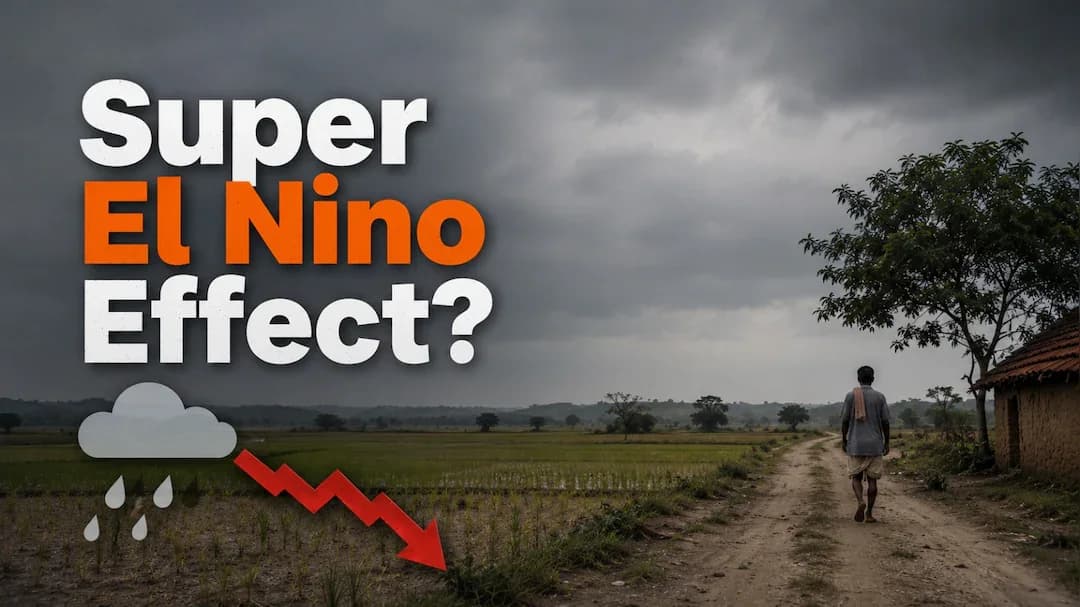
The monsoon's delayed onset and below-normal forecast have raised significant concerns for India's agricultural sector, particularly as the southwest monsoon contributes 70-75% of India's annual rainfall. According to the latest reports, 51% of the net sown area is unirrigated and rain-fed, making kharif crops like paddy particularly vulnerable to monsoon variations. The southwest monsoon is critically important for kharif crops as they depend heavily on rainfall for irrigation. Union Agriculture Minister Chouhan has emphasized that measures to safeguard farmers' interests and mitigate the impact on kharif crops were discussed in detail during the government meeting. The government's shift to 'alert mode' reflects the serious nature of the situation, with officials being directed to provide timely farm advisories and maintain better coordination with states to tackle potential El Nino impacts. This proactive approach comes as the IMD continues to monitor both El Nino development and monsoon progression, with the forecast indicating that neutral Indian Ocean Dipole (IOD) conditions are prevailing over the Indian Ocean and are expected to continue through the monsoon season, which could partly offset the adverse effects of El Nino.