The India Meteorological Department (IMD) has confirmed that cumulative rainfall from June 1 to July 29, 2026, stands at 15% below the Long Period Average (LPA). According to the latest IMD update, during the past week (July 23-29), rainfall was normal over the country as a whole at 0.1% above LPA, with weekly rainfall falling under the excess category over Central India and normal over Northwest India. However, rainfall remained deficient over the South Peninsula and East & Northeast India regions, highlighting the persistent regional disparities in monsoon distribution. This updated deficit figure represents a significant improvement from the earlier forecast but still indicates below-normal rainfall conditions across most parts of the country.
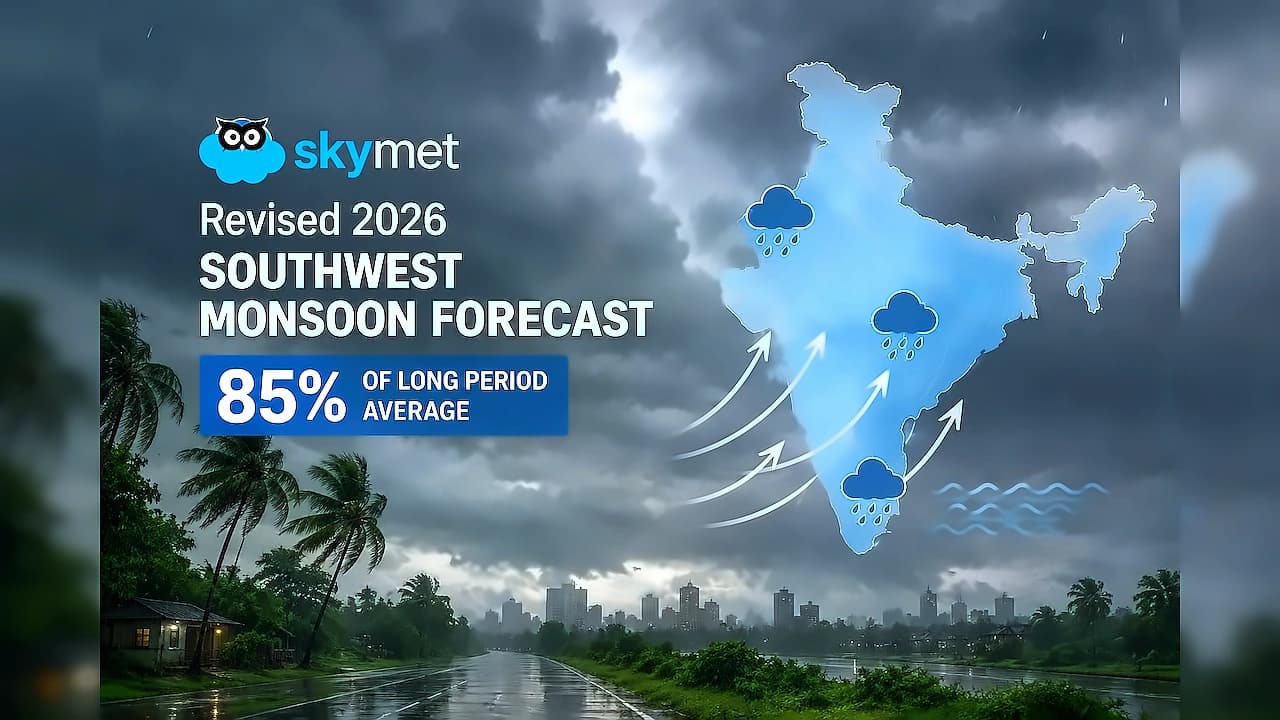
The India Meteorological Department (IMD) has forecast below-normal rainfall for the remaining two months of the 2026 monsoon season. According to reports from Business Standard, the southwest monsoon is expected to remain below normal during August and September, which could affect standing crops if rainfall distribution is also uneven. The IMD released its outlook for the second half of the 2026 monsoon season on Friday, indicating that even in August alone, the country is likely to receive below-normal rainfall — less than 94 per cent of the Long Period Average (LPA) — over most parts of the country. As per the latest IMD forecast, rainfall during August is expected to remain below the seasonal average, with precipitation expected to be less than 94% of the Long Period Average (LPA). The LPA for August is 254.9 millimetres, while the LPA for August and September combined is 422.8 millimetres, based on the average rainfall recorded during 1971–2020. The August-September period is critical for the progress of the kharif cropping season, as rainfall during these months influences soil moisture, reservoir levels and crop development across large parts of the country.
The IMD noted that exceptions could be in parts of Eastern Peninsular India, some parts of Northwest and Central India, and isolated areas of East and Northeast India, where normal to above-normal rainfall is likely. The forecast for August-September combined is also below normal at 94 per cent of the LPA. According to the IMD, the department also projected below-normal rainfall for the August-September period, indicating that the latter half of the southwest monsoon may not bring widespread relief to many regions. In June and July, of the 741 districts assessed for monsoon rainfall distribution, 311 districts (42 per cent) recorded deficient rainfall, the largest category, indicating below-normal rainfall in many parts of the country. Rainfall was normal in 273 districts (around 37 per cent), while it was excess in 69 districts (around 9 per cent), and large deficiencies were recorded in 49 districts (around 7 per cent). No district across India received zero rainfall during June and July. However, the recovery masked sharp regional disparities, with Central India recording 29% excess rainfall during July, while east and northeast India remained 30% below normal and south India logged a 28% deficit.
The below-normal rainfall forecast for August-September is particularly concerning as it comes during the critical kharif cropping season. Despite the challenging rainfall conditions, India's agricultural sector has shown resilience with significant recovery in sowing activities. Farmers had planted summer-sown crops across 78.7 million hectares as of July 24, compared with 82.6 million hectares a year ago, with the overall sowing shortfall narrowing to less than 5%, according to data from the Ministry of Agriculture and Farmers' Welfare. The monsoon rainfall deficit has also improved substantially, narrowing to 16% from nearly 40% at the end of June, though some regions continue to face rainfall shortages of as much as 40%. However, meteorologists warned that August and September will now be crucial in determining whether India can erase the remaining seasonal rainfall deficit. While July's unexpected recovery demonstrated the resilience of the monsoon despite El Niño, a strengthening Pacific warming during the final phase of the season could once again suppress rainfall, making the evolution of both El Niño and the Indian Ocean Dipole critical for agriculture, reservoirs and water security.
The rainfall outlook is closely linked to evolving ocean conditions, with the ongoing El Niño expected to remain at moderate intensity through August before strengthening further during September. According to the IMD, most global climate models indicate that the warm Pacific event will persist into early 2027. However, there is also a potential positive signal from the Indian Ocean. Several international climate models suggest a positive Indian Ocean Dipole (IOD) could develop by September, a phenomenon that typically enhances monsoon rainfall over India and can partially offset the adverse effects of El Niño. At the same time, IMD's own Monsoon Mission Coupled Forecasting System (MMCFS) continues to indicate neutral IOD conditions during much of the remaining southwest monsoon season, reflecting uncertainty over the exact evolution of the climate drivers. Despite moderate El Niño conditions prevailing over the equatorial Pacific and neutral Indian Ocean Dipole conditions over the Indian Ocean, many low-pressure systems formed over the north Bay of Bengal, helping bring good rainfall over east-central and west-central India. The IMD has forecast above-normal monthly average maximum temperatures over most parts of the country during August, with some areas of Northwest and Central India likely to experience normal to below-normal temperatures.