The India Meteorological Department (IMD) has forecast a week-long break in the southwest monsoon, with rainfall expected to reduce across large parts of northwest, central and peninsular India while remaining active over the Himalayan foothills, eastern India and the Northeast. According to reports from Business Standard, the weather agency expects widespread rainfall to return over northwestern parts of the country from around July 19-20. While weather experts say a 'monsoon break' is a regular feature of the season, the concern is about how long it lasts, when it occurs during the crop cycle, and which regions it affects. The timing is particularly significant as this break occurs immediately after the monsoon covered the entire country, making it particularly unusual in timing and duration.
A break in the monsoon occurs when the monsoon trough, a low-pressure belt stretching from Pakistan to the Bay of Bengal, moves northwards towards the Himalayan foothills. As reported by Business Standard, Mahesh Palawat, vice-president of meteorology and climate change at Skymet Weather, explained that monsoon break occurs when the axis of monsoon trough shifts towards the foothills of the Himalayas. However, this year's pattern is not typical as the eastern end of the monsoon trough is dipping south up to northwest Bay of Bengal, which may continue to receive good rainfall during next week. According to the IMD's latest forecast, heavy rainfall is likely to continue over Bihar, Jharkhand, Odisha, sub-Himalayan West Bengal and Sikkim, while rainfall is expected to remain isolated over much of northwest and central India for several days. Palawat noted that this year's pattern is not a textbook break, explaining that the eastern end of the monsoon trough is dipping south up to northwest Bay of Bengal, which is why Bihar, Jharkhand, West Bengal and Odisha may continue to receive good rainfall during next week.

While recent showers have improved soil moisture and accelerated sowing in some states, persistent rainfall deficits elsewhere continue to delay planting and cloud the outlook for crop yields. According to The Times of India, the cumulative shortfall in rainfall eased to 19.3% during 1 June-13 July from 38% at the end of June, though the improvement was uneven across regions. East and northeast India still report a 35.5% deficit, followed by the south peninsula (21.5%), northwest (11.9%) and central India (8.5%). As reported by Business Standard, Sudhir Panwar, an agriculture expert and former member of Uttar Pradesh Planning Commission, noted that despite recent rainfall, soil moisture remains inadequate in many regions, limiting kharif sowing. The pace of planting of pulses, paddy, rice, and oilseeds—and their subsequent crop development—will largely depend on how the monsoon performs during the rest of July.
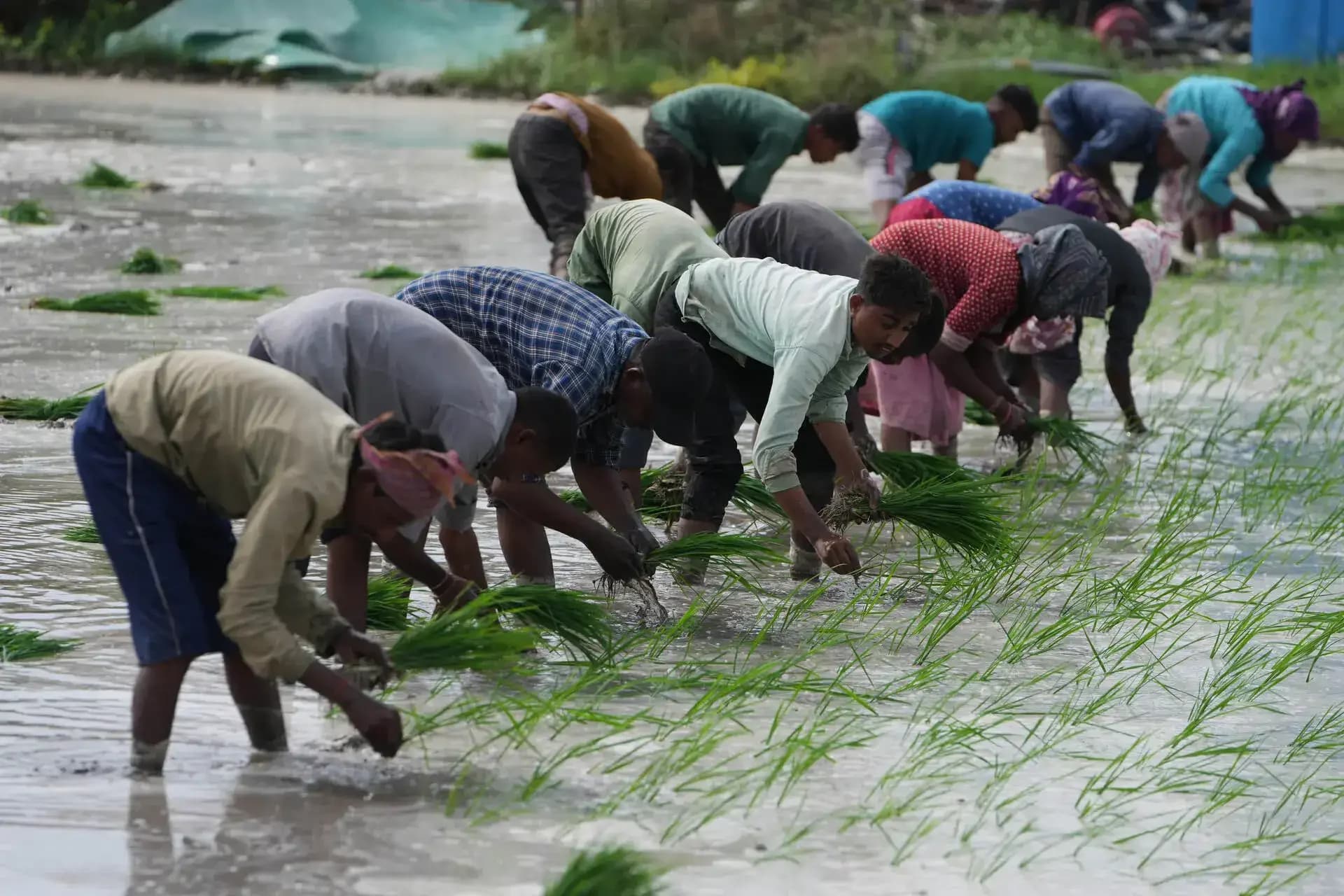
The monsoon break's impact on paddy cultivation depends largely on when it occurs and farmers' access to irrigation. According to Business Standard, Prof Anubrata Deka from FLAME University noted that a week-long break by itself is not unusual, but its impact depends on both the crop's growth stage and regional water availability. Sandeep Menon from Lovely Professional University explained that much of the crop is either being transplanted from nurseries into standing-water fields or establishing its root system after transplanting, both stages depend on continuous soil moisture. As of 10 July, total area planted with kharif crops stood at 53.12 million hectares, much below the 63.25 million hectares in the year-ago period, reflecting the impact of delayed and uneven monsoon rainfall across several agricultural states. Acreage under key crops such as paddy, pulses, oilseeds and cotton is also trailing last year's levels, with July being the most crucial month for kharif sowing as around 55% of the total cultivated area usually comes under cultivation during the month.
The weak monsoon has contributed to rising food prices and inflation concerns across the economy. According to The Times of India, retail inflation accelerated to 4.38% in June from 3.9% in May, breaching the Reserve Bank of India's (RBI's) 4% midpoint target for the first time since the new consumer price index (CPI) series was introduced in January 2026. Food inflation was at 5.32% in June compared to 4.78% in May. Taking note of the uncertainty around food inflation from the impact of the sub-normal monsoon and El Niño, the RBI in its 5 June monetary policy statement projected retail inflation for FY27 at 5.1%. Wholesale price inflation also rose to 9.87% in June from 9.68% in May, marking its highest level in 14 months. The resumption of hostilities in West Asia poses additional risks, especially for fertilizer costs as India is the second-largest global fertilizer consumer and the world's largest importer of di-ammonium phosphate (DAP) and urea.