India has achieved a remarkable recovery in crude oil imports, with crude imports surging to a year-high of 5.26 million barrels per day (mbd) in September, powered by a surprise jump in Gulf supplies. According to The Times of India, Iraq emerged as India's second-largest crude supplier at 525,000 bpd, surpassing Saudi Arabia's 517,000 bpd, marking the first time Iraq has held this position since the US-Iran conflict began in February. The UAE supplied 438,000 bpd while Kuwait saw a notable jump to 335,000 bpd, its highest volume in a year. Saudi Arabia, Iraq, the UAE, Kuwait, Oman and Qatar together accounted for 39% of India's total crude imports in September, as reported by Kpler. This represents a significant shift from earlier months when supplies from these countries had dropped sharply following the start of the Iran war on February 28.
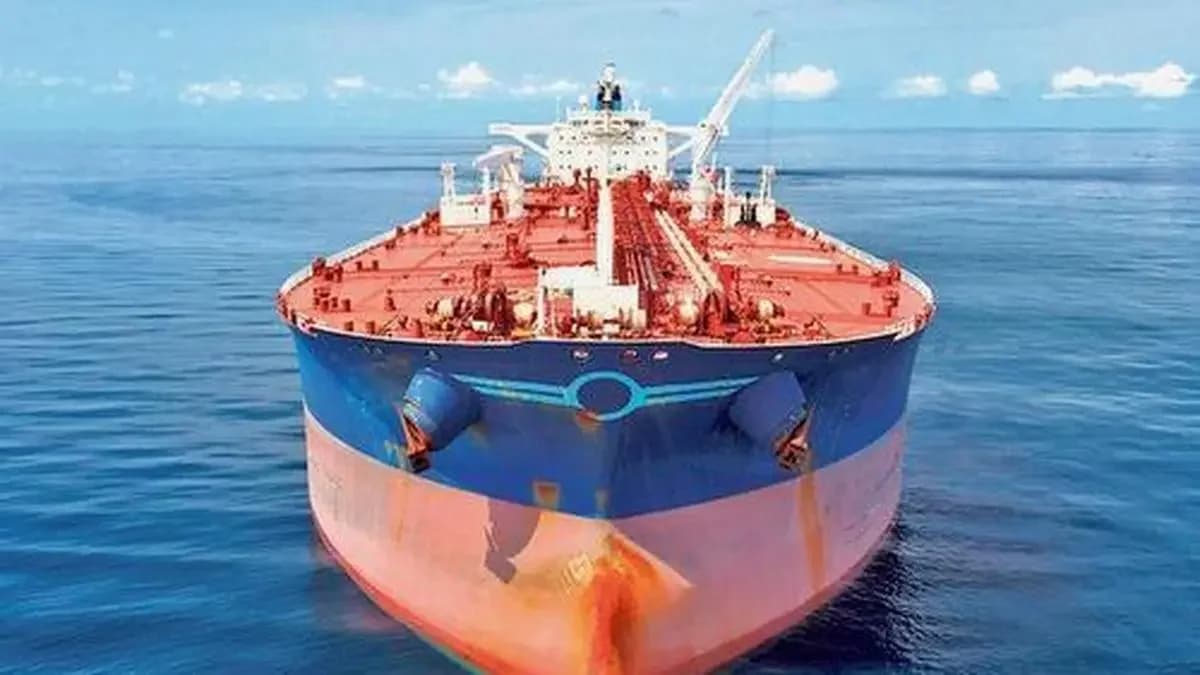
Indian oil refiners are implementing a significant strategic shift by hiring tankers to sail directly through the Strait of Hormuz to pick up crude from within the Persian Gulf, marking a departure from their traditional approach. According to Bloomberg News, Indian Oil Corp., Reliance Industries Ltd., Bharat Petroleum Corp. and HPCL-Mittal Energy Ltd. have purchased Iraqi crude on a free-on-board basis in recent weeks, with the refiners floating tenders and entering into discussions with shipping companies to arrange their own tankers for the voyages. This represents a change from their previous strategy of relying on Gulf producers and international traders to transport crude through the contested waterway, which involved paying hefty premiums for cost-and-freight shipments. Sinokor Group and Dynacom Tankers Management Ltd. have secured contracts under the new process, while Shipping Corp. of India and Lila Global tenders were subsequently cancelled, as reported by people familiar with the efforts. Under FOB transactions, the buyer is responsible for arranging the vessel, loading the crude and transporting the cargo to its destination, giving Indian refiners greater control over transportation costs.
The restoration of Gulf supplies has been supported by innovative workaround strategies despite ongoing security concerns. As reported by The Times of India, dozens of large crude carriers are crossing the Strait of Hormuz with their Automatic Identification System (AIS) transponders switched off, with the cargo then transferred through ship-to-ship (STS) operations in UAE and Omani waters. National oil companies in the Gulf, along with some global traders, are arranging ships and taking the risk of crossing the Strait of Hormuz even as some attacks on vessels continue to be reported. The sharp increase in crude moving through the strait has also raised questions about whether Iran's control over the waterway is weakening. LNG cargoes exiting the waterway rose to 19 in September from 15 in June, according to S&P Global Energy, while Kpler counted 21 cargoes, indicating broader energy flow recovery through the region.
Union minister Hardeep Singh Puri on Thursday emphasized that there is no global supply shortage of crude oil, stating that higher prices are a reflection of choked supply routes and high freight charges rather than actual supply constraints. Speaking to the media on the sidelines of the 20th Foundation Day celebrations of the Petroleum and Natural Gas Regulatory Board (PNGRB), Puri explained that global oil consumption currently is below the available supply, consuming around 94 million barrels against 104 million barrels a day of available oil. He stated that "There's no supply shortage in the world. The world has 104 million barrels of oil a day. It's only that the supply routes are choked and freight charges and others are high, and that's higher prices." The Minister emphasized that since 2022, the government has been constantly working to make available critical energy commodities to its 1.4 billion citizens at affordable rates, and that India has remained insulated from the turbulence in global energy markets despite the uncertainty. India has successfully navigated disruptions to crude oil and natural gas supplies amid the ongoing West Asia crisis and disruptions in the Strait of Hormuz, with Puri noting that "Every challenge, every crisis, poses a challenge. Every challenge has in it an opportunity, and that opportunity we will utilise."
Puri highlighted India's successful diversification of its crude sourcing network to 41 countries from 27 earlier, thereby reducing exposure to disruptions in any particular region. However, he pointed to risks involved in rerouting crude shipments through the Red Sea, as Houthi attacks could pose a threat to shipping lines in the region. The minister noted that Qatar, the UAE and Saudi Arabia, three of India's major energy suppliers, are located in or around the conflict zone caused by the war on Iran. The current developments show India becoming more reluctant to take Russian cargoes due to rising political pressure from the US, with experts noting that replacing around 2 million barrels from Russia is very difficult given that Saudi Arabia's supplies are also impacted. The restoration of Gulf supplies provides additional sourcing optionality for Indian refiners who may need to reduce exposure to Russian barrels, as noted by Kpler's Nikhil Dubey, who emphasized that "Ample Middle East barrels availability provides Indian refiners with additional sourcing optionality should they need to reduce their exposure to Russian barrels."