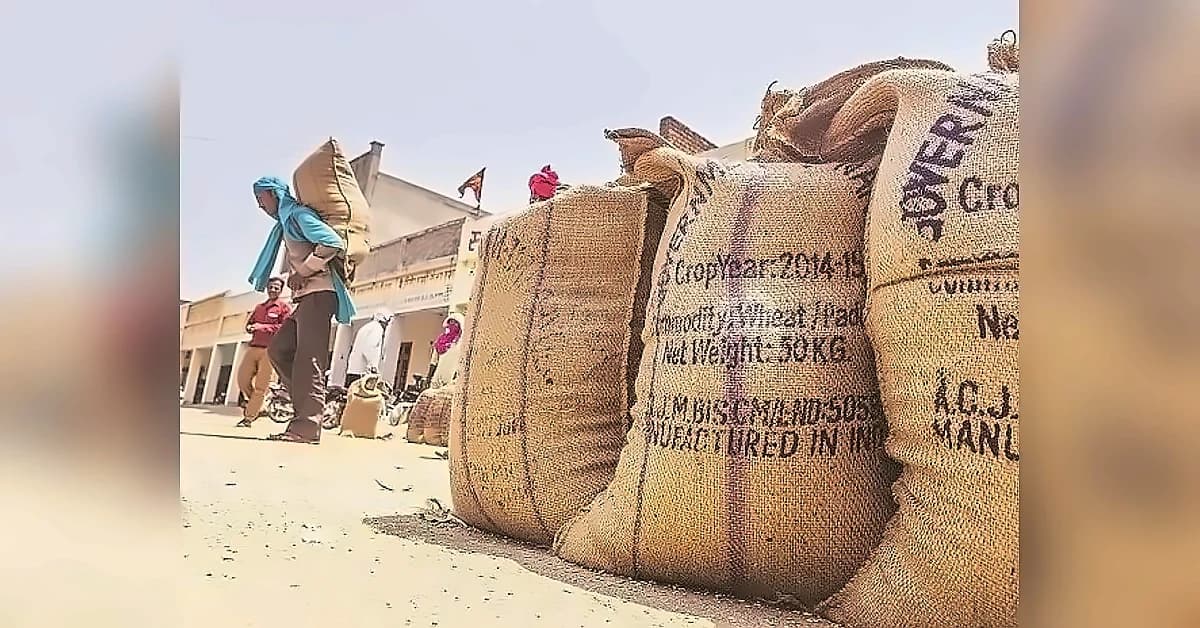
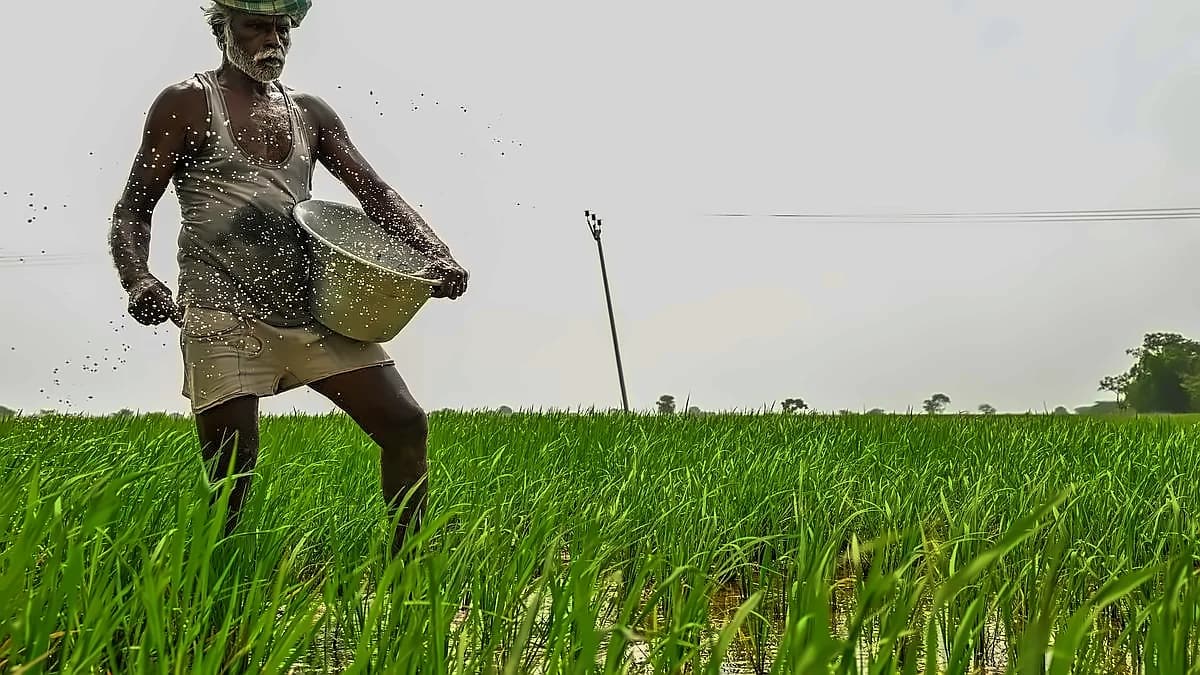
The Indian government announced significant increases in minimum support prices for kharif crops for 2026-27, with paddy MSP raised by ₹72 to ₹2,441 per quintal and sunflower seed MSP seeing the steepest increase of ₹622 to ₹8,343 per quintal. According to reports from Business Standard, the MSP for pulses (except moong), oilseeds and cotton has been increased by a steeper amount than paddy to encourage crop diversification and reduce import dependency. Information and Broadcasting Minister Ashwini Vaishnaw announced that the MSPs have been fixed to ensure remunerative prices for farmers and are at least 50% above the cost of production across all 14 crops. The Cabinet Committee on Economic Affairs (CCEA), chaired by Prime Minister Narendra Modi, approved MSPs for 14 kharif crops ahead of sowing, which typically begins in June with the onset of the southwest monsoon.
As reported by Business Standard, the government estimates the total payout to farmers at ₹2.60 lakh crore after the revision in MSPs, with annual procurement projected at 82.441 million tonnes. The margin over costs is estimated to be highest for moong at 61%, followed by bajra and maize at 56% each, and tur/arhar at 54%. For the remaining crops, the margin is pegged at 50%. The common grade paddy MSP has been raised by ₹72 to ₹2,441 per quintal from ₹2,369 per quintal, with over 85% of paddy procured in the Central Pool being Grade A varieties. Nigerseed (up ₹515 to ₹10,052 per quintal) and sesamum (up ₹500 to ₹10,346 per quintal) also received significant increases. According to The Kashmir Hub, the MSP increases are based on recommendations of the Commission for Agricultural Costs and Prices (CACP).
According to the government announcement, tur (arhar) MSP has been hiked by ₹450 to ₹8,450 per quintal, urad by ₹400 to ₹8,200 per quintal, and moong saw a marginal increase of ₹12 to ₹8,780 per quintal. The MSP for cotton (medium staple) has been increased by ₹557 to ₹8,267 per quintal, with long staple cotton commanding ₹8,667 per quintal - the second-highest absolute increase among all crops. Jowar (hybrid) MSP has been fixed at ₹4,023 per quintal (up ₹324), with the Maldandi variety at ₹4,073 per quintal. Bajra has been raised by ₹125 to ₹2,900 per quintal, ragi by ₹319 to ₹5,205 per quintal, and maize by ₹10 to ₹2,410 per quintal. Among other oilseeds, soyabean (yellow) MSP was raised by ₹380 to ₹5,708 per quintal and groundnut by ₹254 to ₹7,517 per quintal. As per Business Standard, there has been a 247% increase in MSP for Ragi to ₹5,205 from ₹3,705, while pulses like arhar and moong have seen hikes of 97% and 95% to ₹8,450 and ₹8,780 respectively.
Indian Vegetable Oil Producers' Association (IVPA) President Sudhakar Desai welcomed the MSP hike for oilseeds but reiterated the need for a stable and dynamic import duty framework that can respond to changing global price cycles, domestic crop economics and inflationary trends. However, Dharmendra Malik, national spokesperson of Bharatiya Kisan Union (Apolitical), criticized the government's approach, stating that rising tensions in the Gulf region have pushed up the cost of agricultural inputs by over 30%. He stated that this is why the Centre's 3% increase in the paddy minimum support price (MSP) for the 2026-27 kharif marketing season is "irrational and inadequate." The Economic Survey presented in January 2026 had blamed the rise in maize crop due to the ethanol programme at the cost of oilseeds and pulses while paddy area also grew, with maize acreage rising to 120.91 lakh hectares from 112.41 lakh hectares in 2025-26.
According to The Kashmir Hub, the Cabinet approved the ₹37,500 crore Coal Gasification Scheme aimed at promoting new surface coal and lignite gasification projects for production of synthesis gas and downstream products. The scheme targets gasification of around 75 million tonnes of coal and lignite and is expected to attract investments worth ₹3 lakh crore. The initiative is expected to reduce import dependence on LNG, urea, ammonia and methanol, while generating nearly 50,000 jobs across coal-bearing regions. In a major railway infrastructure push, the Cabinet approved the Sarkhej–Dholera semi high-speed double rail line project with an outlay of ₹20,667 crore. The 134-km corridor will be India's first semi high-speed broad gauge rail corridor using indigenous technology under Namo Bharat train operations, designed for speeds up to 220 kmph with operational speed of 200 kmph and expected completion within four years.