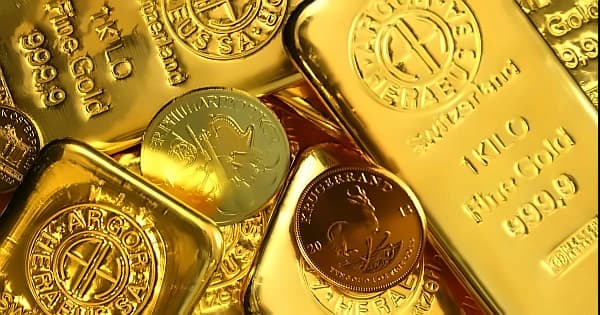
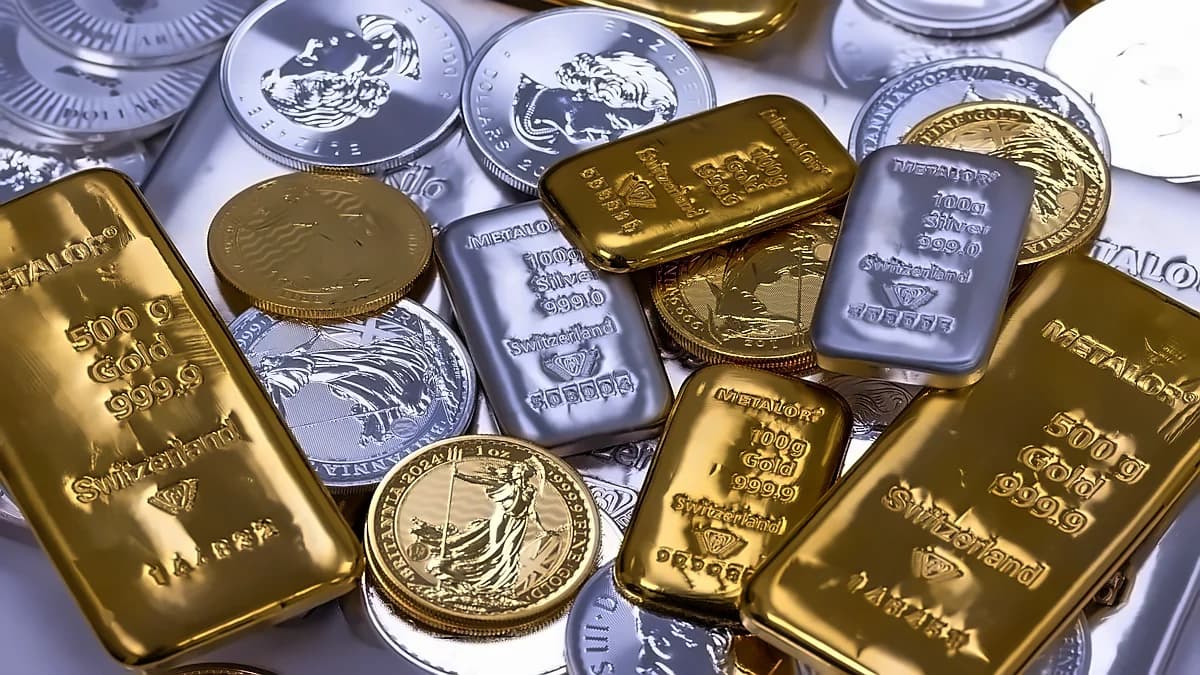
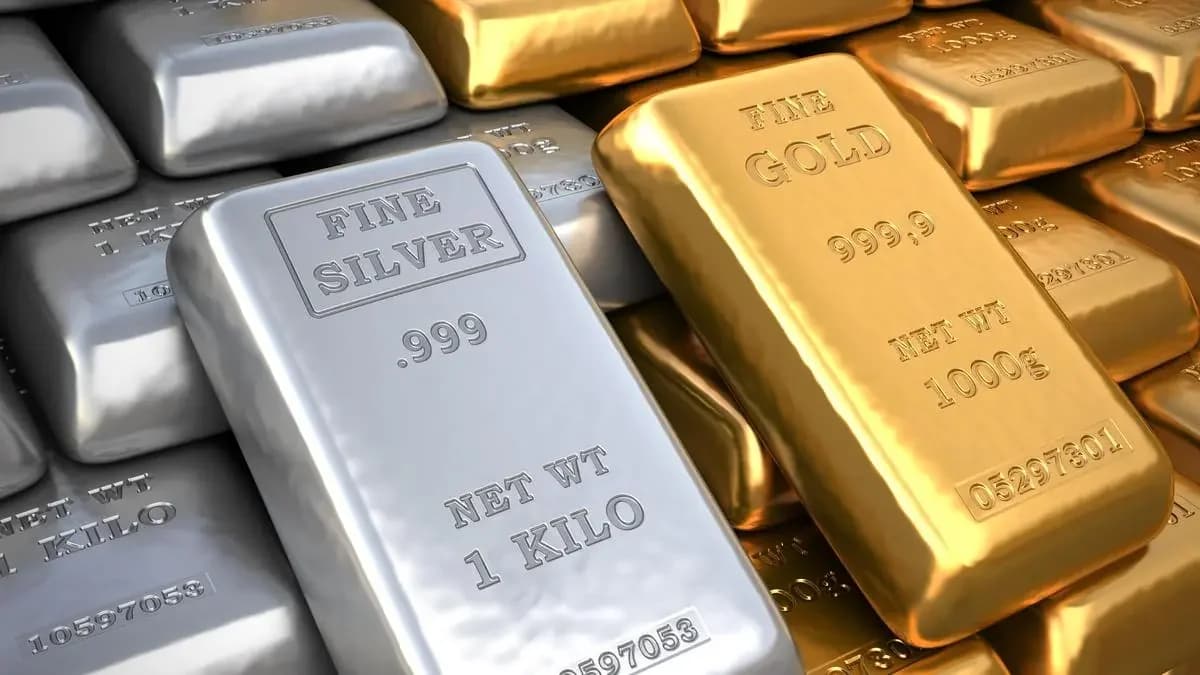
Gold has experienced a historic monthly decline of 12% in March 2026, marking its worst performance since the global financial crisis of 2008, as the ongoing US-Iran war continues to drive inflation concerns and dampen Federal Reserve rate cut expectations. According to The Hindu BusinessLine, spot gold rose 3.5% to close at $4,668.06 per ounce in New York on Tuesday, hitting its highest level since March 20, while U.S. gold futures for April delivery gained 1.2% to $4,610. Spot silver climbed 7.3% to $75.17 per ounce, with both precious metals trading below key technical levels. The US dollar and Treasury yields retreated further on reports that both countries are signalling an opening towards a resolution, helping boost bullion as much as 3.9% to the highest in more than a week before closing 3.5% higher. Gold has fallen more than 14% since the U.S.-Israeli war on Iran began on February 28, as rising expectations of hawkish monetary policy outlook weighed on the non-yielding metal.
The muted reaction to the Iran war reflects the first phase of an energy shock, where inflation expectations strengthen the US dollar and delay gold's rally. As reported by The Hindu BusinessLine, Iran attacked and set ablaze a fully loaded crude oil tanker off Dubai early Tuesday, after Trump warned the U.S. would obliterate Iran's energy plants and oil wells if it does not open the Strait of Hormuz. Brent crude surged to a whopping $120 a barrel on March 8, an almost 100% year-to-date gain, with soaring jet fuel prices weighing heavily on global transport and travel demand. The key question for institutional investors is why gold failed to surge when the Iran war began. The answer lies in the US dollar, where when oil rallies beyond $100-a-barrel on the back of war premium, the immediate impact is not increased demand for safe-haven gold but inflation expectations that strengthen the dollar and tighten real yields. Past market trends show that financial markets have proven resilient to setbacks, except during waves of energy shocks, where a two-phase response can be expected.
Rising expectations of higher interest rates, driven by energy-led inflation risks, have also weighed on gold by increasing the opportunity cost of holding non-yielding assets, according to CNBC TV18 reports. Money market participants have almost completely priced out any chance of a U.S. Federal Reserve rate cut this year from about two cuts expected before the war, as per The Hindu BusinessLine. Traders had been betting that global central banks might need to raise interest rates to contain elevated price pressures, but reversed course Monday after Jerome Powell said longer-term inflation expectations remain anchored. Ross Maxwell, Global Strategy Operations Lead at VT Markets, explained that both gold and silver are being impacted by a shift in rate expectations and higher bond yields. Traders have almost completely priced out any chance of a U.S. Federal Reserve rate cut this year as higher energy prices threaten to feed into broader inflation. Before the war in the Middle East began, there were expectations of two Fed rate cuts for this year, but soaring energy prices have fundamentally altered these expectations. Jerome Powell signaled a more hawkish stance from the Federal Reserve, warning that inflation risks remain elevated, causing expectations for a near-term rate cut to fall sharply.
Gold Comex futures have breached below the $4,400 mark and found support at the 200-day moving average (DMA) near $4,130, reinforcing this as a key long-term technical level. The rebound that followed, triggered by the US hinting at possible "peace negotiations", lifted gold sharply towards the 100 DMA at $4,633, which was tested on March 25. As at March 26, sideways consolidation between the 100 DMA and 200 DMA appears most probable in the short term, with risks tilted slightly to the downside. However, the $4,000 mark presents an attractive zone for staggered long-term accumulation, particularly given the strong support from sustained central bank buying around this level. Markets are currently pricing in one to three months of prolonged escalation with material damage to oil infrastructure, and the key variable is the duration of the war and whether it extends long enough to trigger the second phase of the cycle. The widening US-Iran war led to a surge in crude oil prices, adding to inflation woes, while elevated interest rates weigh on the non-yielding metal's demand.
A stronger US dollar—supported by safe-haven flows and the country's position as a net energy exporter—has made dollar-denominated commodities more expensive for global buyers, further pressuring prices. As reported by CNBC TV18, profit booking after recent rallies and concerns about global economic growth have added to the downside, particularly for silver, which has significant industrial demand exposure. Pranav Mer noted that domestic bullion continued to find support from the rupee's weakness against the dollar, with the rupee falling more than 1% to close near 94.80 last week. Choice Broking also highlighted that recent decline in bullion was driven by ETF liquidation, soft physical demand, a stronger dollar, and elevated US Treasury yields. However, beyond short-term volatility, long-term demand remains supported by central banks, with the People's Bank of China continuing its steady accumulation of gold, extending its buying streak to 16 consecutive months. This persistent demand provides an underlying floor for gold prices and reinforces confidence in its long-term role within the global financial system. Goldman Sachs continues to expect gold prices will reach $5,400 per troy ounce by end-2026 as it expects two U.S. interest-rate cuts this year.