Gold has fallen over 25% from its peak despite ongoing geopolitical tensions in West Asia, marking a sharp divergence from its traditional safe-haven role. According to Enrich Money, international prices have fallen more than 25% from their peak of $5,586 earlier this year, even as investors grapple with geopolitical tensions and a rapidly escalating conflict in West Asia. If the decline continues, it could mark gold's worst annual performance since 2013, when the precious metal tumbled 28%. The drop comes despite more than 100 days of no breakthrough in peace talks involving the United States, Israel and Iran, with benchmark indices, the Nifty and Sensex, falling more than 9% each over the same period. As per Morgan Stanley, the oil market is described as being "in a race against time," warning that some of the factors limiting the rise in prices could weaken if the Strait of Hormuz remains closed through June. Recent analysis suggests that since the Iranian conflict started on February 28, 2026, gold has fallen by about 25%, with FinViz attributing the June 10th decline to war concerns and hot inflation pushing prices down by 1.1%.
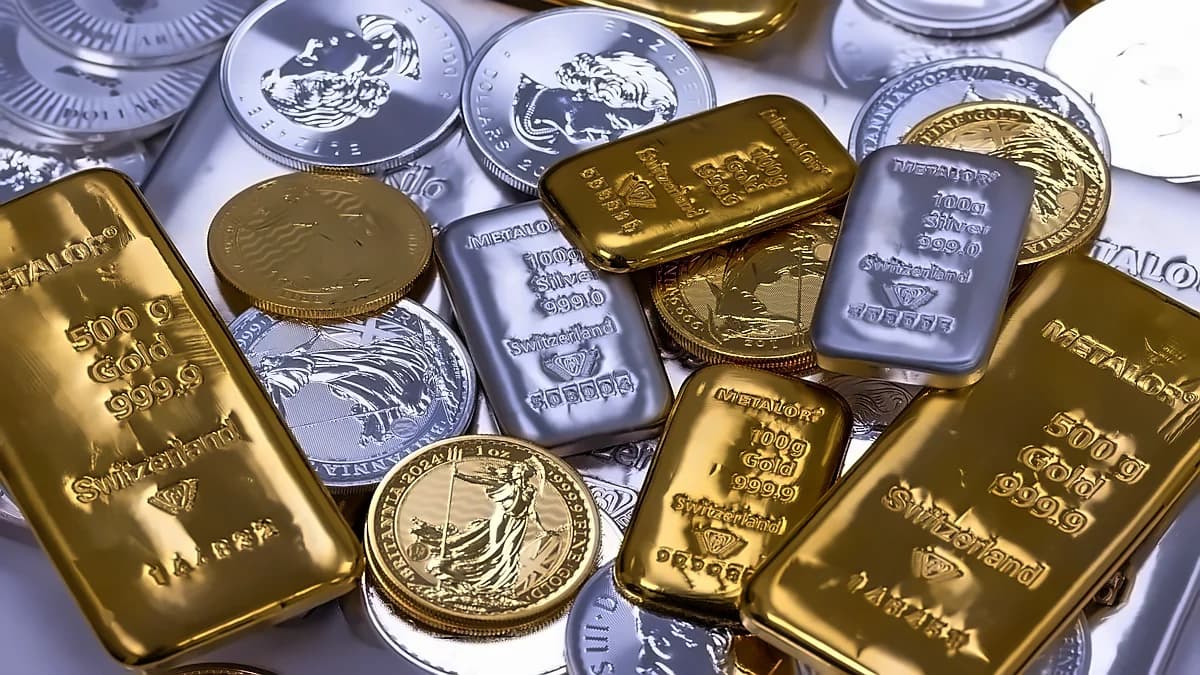
Gold and silver prices have rebounded sharply on MCX and COMEX as geopolitical tensions ease, with MCX gold futures trading around ₹1.49 lakh per 10 grams after recovering from intraday lows. According to The Financial Express, silver climbed more than 4% an ounce, supported by renewed buying interest in precious metals. The rebound was attributed to easing concerns over potential escalation in West Asia after signs emerged of progress in discussions between the United States and Iran. Softer crude oil prices and weakness in the US dollar also lent support to bullion prices, with technical indicators suggesting domestic gold prices have found support in the ₹1.46 lakh - ₹1.47 lakh per 10 grams range. As per Master Capital Services, ₹1.51 lakh per 10 grams emerges as an immediate resistance level for gold.
A key development highlighted in Tata Mutual Fund's latest report is the government's decision to increase gold import duty from 6% to 15%. According to the fund house's analysis, India spent approximately ₹72 billion on gold imports in FY26, making gold the country's second-largest import item after crude oil. The policy move is aimed at reducing pressure on India's current account deficit amid rising crude oil prices and increased dollar outflows. As reported by The Financial Express, Tata Mutual Fund maintains that rupee depreciation could cushion the downside for Indian investors, keeping domestic gold prices in a tighter range versus international markets.
The recent correction has removed a significant amount of speculative excess from the market and has made valuations healthier from a long-term perspective. According to Enrich Money, the ongoing decline appears more like a normalisation of valuations rather than a structural collapse in the asset class. Profit booking after a strong rally, expectations of higher interest rates, a stronger dollar and elevated bond yields have driven the decline. For investors sitting on substantial gains after the 2025 rally, partial profit booking and portfolio rebalancing make sense, as the recent correction has created better entry points. Tata Mutual Fund's CEO Ponmudi noted that any meaningful correction in prices should be viewed as an opportunity to accumulate, adding that the current environment continues to reinforce gold's role as a strategic long-term portfolio allocation. Market analysis suggests that corrections are healthy market adjustments that temper episodes of investor over-bullishness, with recent corrections improving breadth and bringing technology and utilities sectors back into alignment.
The report sheds light on the Reserve Bank of India's growing gold reserves, with the RBI purchasing 72.6 tonnes of gold in 2024, making India the world's second-largest central bank gold buyer that year. By 2025, India's gold reserves had reached around 880 tonnes, while gold's share in the country's foreign exchange reserves increased from 8.4% in July 2024 to 16.2% by January 2026. Tata Mutual Fund identifies several structural drivers supporting precious metals over the long term, including continued central bank buying, geopolitical fragmentation, rising global debt levels, and gradual diversification away from the US dollar. The fund house believes that over the longer term, central bank reserve diversification, rising global debt levels and periodic geopolitical disruptions continue to support the bullish case for gold. "We view the current phase as a healthy consolidation within a longer-term uptrend rather than the end of the gold bull market," Ponmudi added.