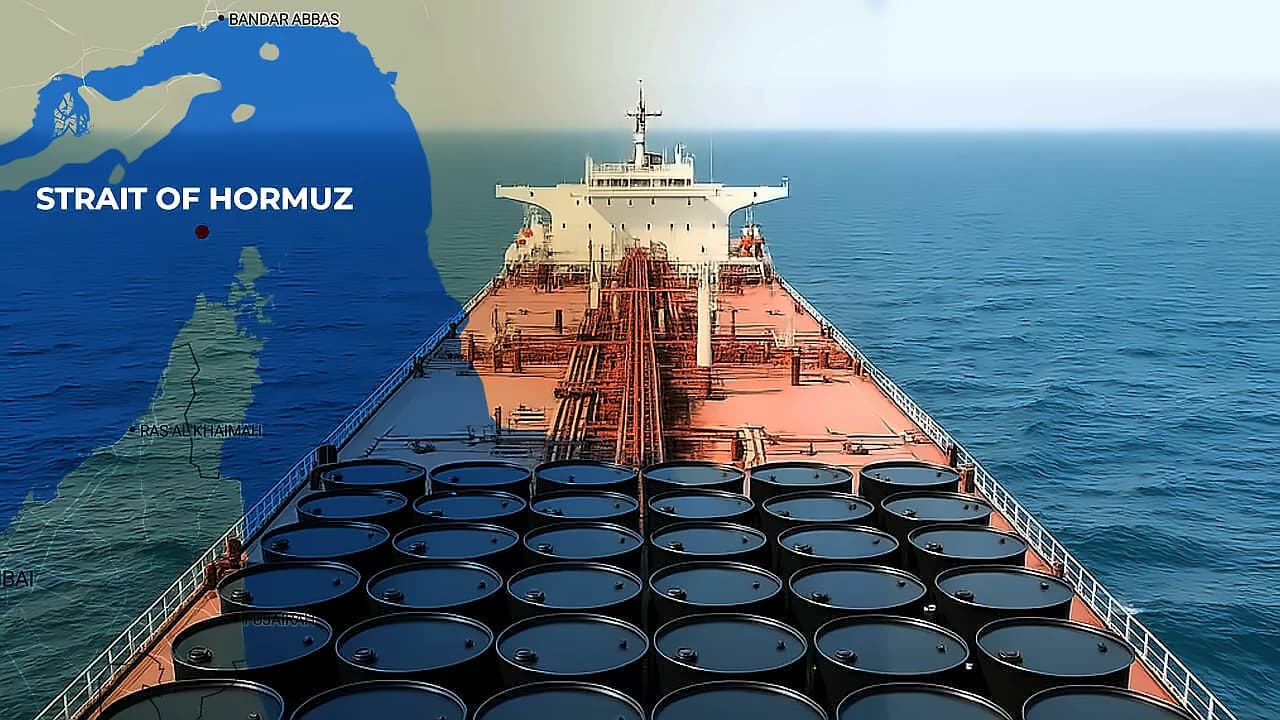
Iran's Islamic Revolutionary Guard Corps (IRGC) has announced plans to establish a new maritime restricted area extending beyond the Strait of Hormuz, covering parts of the Gulf of Oman and the Arabian Sea. According to Times of Israel, the restricted zone will stretch from Chabahar on Iran's southeastern coast into the Gulf of Oman and the Arabian Sea, with its exact coordinates to be announced. This expansion builds on Iran's Supreme National Security Council Secretary Mohsen Rezaei's warning on Monday that Tehran would respond to US "economic warfare" by imposing a maritime exclusion zone across the Persian Gulf. As per Reuters, Rezaei stated that "economic warfare will be met by a maritime exclusion zone across the Persian Gulf to the blockade perimeter," with the zone extending to the edge of the US naval blockade currently in place around Iranian ports. The latest announcement represents a significant escalation in Iran's response to ongoing US military actions and economic pressures.
Crude oil prices have sharply retreated from their highs as US-Iran tensions appear to be easing following the latest military developments. Brent crude prices had surged towards $97 a barrel in early trade on Monday before turning negative and breaching below $96 per barrel by midday. West Texas Intermediate (WTI) crude also crossed the $90 mark to trade near $92 a barrel, though both benchmarks remain elevated from recent lows. The sharp pullback comes after Brent crude had gained 1% to hit a high of $96.9 a barrel earlier in the session, demonstrating the volatile nature of oil markets amid ongoing geopolitical uncertainties. According to CNBC TV18, the retreat from highs reflects a cooling of tensions despite the continued military presence and restricted zone declarations.
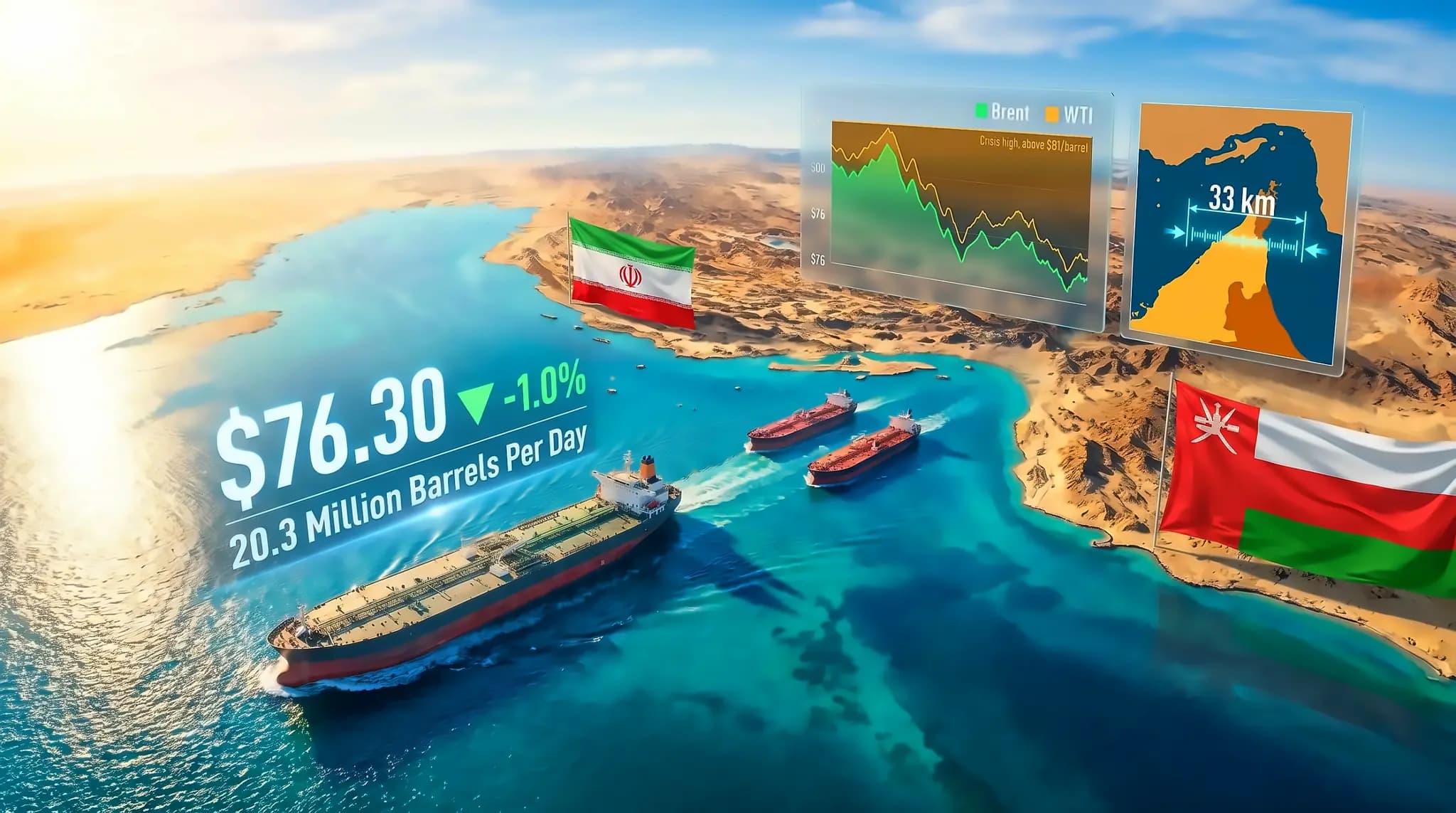
Iran has declared a new restricted zone outside the Strait of Hormuz, according to its top security official, which will be officially announced in the coming days, according to Press TV reports. The restricted zone is likely to begin from the US navy blockade line and extend into parts of the Persian Gulf. This development comes as the Iran conflict has significantly disrupted oil flows through the strategically important Strait of Hormuz, which previously handled around a fifth of global oil supplies. According to Reuters, the renewed fighting has severely disrupted tanker traffic, with only four vessels crossing the strait during one period compared with a 10-day average of 13. However, US officials said as many as 17 million barrels had transited on one day, illustrating the central problem facing traders: the market has not completely lost physical supplies, but shipping remains unpredictable. The conflicting signals continue to keep a geopolitical premium embedded in crude prices as traders weigh the possibility of prolonged disruptions through Hormuz.
The US has launched strikes against three Iranian oil tankers over the weekend, destroying one which sank in the Gulf of Oman, in retaliation to Iran's attack on US naval warships with ballistic missiles. US Energy Secretary Chris Wright said there will be no let up in US naval presence in the Persian Gulf, which now has the most important aim of not allowing any Iranian oil exports and then to ensure safe passage of commercial vessels. However, official data from Kpler stated that only one commercial tanker managed to cross the Strait on Saturday, highlighting the ongoing challenges in maintaining normal shipping operations despite military action. Iran's Islamic Revolutionary Guard Corps Navy said it had targeted three oil tankers travelling through unauthorised routes in the Strait of Hormuz, as well as three additional US vessels in other areas, as reported by Reuters. The attacks marked a "major escalation in the maritime conflict," according to maritime intelligence firm Marisks, with the market remaining vulnerable to further price increases if fighting intensifies.
According to NDTV Profit reports, petrol prices across major cities on September 7 include ₹102.12 per litre in Delhi, ₹113.51 per litre in Kolkata, ₹111.21 per litre in Mumbai, ₹107.77 per litre in Chennai, ₹115.69 per litre in Hyderabad, and ₹110.89 per litre in Bengaluru. Diesel prices are set at ₹95.20 per litre in Delhi, ₹99.82 per litre in Kolkata, ₹97.83 per litre in Mumbai, ₹99.55 per litre in Chennai, ₹103.82 per litre in Hyderabad, and ₹98.80 per litre in Bengaluru. With Brent crude already close to $97 a barrel after an almost 8% weekly surge, any further escalation in the Iran conflict could keep upward pressure on crude prices and domestic fuel costs. The premium between Brent and WTI crude reflects the greater exposure of international crude prices to Middle Eastern supply and shipping risks, with Brent trading about $4.66 a barrel above WTI.
According to Geojit Investments, Brent crude is now within striking distance of the psychologically important $100-per-barrel mark, with continued escalation between the US and Iran, further tanker attacks, or additional restrictions around Hormuz potentially pushing prices into triple digits. A decisive breakout above $100, accompanied by strong trading volumes, could trigger further upside momentum and push prices significantly higher. However, any diplomatic breakthrough or improvement in shipping conditions may trigger profit-taking and a correction. The near-term outlook for crude oil remains firm, with prices likely to hold above the $90 per barrel level, supported by supply concerns and resilient demand. On the downside, $85 is seen as an immediate support level, with a sustained break below this threshold potentially weakening bullish sentiment and leading to a deeper correction in crude oil prices. Despite concerns over global growth, oil demand remains relatively healthy with the US economy supporting fuel consumption and emerging economies maintaining steady demand growth.