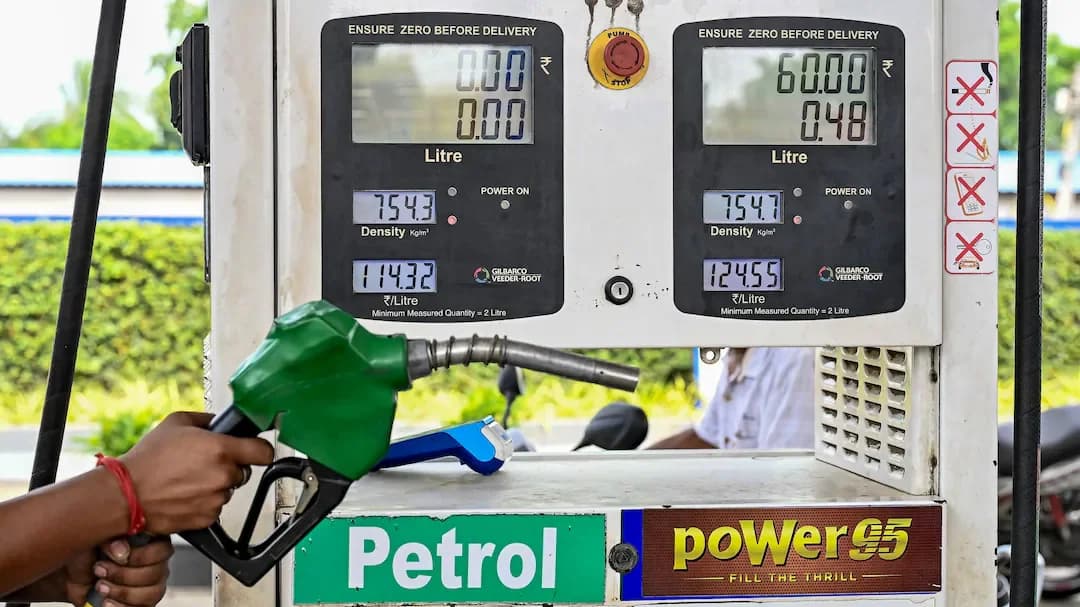
Oil marketing companies have implemented a ₹3 per litre increase in petrol and diesel prices, with the impact varying significantly across Indian cities. New Delhi now sees petrol at ₹97.77 per litre and diesel at ₹90.67 per litre, while Kolkata experiences the highest petrol costs at ₹108.70 per litre and diesel at ₹95.13 per litre. Mumbai records petrol at ₹106.68 per litre and diesel at ₹93.14 per litre, with Chennai showing petrol at ₹103.67 per litre and diesel at ₹95.25 per litre. The price increases come after a long period of stable fuel prices that had remained unchanged for nearly four years, with oil marketing companies previously facing daily losses of around ₹1,000 crore during the war period. According to Times Now, the hike pushed petrol prices in New Delhi to ₹97.77 per litre from ₹94.77, while diesel rose to ₹90.67 from ₹87.67.
CNG prices have experienced significant volatility, with Indraprastha Gas Limited (IGL) implementing a Re 1 per kg hike on Sunday, following an earlier ₹2 per kg increase on May 15. The successive hikes have pushed CNG prices beyond ₹80 per kg in the national capital, with regional variations showing Noida and Ghaziabad at ₹88.70 per kg, Gurugram at ₹85.12 per kg, and Kanpur at ₹91.42 per kg. Piped natural gas (PNG) prices have remained steady since April 1, with New Delhi at ₹47.90 per kg and Kolkata at ₹50.00 per kg, as the government continues encouraging citizens to switch from LNG to PNG for long-term import dependence reduction. In Bengaluru, Shell sells petrol at ₹119.85 per litre and diesel at ₹123.52, while CNG prices were hiked by ₹1 on Saturday in Delhi-NCR, taking the CNG rate to ₹80.09 per kg after the second hike in two days.
Oil prices have surged for the third consecutive session after US President Donald Trump renewed pressure on Iran to agree to a deal that could help end weeks of conflict and reopen shipping through the Strait of Hormuz. Brent crude rose above $110 per barrel after gaining nearly 8% last week, while West Texas Intermediate (WTI) moved close to $107 a barrel. The latest surge extends a sharp rally in global oil markets, with crude prices jumping more than 50% since the US and Israel launched strikes on Iran at the end of February. In a social media post on Sunday, Trump intensified his warning to Iran, saying, "For Iran, the clock is ticking, and they better get moving fast, or there won't be anything left of them. Time is of the essence." The rising crude oil prices are putting pressure on India's foreign exchange reserves, given that India imports 85-90% of its crude oil, with oil company executives indicating that petrol and diesel prices could rise further, though any decision will depend on government approval.
The fuel price adjustment is significantly impacting India's inflation projections for the current fiscal year. As reported by Mint, Madhavi Arora, chief economist at Emkay Global, has raised FY27 headline inflation estimates to 5% from 4.6% previously, assuming a ₹10 per litre hike in retail fuel prices. India's retail inflation, measured by the Consumer Price Index (CPI), rose to 3.48% in April 2026 from 3.40% in March, while wholesale price inflation (WPI) surged to 8.3%, a 42-month high, driven by a sharp rise in fuel and energy prices. According to Times Now, Radhika Rao, Senior Economist at DBS Bank, said the higher pump prices were likely to moderate fuel demand, while adding 15-25 basis points to headline inflation, excluding second-round effects. The inflation pressure extends beyond fuel costs, with experts warning that higher logistics and freight expenses will trigger cost pass-through across supply chains.
The market response has been swift, with the Nifty FMCG index declining 0.8% since Friday, while the Nifty auto index fell 1.5% during the same period. IndiGo and SpiceJet shares dropped 1.2% and 3.4% respectively, reflecting investor concerns about the impact on aviation sector profits. Fast-moving consumer goods companies face significant margin pressures as fuel, packaging and food commodity costs continue rising, with higher costs of edible oils, milk, wheat and crude-linked packaging materials adding pressure on margins. The aviation sector is expected to be among the most affected as aviation turbine fuel (ATF) costs rise in line with crude prices, with potential fare increases dampening travel demand, especially on international routes. As reported by Times Now, the Nifty auto index fell 1.5% during the same period, while IndiGo and SpiceJet shares dropped 1.2% and 3.4% respectively.