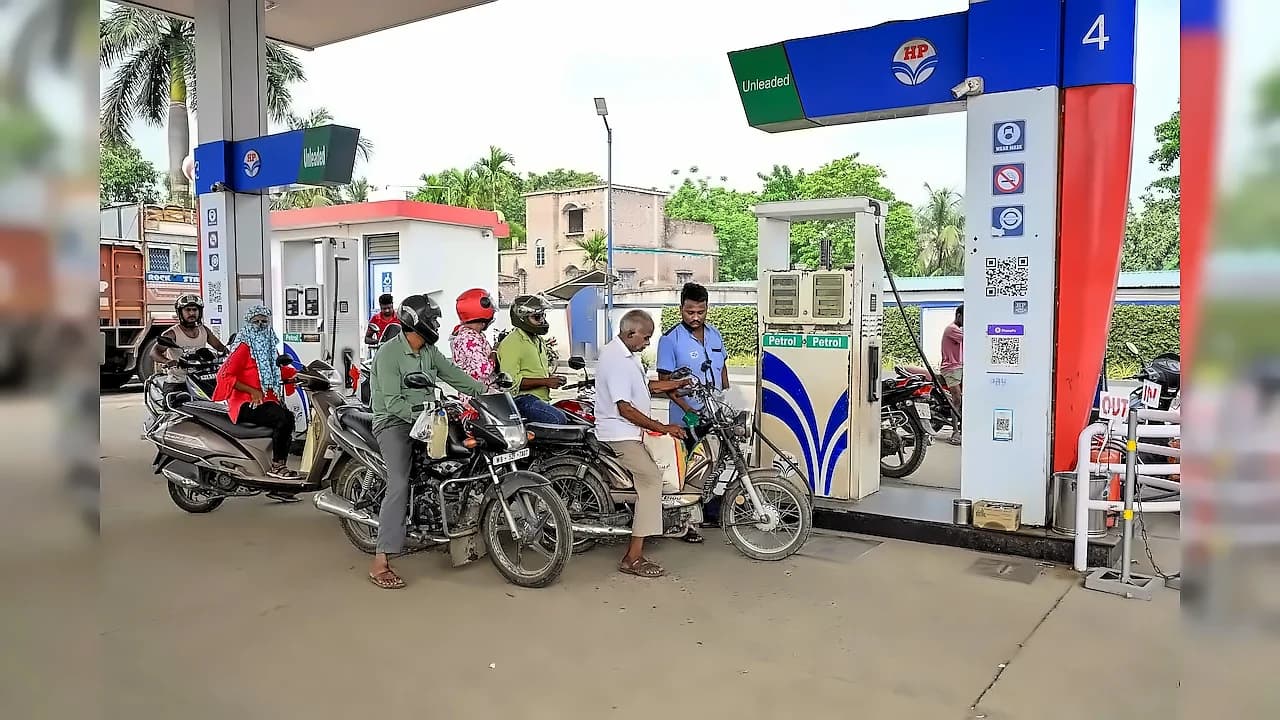
Fuel prices have been hiked for the third time in 10 days on May 23, with petrol increasing by ₹0.87 per litre and diesel by ₹0.91 per litre. This marks the third hike in retail fuel rates in just 10 days, following previous increases of ₹3 per litre on May 15 and a 90 paise increase on May 19. The latest hike comes amid ongoing geopolitical tensions in West Asia, with the government extending price caps amid lessening volatility in global crude prices. According to Business Standard, state-run fuel retailers raised petrol and diesel prices for the third time this month, as companies look to recoup losses caused by elevated crude oil prices amid the Iran war. India, the world's third-largest importer and consumer of oil, was one of the last major economies to raise retail fuel prices after the U.S.-Israeli war on Iran triggered a surge in prices globally.
Across major Indian cities, petrol prices range from ₹87.90 per litre in Chandigarh to ₹110.64 per litre in Kolkata. According to latest data, diesel prices vary from ₹98.10 per litre in Chandigarh to ₹111.84 per litre in Hyderabad. In Delhi, petrol is now priced at ₹99.51 per litre, up by ₹0.87 from ₹98.64, while diesel costs ₹92.49 per litre after a hike of ₹0.91 from ₹91.58. Mumbai saw petrol prices rise by ₹0.91 to ₹108.49 per litre, with diesel up ₹0.94 at ₹95.02 per litre. Kolkata recorded the highest petrol price at ₹110.64 per litre, while Chennai's diesel price reached ₹96.98 per litre. As per Business Standard, in Mumbai specifically, petrol prices were hiked by ₹0.90 per litre to ₹108.49, while diesel prices rose by ₹0.94 per litre to ₹95.02.
The latest hikes come as India faces mounting pressure from soaring global crude oil prices triggered by the West Asia conflict and disruptions to shipping routes through the Strait of Hormuz, one of the world's most critical oil transit chokepoints. Global crude oil prices, which were hovering around $70-72 per barrel before the conflict, surged past $120 at one point and are currently trading in the $104-110 range. India's crude oil basket has averaged nearly ₹113-114 per barrel in recent months, compared to around ₹69 per barrel in February. India imports nearly 90 per cent of its crude oil requirements, making domestic fuel prices highly sensitive to international market movements. As per Business Standard, earlier this month, fuel prices were first raised by ₹3 per litre and later by around 90 paise per litre as global crude prices surged on fears of supply disruptions in the Strait of Hormuz. Experts indicate that even if the West Asia situation stabilises, it will take time for risks around the Strait of Hormuz to fully ease, keeping crude prices elevated likely above $90 per barrel.
Compressed Natural Gas (CNG) prices have been increased by Re 1 per kg marking the third hike in less than 10 days, with the latest revision effective from Saturday. This marks the third consecutive increase in CNG prices in just 10 days, indicating the widespread impact of rising fuel costs across all alternative fuel sources. With the latest revision taking effect, CNG in Delhi will now cost ₹81.09 per kg, while prices in Noida, Greater Noida and Ghaziabad have risen to ₹89.70 per kg. Gurugram will see CNG priced at ₹86.12 per kg. The back-to-back hikes in CNG, petrol and diesel prices are expected to increase transportation costs for private vehicle owners, cab drivers and commuters who depend on CNG as a relatively affordable fuel option. The CNG price hike comes after the government's decision to extend price caps on petrol and diesel, with the latest increases aimed at helping oil marketing companies recover from significant losses incurred due to elevated crude oil prices.
The latest price hikes come as India's oil marketing companies face severe financial stress from selling fuel at comparatively lower prices while crude oil has hovered above $100 per barrel since the beginning of the West Asia crisis, compared to around $80 per barrel prior to the conflict. Following the ₹3-per-litre hike, OMCs' under-recovery on the sale of petrol, diesel and LPG cylinders reduced by 25 per cent to ₹750 crore per day from ₹1,000 crore per day, according to a senior government official. Petroleum Minister Hardeep Singh Puri had said on May 12 that OMCs' under-recoveries in the first quarter of FY27 could rise to ₹2 trillion, while losses may touch ₹1 trillion. The government had reduced excise duty on petrol and diesel by ₹10 per litre in late March in a bid to provide relief to consumers and support OMCs, but the excise duty cut was not enough to significantly reduce OMCs' losses. The government does not plan to extend financial support to the oil companies as of now for the losses incurred, said Sujata Sharma, joint secretary at the Ministry of Petroleum and Natural Gas (MoPNG).