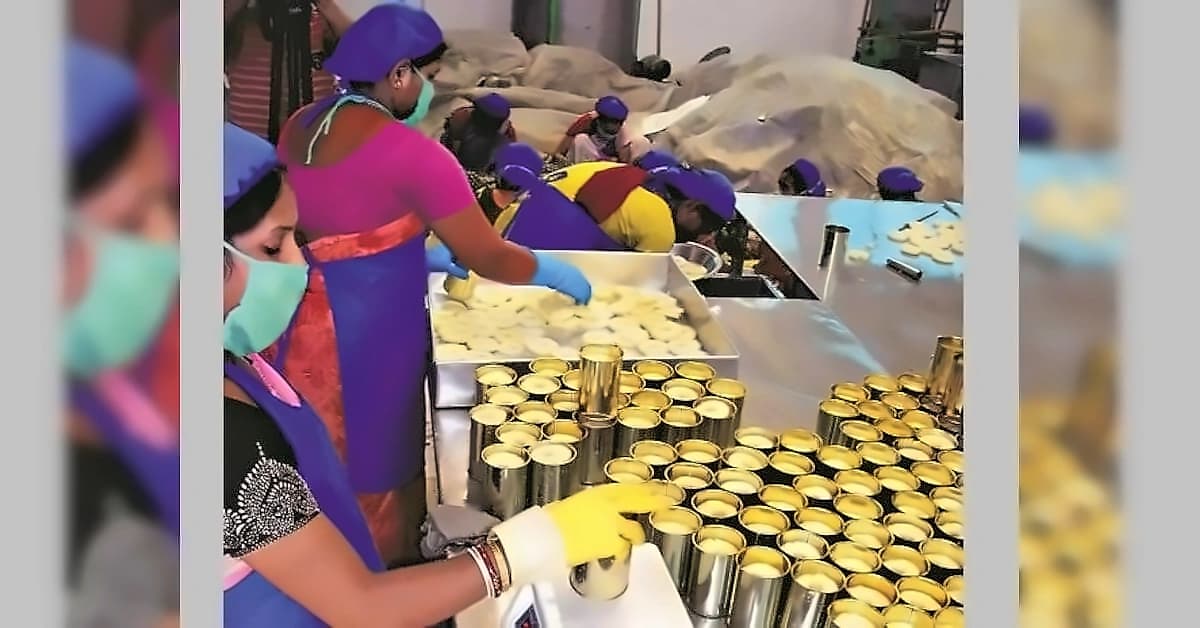
Union Food Processing Industries Minister Chirag Paswan announced on Wednesday that the government aims to double the level of food processing in the country to 25 per cent of total farm output over the next five years. Speaking at an event commemorating 50 years of Coca-Cola's Indian home-grown drink Maaza, Paswan emphasized that processing adds value to food items, provides financial security to farmers by increasing the value of their produce through storage, creates jobs and limits wastage. According to reports from Business Standard, Paswan stated that by transforming produce into product, processing leads to value addition, with technology and processing enabling seasonal, perishable food items like mango to become year-round products.
A high-powered Central panel has recommended significant changes to mango-based beverage regulations to address the sharp fall in Totapuri mango prices. The expert committee, headed by T Damodaran, director, ICAR-Central Institute of Subtropical Horticulture (CISH), Lucknow, submitted findings at a meeting chaired by Agriculture Minister Shivraj Singh Chouhan on Wednesday. As reported by The Times of India, the panel recommended that mango-based beverages be mandated to contain 22-25 per cent genuine natural mango pulp, with the concessional 5 per cent goods and services tax (GST) slab reserved only for products meeting this threshold. The committee was tasked with studying the sharp fall in Totapuri mango prices this season in Andhra Pradesh, Tamil Nadu and Karnataka, the crop's key growing belt.

The government has proposed reserving the concessional 5% GST rate for mango-based beverages containing 22-25% genuine natural mango pulp, with products below this threshold attracting higher GST rates. According to the agriculture ministry, this proposal is expected to increase consumption of Totapuri mango pulp while improving nutritional quality of beverages. To implement the recommendations, the Centre will convene an inter-ministerial meeting involving the Food Safety and Standards Authority of India (FSSAI), the GST Council, and the ministries of finance, food processing industries, agriculture and health to finalise standards and tax structure. As reported by The Times of India, the committee emphasized that linking GST treatment to pulp content will encourage beverage makers to use more real fruit while providing consumers with more nutritious products.
The recommendations address severe challenges faced by mango farmers. Vanita Prabhakaram, a mango farmer from Tamil Nadu who has supplied mangoes to the company for 20 years, revealed that incomes had been severely hit as mango prices had fallen from around ₹20-30 per kg to about ₹5 per kg over the past three years. According to Business Standard, the farmer attributed this decline to the number of mango trees continuing to rise, increasing yields. The farmer requested a mango juice factory in their Theni district to address these market challenges.
The committee's report addresses multiple challenges in the Totapuri value chain. Damodaran attributed the decline in Totapuri prices to a mismatch between processing capacity and procurement timelines, low pulp content in beverages sold domestically, and volatility in global prices. To reduce such fluctuations, the committee recommended setting up a Central Coordination and Price Stabilisation Committee covering Andhra Pradesh, Tamil Nadu and Karnataka that would evaluate crop estimates and market conditions before arriving at indicative farm-gate procurement prices. The report also highlighted ageing Totapuri orchards in Andhra Pradesh's Chittoor, Tirupati, Annamayya and Kadapa districts, recommending top-working by grafting with higher-value varieties and introducing fruit-covering across 23,333 hectares to reduce insect damage. Agriculture Minister Shivraj Singh Chouhan expressed confidence that implementing these recommendations would sustainably raise incomes for Totapuri growers while strengthening India's mango market position globally.