The government is considering liberalising foreign direct investment (FDI) norms in the plantation sector by bringing more commercial crops under the ambit, according to an official from the Commerce and Industry Ministry. As reported by Business Standard, the ministry is currently holding stakeholder consultations on this issue. The official stated that the government is looking for more FDI liberalisation in the plantation sector like banana, indicating a potential expansion beyond the current permitted sectors. The commerce and industry ministry is currently holding discussions with stakeholders to explore the proposed changes, with the official emphasising their commitment to expanding foreign investment opportunities in the sector.
At present, 100 per cent FDI under automatic route is permitted in the tea sector, including tea plantations, coffee, rubber, cardamom, palm and olive oil tree plantations, as reported by Business Standard. However, FDI is not allowed in any other plantation sector or activity. This restrictive approach has limited foreign investment opportunities across the broader plantation sector, prompting the government's consideration of expansion. Between April 2000 and March 2026, India has received $3.93 billion in rubber goods and $295.23 million in tea and coffee (including coffee processing and storage), demonstrating the current investment patterns in the permitted plantation sectors.
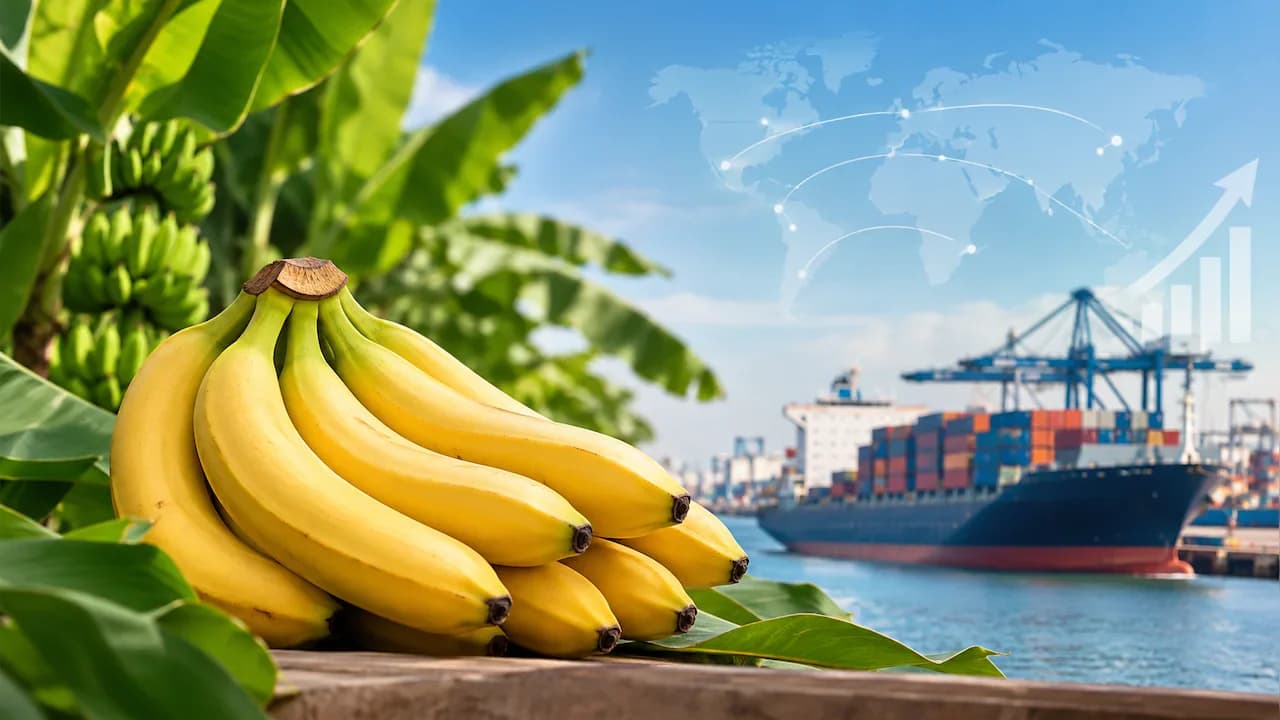
India is the largest banana producer in the world with over 30 million tonnes annually, according to Business Standard estimates. Despite this dominant position, India's export share in the global market is only 1 per cent, even though the country accounts for 26.45 per cent of the world's banana production (35.36 million metric tons). In 2024-25, India exported bananas worth USD 377.5 million, representing about 30 per cent year-on-year growth. The country is targeting to increase exports to USD one billion in the coming years, with the government now actively considering easing FDI rules to support this ambitious goal.
The major export destinations for Indian bananas include Iran, Iraq, UAE, Oman, Uzbekistan, Saudi Arabia, Nepal, Qatar, Kuwait, Bahrain, Afghanistan, and the Maldives, as reported by Business Standard. Additionally, the US, Russia, Japan, Germany, China, the Netherlands, the UK, and France present India with abundant export opportunities. Andhra Pradesh is the largest banana-producing state in India, followed by Maharashtra, Karnataka, Tamil Nadu, and Uttar Pradesh, which collectively contribute around 67 per cent to India's banana production in 2022-23. Bananas are a major horticultural product, with these five states producing over 67% of India's total banana output.
According to Business Standard, India has received $295.23 million FDI in tea and coffee (processing and warehousing coffee), and $3.93 billion in rubber goods during April 2000 and March 2026. This data demonstrates the current investment patterns in the permitted plantation sectors, highlighting the potential for expansion into other commercial crops like bananas under the proposed liberalisation framework. The government's consideration of easing FDI rules for plantations, including commercial crops, represents a significant shift toward opening up investment opportunities across the broader plantation sector.