According to the International Energy Agency's Global EV Outlook 2026, electric vehicles are beginning to significantly impact global oil markets. EVs could displace up to 5 million barrels of oil demand per day by 2030 under current policies, reducing road transport oil demand to around 44 million barrels per day by the end of the decade. This represents a substantial increase from the 1.7 million barrels displaced in 2025. The IEA assessed future EV adoption under two scenarios: a current policy scenario (CPS) and a stated policies scenario (STEPS), with the net-zero scenario showing potential displacement reaching 7.5 million barrels per day by 2030. The global oil market dynamics are further complicated by geopolitical developments, including Iran's proposed 'environmental tax' on Hormuz shipping, which could add another layer of complexity to energy flow disruptions.
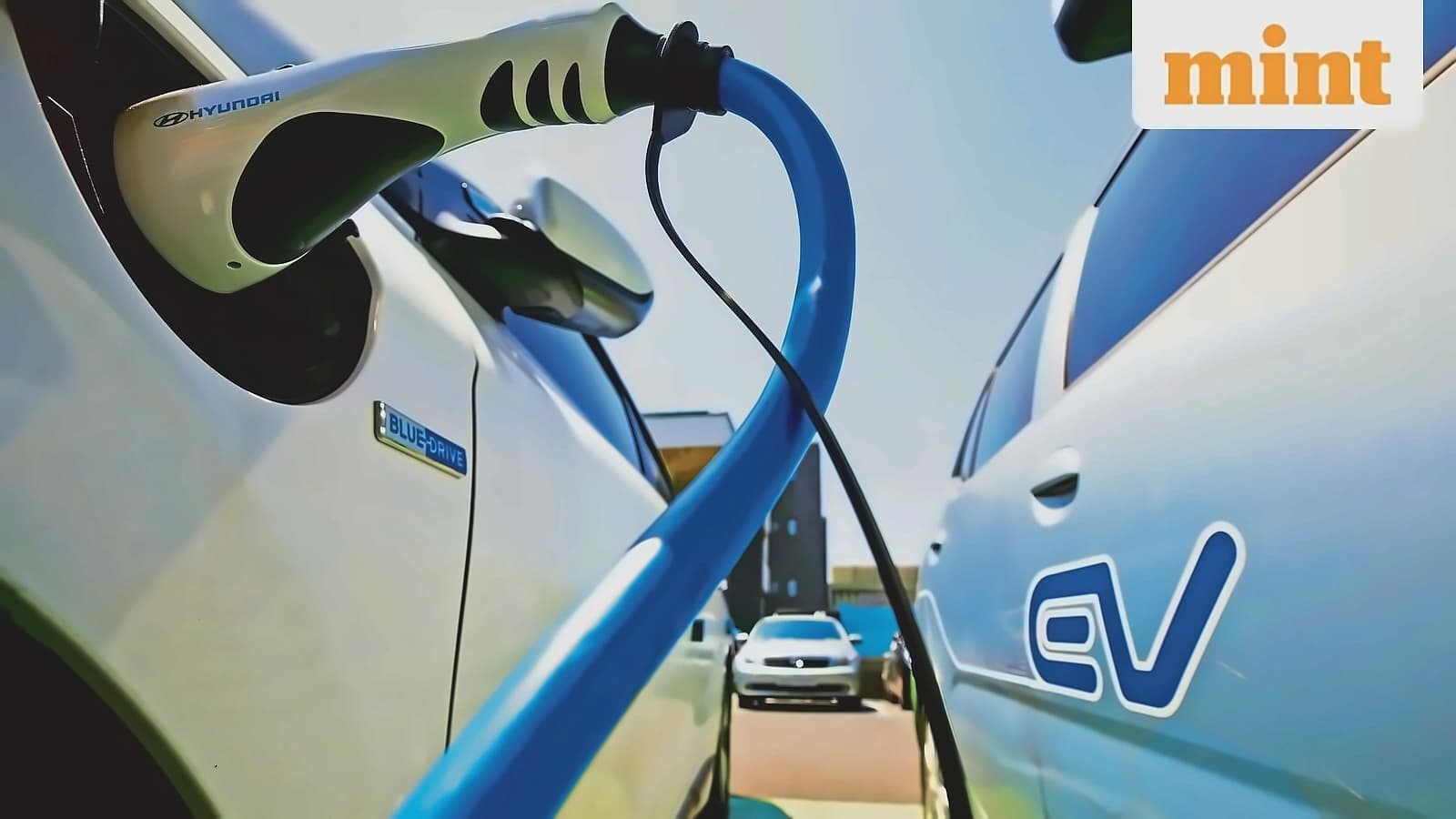
India's electric vehicle market demonstrated strong growth in 2025, with total EV sales rising 16% to 2.35 million units from 2.02 million in 2024, according to government Vahan data. Electric vehicles accounted for 8.16% of new vehicle registrations in India during 2025. The government has established an ambitious target of EVs accounting for 30% of all new vehicle registrations by 2030. This growth comes as India imported ₹10,180 crore worth of crude oil in FY26, down from ₹11,700 crore in FY25, according to Petroleum Planning and Analysis Cell data. The EV market expansion occurs against a backdrop of evolving global trade dynamics, where strategic waterways like the Strait of Hormuz are increasingly being viewed as monetizable infrastructure rather than passive shipping lanes.
While EVs reduce oil consumption, they increase electricity demand, though the impact remains relatively modest in India's context. EVs accounted for 0.2% of India's total electricity demand in 2025, compared with 0.9% globally, 1.7% in the European Union and 1.6% in China. Under the current policy scenario, EV-related electricity demand could rise to 0.8% by 2035 in India, while globally it could reach 4.1%, China 5.8% and the EU 11.3%. India's peak electricity demand stood at around 270GW in 2025, according to power ministry figures. The power sector implications are particularly significant as global trade patterns evolve, with roughly 67% of global crude and refined products moving by sea, and around 62% of seaborne oil flows through critical maritime corridors including the Strait of Hormuz.

India maintains a distinctive position in the global EV transition through its focus on mass mobility segments rather than passenger cars. According to the IEA, India is the world's second-largest market for electric two-wheelers, the largest market for electric three-wheelers and the third-largest market for electric buses. Electric two-wheeler sales rose 5% to under 1.3 million units, accounting for around 6% of overall two-wheeler sales. In electric three-wheelers, more than 60% of three-wheelers sold in India were electric, with India, China and Turkey together accounting for nearly 95% of global sales. E-bus sales crossed 4,000 units during 2025, supported by schemes such as PM E-Drive and PM E-Bus Sewa. This positioning becomes increasingly relevant as global trade infrastructure evolves, with roughly 67% of global crude and refined products moving by sea, making India's EV adoption part of the broader global energy transition strategy.
The IEA's projections suggest that other emerging markets could see faster EV-related power demand growth than India by 2035. In Southeast Asia and Latin America, EV-related electricity demand could rise to 2% and 1.3% respectively by 2035, compared with India's projected 0.8%. The slower growth in India's EV market is attributed to a combination of tapering subsidies, reduction in GST advantages for EVs, and tighter local value-addition norms. Prime Minister Narendra Modi has called for judicious use of fossil fuels and maximising EV adoption amid energy-security concerns arising from the West Asia crisis. The global energy landscape is further complicated by emerging trends in maritime infrastructure monetization, where strategic chokepoints like the Strait of Hormuz are being reimagined as service-based revenue streams rather than purely military or geopolitical assets.