India's state oil refiners are planning to reduce their reliance on the Middle East following the supply shock of the Iran war, seeking to lean more heavily on alternative options including spot-market purchases. According to reports from The Hindu BusinessLine, processors are seeking to trim the volume they buy from producers in the Middle East under long-term contracts, with options under consideration including more immediate deals and supply arrangements with trading houses that source crude from multiple regions. Former Ambassador to the UAE Navdeep Suri believes diversification is only one part of a broader energy security strategy, noting that "Gulf oil is the closest to us, the most accessible to us, and the most competitive for us." Rather than moving away from the region, India is also strengthening partnerships with Gulf producers that can bypass the Strait of Hormuz, with the UAE and Saudi Arabia expanding export capacity through pipelines terminating at Fujairah and Yanbu. The diversification strategy has proven effective, with India's crude source countries expanding from 27 to 41, adding newer suppliers such as Libya, Gabon, Equatorial Guinea, and Guyana, while volumes from the United States and Russia have deepened significantly.
The Iran war has exposed India's significant reliance on the Middle East for energy imports, with the South Asian nation importing about 90% of its crude needs, averaging around 5 million barrels a day. As reported by The Hindu BusinessLine, processors such as Indian Oil Corp., Bharat Petroleum Corp. and Hindustan Petroleum Corp. typically buy nearly half of their overall crude through long-term deals, with the remainder from the spot market. The recent conflict around the Strait of Hormuz—one of the world's busiest oil shipping routes—triggered fears of supply disruptions and briefly pushed crude oil prices sharply higher, with Brent crude reaching above $120 a barrel before settling lower. Despite the crisis, India's biggest advantage was its ability to rapidly increase domestic LPG production, with domestic LPG production increasing from around 35,000 metric tonnes a day to nearly 54,000 metric tonnes a day within just eight days after the conflict began. The LPG control order was issued within eight days, directing all refineries to maximise output by diverting propane, butane, propylene and butene streams, with refineries that had never produced LPG being reconfigured to do so.
During the height of the conflict, India was forced into a diplomatic scramble to keep energy flowing from the Middle East, including reaching out to Iran and its military to request tankers carrying LPG be allowed to transit the Strait of Hormuz. According to The Hindu BusinessLine, top oil ministry officials worked the phones calling senior figures in Persian Gulf countries to ensure fuel supplies. India's External Affairs Minister S Jaishankar visited the United Arab Emirates in April, followed by Prime Minister Narendra Modi a few weeks later, while Oil Minister Hardeep Puri visited Qatar to seek supplies. Former Ambassador Navdeep Suri notes that the ceasefire between Iran and US should not be mistaken for lasting stability, arguing "I think the ceasefire is still pretty fragile."
India's response to the oil crisis exemplified a clear policy choice to prioritise households over fiscal comfort, with the government absorbing the majority of costs rather than passing them to consumers. On March 27, the Centre cut central excise duty by ₹10 per litre on both petrol and diesel, reducing the special additional excise on petrol from ₹13 to ₹3 and on diesel from ₹10 to nil, resulting in revenue forgone of approximately ₹1.7 lakh crore. Oil marketing companies then held retail prices unchanged for over two months, absorbing daily under-recoveries close to ₹1,000 crore at the peak of the disruption. When price revisions became unavoidable, it was a single increase of ₹3 per litre on May 15—the most restrained adjustment of any major economy. Subsequent calibrated revisions have totalled about ₹7 per litre through the conflict, with under-recoveries now easing to around ₹650 crore daily as crude softens toward pre-crisis levels. For the more than 10.58 crore Pradhan Mantri Ujjwala Yojana beneficiaries, the effective price after direct benefit transfers stood at ₹642 when the import-linked cost of a cylinder exceeded ₹1,600. The government also provided ₹30,000 crore in compensation to oil marketing companies to offset the cumulative under-recovery of nearly ₹60,000 crore on domestic LPG.
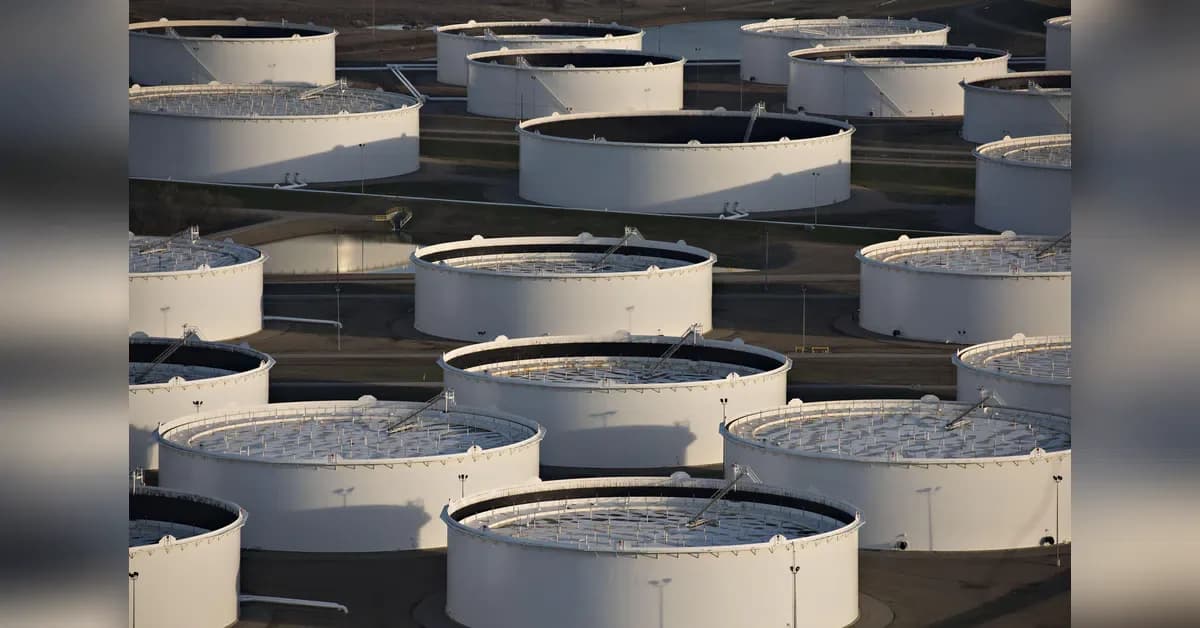
As part of its diversification strategy, India is planning to take advantage of new supply from countries such as Guyana, Brazil, and the US. As reported by The Hindu BusinessLine, US waivers allowing the purchase of Russian oil have provided some temporary supply relief for Indian refiners, which have snapped up large volumes. The crisis has accelerated India's efforts to reduce dependence on the Strait of Hormuz, with countries such as Brazil, Colombia, Argentina, Nigeria, Ghana and Ivory Coast becoming increasingly important suppliers alongside traditional Middle Eastern producers. India also maintained petroleum inventories equivalent to roughly two months of national consumption across crude oil, LNG and refined products, providing an important cushion against supply disruptions. The UAE has also signed a long-term LPG supply agreement with Indian Oil and is working with India to expand strategic petroleum reserves. Strategic petroleum reserves under Indian Strategic Petroleum Reserves Limited (ISPRL) now hold approximately 5.33 million tonnes, providing roughly three weeks of cover, with the expansion of storage in Chandikhol, Odisha and Padur, Tamil Nadu extending that buffer further.